

BY: PHESHEYA KUNENE – EDITOR
MANZINI — Eswatini’s farmers could soon be doing more than feeding the nation, they could be fuelling Southern Africa’s green economy.
A new study by the Centre for Coordination of Agricultural Research and Development for Southern Africa (CCARDESA) has identified liquid biofuels as one of the region’s most underused agricultural opportunities, with strong potential to reduce fuel imports, create rural jobs, boost farmer incomes and strengthen climate-smart agriculture across the Southern African Development Community (SADC).
Produced from crops such as sugar-cane, cassava, sweet sorghum, sunflower and castor beans, liquid biofuels are increasingly being recognised as a strategic link between agriculture, energy and industrial development.
For Eswatini, where agriculture remains a major economic pillar and sugar-cane dominates commercial farming, the opportunity is particularly significant.
The peer-reviewed study, titled Potential for Production and Use of Liquid Biofuels as a Strategy for Developing Green and Circular Economies in Southern Africa, was authored by CS Dlamini, RP Tshidzumba, T Gotore, G Kabia, RSM Munjoyo and D Kachamba, and published in Southern Forests: A Journal of Forest Science in February 2026. The research examined biofuel production trends in Malawi, Mozambique, South Africa and Zimbabwe while drawing broader lessons for the wider SADC region, including Eswatini.
Eswatini’s sugar industry already provides the strongest foundation for a domestic bioethanol sector. According to the Eswatini Sugar Association, the country has about 62 600 hectares under sugar-cane cultivation for the 2025/26 season, with projected production of 5.6 million tonnes of cane and expected sugar output of 662 261 tonnes.
The industry supports nearly 500 growers, most of them smallholders, contributes around five per cent to national GDP and accounts for more than 30 per cent of agricultural output. It directly employs about 5 000 people and supports another 15 000 indirectly.
In the 2024/25 financial year alone, the sugar industry generated E7.7 billion in revenue, with 68.1 per cent going to growers and 31.9 per cent to millers. Hidden within that industry is molasses, one of the key raw materials required for first-generation ethanol production, turning what was once treated as a by-product into a valuable industrial asset.
CCARDESA Executive Director Professor Cliff Dlamini said Eswatini is well positioned to move beyond exporting raw sugar and into higher-value green industrial production.
He said the country’s strong irrigation systems, organised sugar value chain and access to regional markets such as South Africa create a natural advantage for biofuel development.
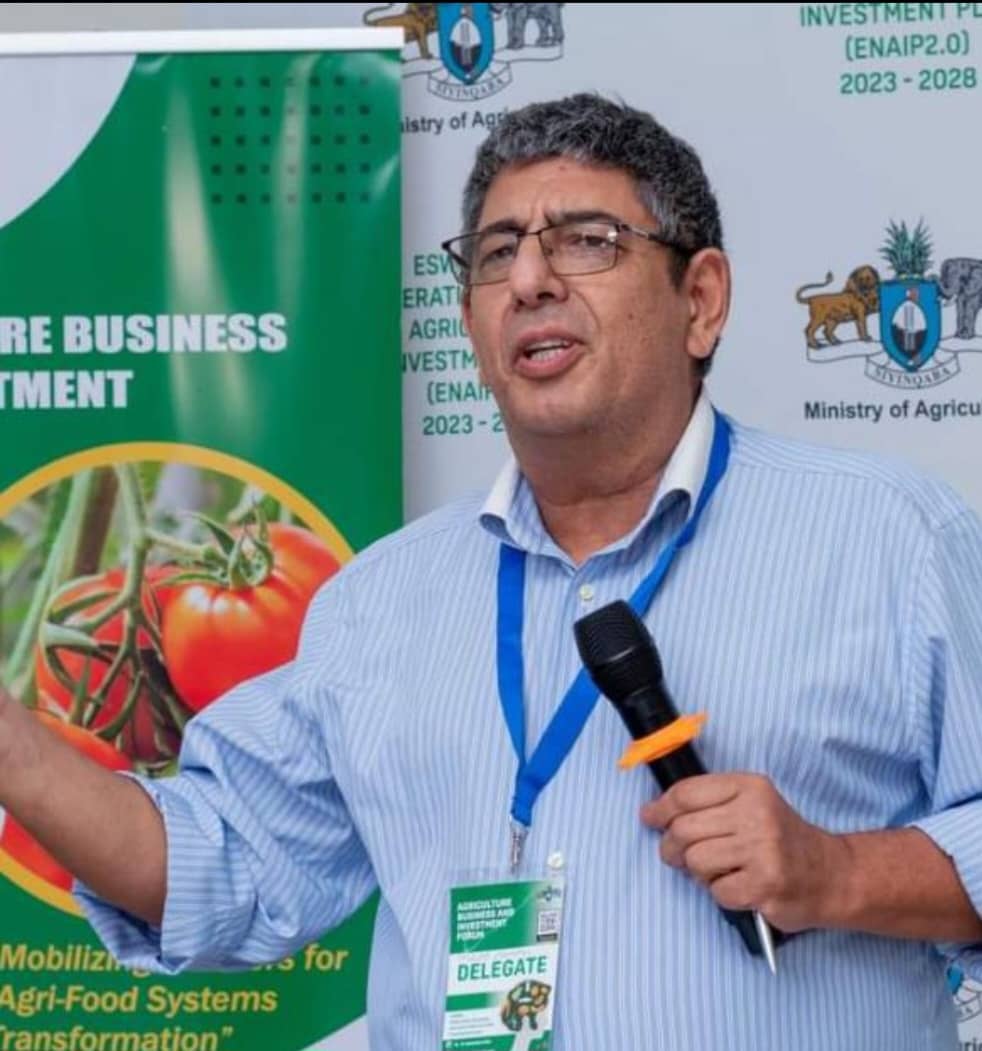
“Eswatini has the right agricultural foundation to participate meaningfully in the liquid biofuel economy. The opportunity is not only about energy security, but also about rural industrialisation, farmer incomes and creating new markets for agricultural products and by-products,” said Professor Dlamini.
He added that farmers should view biofuels as an additional revenue stream rather than a replacement for food production.
“If properly managed, biofuel crops complement food systems through integrated agriculture where molasses, crop residues and other by-products support livestock feeding, soil improvement and circular farming systems,” he said.
For smallholder farmers producing cassava, sweet sorghum and oilseed crops, biofuels could open new and more stable markets. Instead of relying only on food markets that are often vulnerable to price fluctuations, farmers could supply industrial energy value chains where demand remains constant.
Dr Isaac Knafo, Co founder of the Eswatini Cassava Agri industrial Center, highlighted the emerging opportunity for renewable energy transformation in the region through biofuel development, particularly using cassava as a strategic feedstock.
“Biofuel presents a strategic opportunity for Eswatini and the wider SADC region, particularly through cassava as a resilient and high yielding feedstock. With the right investment in processing infrastructure, technology, and enabling policy frameworks, cassava can transition from a food security crop into a cornerstone of renewable energy industrialisation while simultaneously strengthening rural livelihoods and safeguarding food systems,” said Dr Isaac Knafo said.
The study found that sugar-cane ethanol can reduce greenhouse gas emissions by between 70 per cent and more than 100 per cent depending on production efficiency, while most liquid biofuels reduce emissions by 30 to 50 per cent compared to fossil fuels.
This is increasingly important as farmers across Eswatini continue to battle rising fuel costs. Feedlot operators, irrigation farmers and agro-processors depend heavily on diesel for pumping water, running machinery and transporting produce to market.
Fuel costs remain one of the biggest operational pressures in agriculture, particularly for livestock producers and commercial farmers managing large-scale operations.
The Ministry of Agriculture has repeatedly pushed for value addition and import substitution, and biofuel production fits directly into that strategy.
Agriculture is currently the third-largest contributor to Eswatini’s economy, driven mainly by sugar, beef and citrus exports, while the country still imports significant volumes of maize, vegetables and animal feed from South Africa.
Reducing fuel imports while expanding agricultural exports would strengthen both national food security and economic resilience.
The regional market also presents a major commercial opportunity. Researchers estimate that South Africa alone has liquid biofuel demand ranging from 300 million to 1.4 billion litres annually. If flexible-fuel vehicle adoption expands significantly, that demand could rise to nearly three billion litres. South Africa could effectively absorb all SADC biofuel production.
Neighbouring countries have already moved ahead. Zimbabwe has created around 1 200 contract grower entrepreneurs through its biofuel industry, while Mozambique has generated more than 14 000 jobs and committed nearly 700 000 hectares to biofuel feedstock production. Malawi already blends locally produced bioethanol into transport fuels, producing an average of 15.5 million litres annually.
Despite the promise, the study warns that policy delays remain the biggest obstacle.
Only Mozambique and South Africa currently have formal standalone biofuel policy frameworks. Many SADC countries, including Eswatini, still treat biofuels as a secondary issue under broader renewable energy or agriculture policies.
Without clear regulation and targeted investment, researchers warn that biofuel expansion could create land disputes, water shortages and food security risks, especially where sugar-cane competes for fertile land and irrigation resources.
“Countries must formulate biofuel policies that target the entire liquid biofuel production value chain so that production follows an integrated pathway,” the authors recommend.
For Eswatini, the message is becoming increasingly clear.
The future of farming may no longer depend only on producing food, but also on producing energy.
If government, financiers and industry align policy with investment, ordinary crops like sugar-cane and cassava could become strategic national assets, and farmers could move from being raw producers to energy suppliers at the centre of Southern Africa’s green industrial transition.