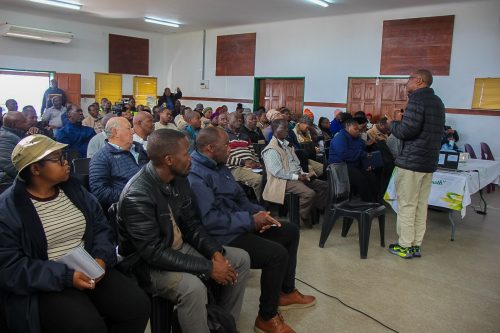


Minister of Agriculture Mandla Tshawuka listening attentively to farmers addressing their challenges.
BY SIBUSISIWE NDZIMANDZE | JOURNALIST
BHUNYA – Late input subsidies and delayed tractor services are undermining crop yields at LaMgabhi Inkhundla, where farmers say missed planting windows are limiting their ability to produce at commercial scale.
The concern was raised during the Ministry of Agriculture’s “Taking the Ministry to the People” outreach at LaMgabhi Inkhundla, where farmers told Minister of Agriculture Mandla Tshawuka that delays in inputs and mechanisation are disrupting the production cycle and limiting their ability to farm commercially.
The engagement brought together the Ministry of Agriculture officials and stakeholders including the National Agricultural Marketing Board (NAMBoard), the Eswatini Agricultural Development Fund (EADF), Eswatini Water and Agricultural Development Enterprise (EWADE), National Maize Corporation (NMC).
The farmers’ concern comes as the Ministry pushes communities such as LaMgabhi to shift from subsistence farming to commercial production so that the estimated E2 million spent on food imports can circulate within Eswatini’s local agricultural economy.
Minister Tshawuka said the outreach forms part of the Ministry’s 2023–2028 strategy, anchored on service delivery, food sovereignty and wealth creation.
“We are taking Ministry services closer to the people because agriculture must create food security, income and wealth for farmers,” Tshawuka said.
He said programmes such as the Eswatini Agricultural Development Fund (EADF), Hamba Ubuye, the Eswatini Youth Opportunities Project (EYOP) which will start operations this year and the Smallholder Agricultural Productivity Enhancement and Marketing Project (SAPEMP) are designed to strengthen production, improve access to finance, support irrigation development and integrate farmers into formal markets.
Tshawuka said the Ministry is guided by ‘SITILE’, which stands for service delivery, innovation, transparency, integrity, loyalty and effectiveness.
Principal Secretary Sydney Simelane said farmers must shift from subsistence production to commercial agriculture if the country is to reduce imports.
“Farmers must forget the culture of farming only to feed their families and venture into commercial farming,” Simelane said.
He said commercial agriculture requires production planning, timely input use, mechanisation, aggregation, market linkages and reinvestment.
Farmers said the late rollout of input subsidies and delayed tractor services are affecting critical stages of the production cycle.
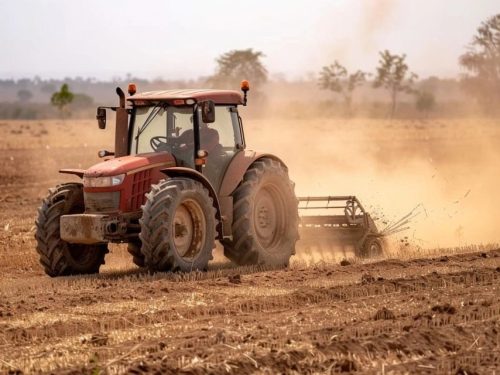
They said when inputs arrive after the onset of rains and tractors are delayed, land preparation is pushed back, planting windows are missed and crops fail to reach their optimal yield potential.
Farmers said these delays affect germination, crop establishment and overall productivity, making it difficult to produce surplus for the market.
In addition to timeliness, farmers said unreliable water harvesting infrastructure is also affecting production.

Ministry of Agriculture Principal Secretary Sydney Simelane following proceedings of the event.
They said that, with support from the Government of Eswatini and the European Union (EU), communities such as Luhleko, Mangcamaneni, LaMgabhi and Mhlangeni were assisted with a water collection project; however, high water pressure from the river is causing pipes to burst, disrupting irrigation and affecting crop growth.
Representing farmers, Andreas Msibi said LaMgabhi has potential, but requires reliable irrigation systems.
“LaMgabhi has water, but what we need is proper harvesting, storage and irrigation infrastructure so that farmers can produce consistently,” Msibi said.
Communities such as Dvudvusini and Nhlulweni also reported water shortages, especially during heatwaves when wells dry up.
Responding to the concerns, Tshawuka said the Department of Land Use Planning and Development will return to LaMgabhi Inkhundla on Wednesday, 6 May 2026, to assess the water harvesting system and provide technical solutions.
He said the Ministry will address the issue of burst pipes and also explore small dam development to improve water storage and irrigation.

Nikiwe Dlamini, Ministry of Agriculture Director Representative being the master of the ceremony (MC).
On input subsidies, Tshawuka said the Ministry is working to ensure that once funds are approved by Parliament, inputs are delivered on time to align with the cropping calendar.
On mechanisation, government has entered into a partnership with Standard Bank Eswatini, John Deere, the National Maize Corporation (NMC), EADF, the United States Embassy and Swazi Trac to improve access to tractors and implements.
The programme will roll out 250 mechanisation packages over five years, with 50 packages delivered annually to improve land preparation capacity.
Under the financing model, EADF provides 15 percent concessional support, beneficiaries contribute 10 percent equity and Standard Bank finances the remaining 75 percent, with reduced interest rates supported by John Deere.
Tshawuka said the intervention is meant to improve timeliness in land preparation and planting, which is critical for improving yields.
The Minister also highlighted climate change and Foot-and-Mouth Disease (FMD) as major risks affecting production.
He said maize production had been affected this season due to erratic rainfall followed by prolonged dry spells and heatwaves.
On FMD, Tshawuka said government is repairing stolen border fences and intensifying vaccination.
By late April 2026, more than 300,000 cattle had been vaccinated nationwide, allowing government to cautiously ease movement controls under strict veterinary conditions.
The revised framework allows controlled movement of cloven-hoofed animals, including cattle, sheep, goats and pigs, mainly for slaughter, feedlot finishing and tightly regulated breeding activity.
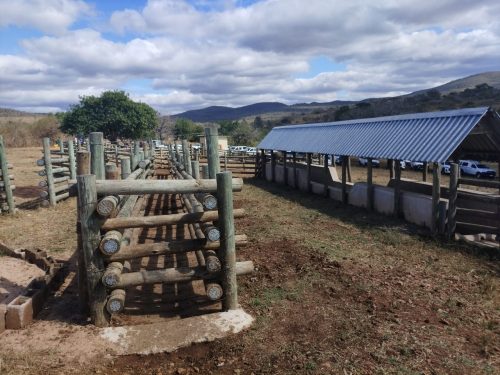
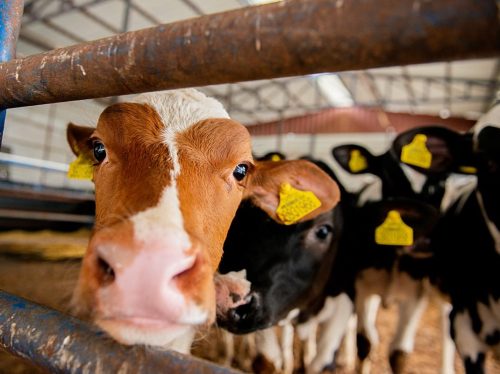
Registered bio-secure feedlots are also allowed to continue operating under national veterinary guidelines, supporting controlled livestock finishing for slaughter while disease-control measures remain in place.
LaMgabhi Member of Parliament Sicelo Jele welcomed the engagement.
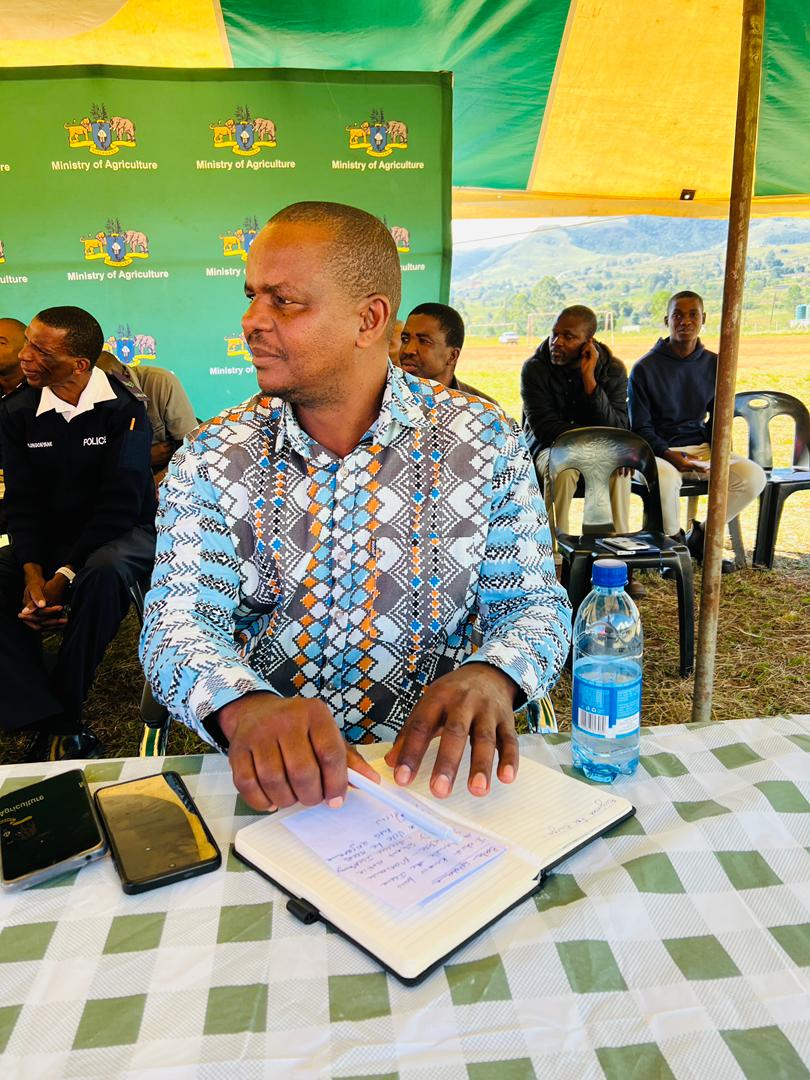
LaMgabhi Member of Parliarment Sicelo Jele following the event’s proceedings.
“This is ‘ingcayizivele’, because it is the first time the community has experienced such a full-day engagement with the Minister and senior Ministry officials,” Jele said.
Farmers said addressing delays in inputs and mechanisation, alongside water challenges, would significantly improve productivity, increase yields and enable LaMgabhi farmers to contribute to reducing imports and strengthening Eswatini’s agricultural economy.