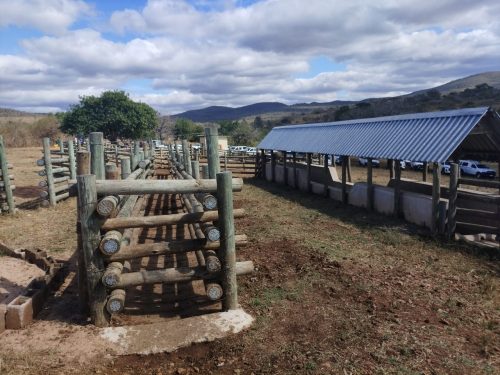

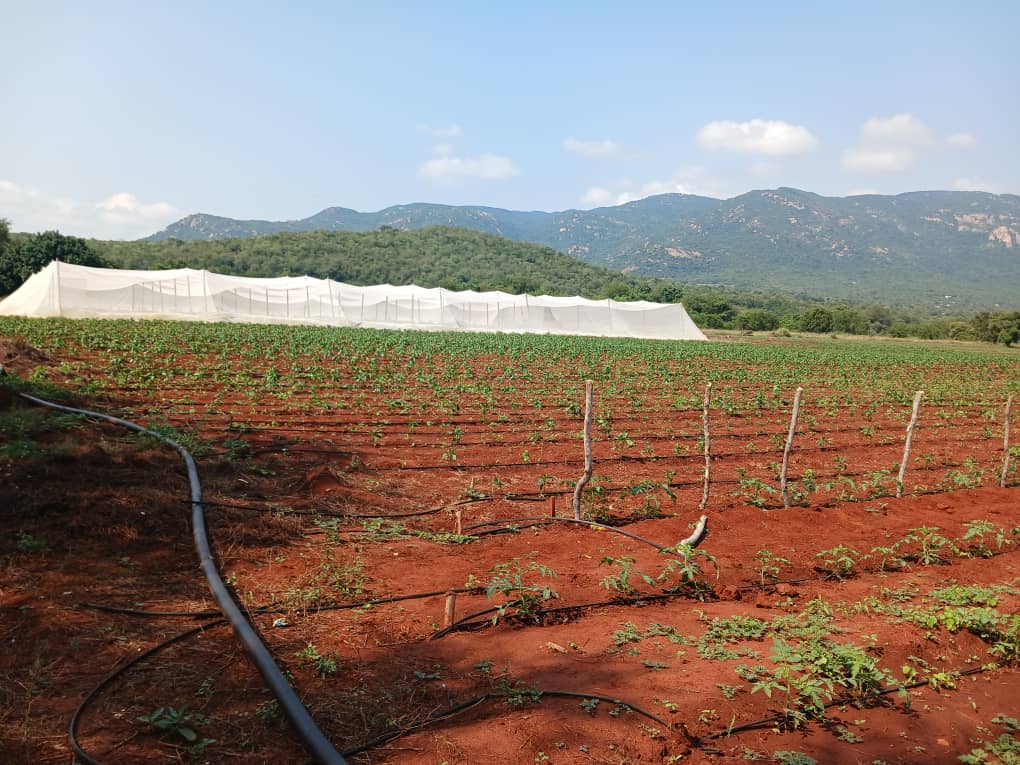
A field where Lesibovu Agricultural Enterprise plant tomatoes, green peppers, carrots, beetroot and beans.
BY SIBUSISIWE NDZIMANDZE | JOURNALIST
GUNDVWINI — As climate change continues to disrupt crop production through heatwaves, storms and erratic rainfall, Lesibovu Agricultural Enterprise in Gundvwini is showing how smart climate farming can help farmers reduce risk, protect yields and build more resilient agribusinesses.
Led by cluster leader Mbuso Lokotfwako, the enterprise is made up of a group of 10 farmers producing tomatoes, green peppers, carrots, beetroot and beans on six hectares. Their approach reflects a shift from traditional farming methods to a more organised production system built around climate adaptation, market access and long-term investment.
Lokotfwako said one of the biggest lessons the group has learned is that farming must be approached as an investment, not as a quick way to make money.
“If you come into farming looking for fast cash, you can easily give up when challenges come. But when you see farming as an investment, your mind becomes broader and you start looking for solutions, especially when dealing with risks like climate change,” he said.
That mindset has become important as farmers face increasing climate-related shocks. According to Lokotfwako, the main production challenges affecting the enterprise include heat stress, storms and heavy rainfall at unexpected times, all of which can damage crops and reduce output.
To respond to those risks, the group has adopted a number of climate-smart agricultural practices aimed at improving resilience and stabilising production.
One of the key interventions has been the installation of a shade net structure, secured through support from the Food and Agriculture Organization (FAO). The structure helps protect crops from excessive heat and harsh weather conditions, reducing the impact of temperature stress and creating a more suitable microclimate for sensitive horticultural crops.
The enterprise has also invested in a solar-powered irrigation system, where water is pumped using solar energy into a storage tank and then distributed through a drip irrigation system. This has improved water-use efficiency, reduced reliance on fuel-powered systems and allowed the group to maintain production even under changing weather conditions.
“The solar pump uses the sun, not electricity. The water goes into the tank and then moves through the drips. That helps us manage water better,” Lokotfwako said.
For a horticulture enterprise, such systems are critical. Crops like tomatoes, green peppers and carrots require stable moisture conditions and careful water management to maintain productivity and quality. Under climate stress, irrigation and protective structures become essential production tools rather than optional extras.
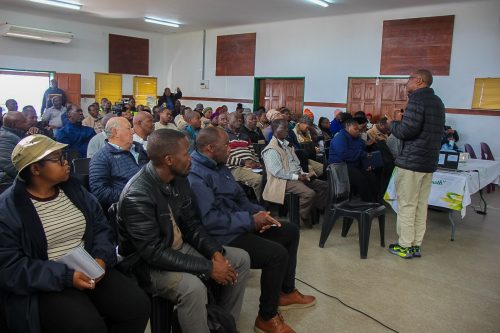
Lokotfwako said the enterprise was formed after members attended agricultural trainings and later organised themselves into a cluster. He also strengthened his own technical knowledge by studying crop farming online, where he obtained a certificate.
The group is now supplying NAMBoard under contract, a development that followed an assessment of their production system. He said the contract was only secured after the land had been checked for soil suitability, fencing and reliable water availability.
“They checked whether the land was suitable, whether we had fencing and enough water. After that, we got the contract,” he said.
This kind of structured market access has pushed the cluster to think more seriously about production planning, infrastructure and compliance. It has also reinforced the importance of climate-smart systems in maintaining reliable supply.
The enterprise has further benefited from financial support through the Eswatini Agricultural Development Fund (EADF) and the Youth Enterprise Revolving Fund (YERF), which have helped strengthen its production base.
For Lokotfwako, smart climate farming is not just about having equipment. It is about building a farming system that can continue producing under pressure.
He said when farmers treat agriculture as an investment, they are more likely to reinvest in solutions such as irrigation, protective structures, fencing and better planning, instead of focusing only on immediate returns.
That wider outlook is what allows them to respond to climate risks more effectively.
Beyond its own production, Lesibovu Agricultural Enterprise is also helping other farmers by offering training for start-ups and assisting with the development of business plans for funding applications.
This shows how climate-smart farming can also strengthen farmer-to-farmer learning, helping more producers move towards resilient and commercially viable agriculture.
At a time when climate change is becoming one of the biggest threats to crop production, Lesibovu’s experience offers a practical lesson: resilience does not happen by chance. It comes from planning, investing in the right systems and treating farming as a serious business.
For Lokotfwako and his group, smart climate farming is not only helping them protect crops. It is helping them build an agribusiness that can survive, adapt and grow.