

Sibongile Dludlu, a farmer of 10,000 cabbages
BY NOSIPHO MKHIZE | JOURNALIST
MANZINI– At Sigangeni in the Hhohho Region, 57-year-old Sibongile Dludlu stands as proof that farming success does not always begin with a formal qualification. Sometimes, it begins with a small backyard garden, a family to feed, and the simple joy of watching a seed become food.
Sibongile has no formal background in agriculture. Her classroom has been the soil, the seasons, and the daily demands of farm life. What started as a humble garden to support her household has grown into a commercial cabbage operation producing about 10,000 cabbages per cycle.
“I began with a small, humble backyard garden just to feed my family,” Dludlu says. “The joy of watching a seed grow into a healthy, nutritious vegetable was addictive.”
That joy soon became a business opportunity. As demand for fresh vegetables grew in her community, Sibongile realised that cabbage farming could become more than a survival activity. It could become a sustainable enterprise, a source of income, and a contribution to local food security.
Today, she manages the farm with one full-time employee who works throughout the year. During busy periods such as planting, weeding, fertilizer application and pesticide spraying, she brings in about 10 seasonal workers. In this way, her farm has become not only a source of food but also a source of employment for people in her community.
Her main crop is cabbage, which she supplies to supermarkets, vendors and the general public. Building those markets, she says, has required consistency and trust.
“A store manager needs to know that when I say I will deliver, I will show up on time with quality produce,” she explains. “I started by visiting them, offering samples of my cabbage, and maintaining an honest, communicative relationship.”
For Sibongile, commercial farming is not guesswork. Managing 10,000 cabbages requires discipline, planning and close attention to detail. She begins with soil preparation, uses quality seed, follows regular irrigation schedules and applies fertilizer carefully. She also monitors the crop daily for pests and diseases.
One of her key lessons is the importance of staggered planting. Instead of planting everything at once and being forced to harvest everything at the same time, she spreads production across different stages. This helps her manage labour, reduce pressure at harvest, and avoid flooding the market with too much produce at once.
But farming has not been easy. Sibongile says unpredictable weather and fluctuating market prices remain some of her biggest challenges. At times, drought threatens production. At other times, excessive rainfall causes disease outbreaks and washes fertilizer from the soil.
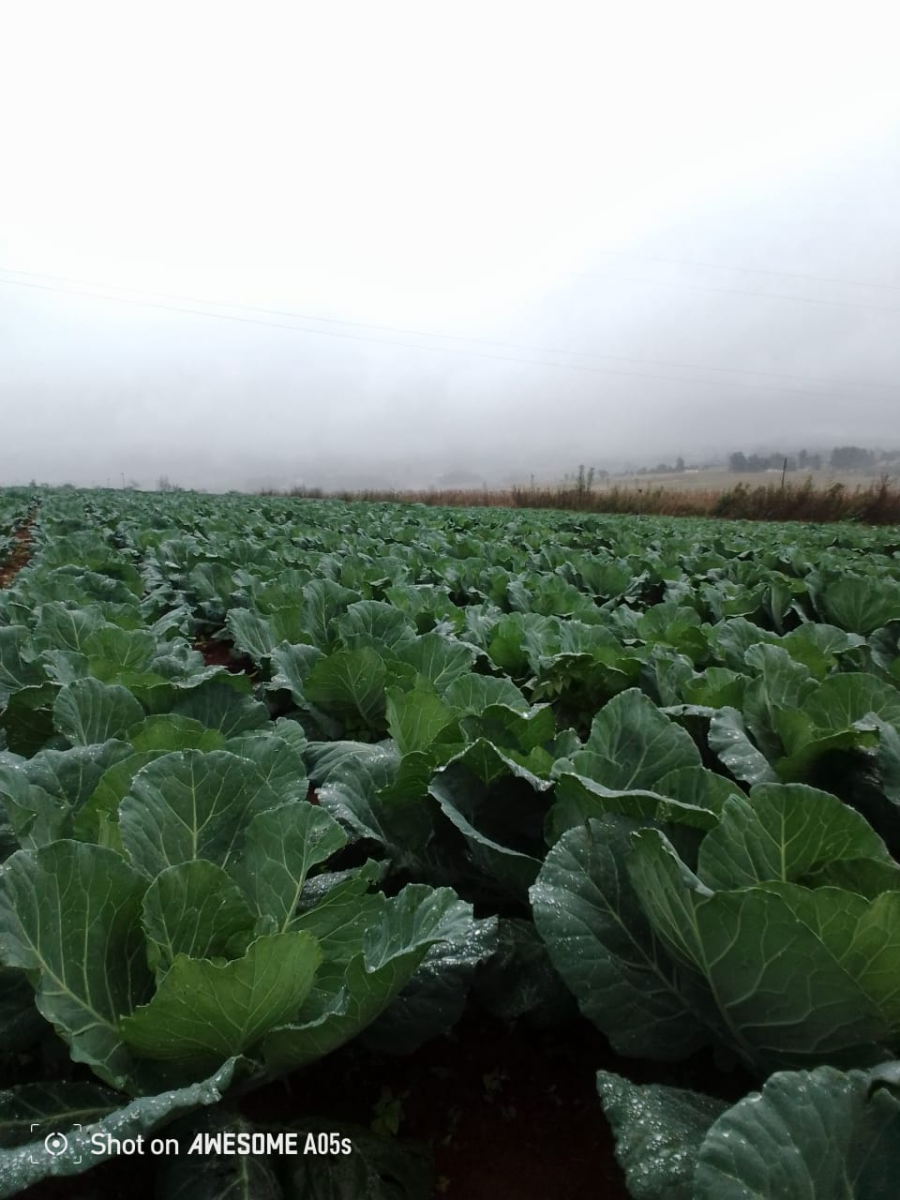
An example of Sbongile’s 10 thousand cabbages
She currently uses sprinklers for irrigation, but the recent heavy rains have created new problems.
“The current weather has been quite unpredictable, with so much rainfall during a season of minimal rains,” Dludlu says. “This causes more diseases, resulting in buying more pesticides. I also have to apply more fertilizer as it is washed down by the rains, resulting in less profits.”
Her response has been to keep learning and adapting. She wants to invest in better infrastructure, including improved irrigation and mulching, to protect the crop and reduce losses. She also believes farmers must accept that agriculture requires resilience.
“It remains a constant reminder that in farming, we work with nature, not against it,” she says.
Sibongile has five dependents in her household, and she says cabbage farming has helped her provide for her family with dignity. Beyond her home, the business has also created pride in her community by showing that agriculture can be a serious, honourable and sustainable path to success.
Looking ahead, she wants to expand beyond primary production into value addition, possibly processing cabbage before it reaches the shelf. She is also interested in smart-farming technologies that can help her use water more efficiently and improve productivity.
Her message to women and young people is simple: start small, but start.
“Agriculture is hard work, but it is deeply rewarding,” Dludlu says. “Your greatest tools are your patience, your willingness to learn from the soil, and your persistence. Don’t look for overnight success; look for growth.”