
BY PHESHEYA KUNENE | EDITOR
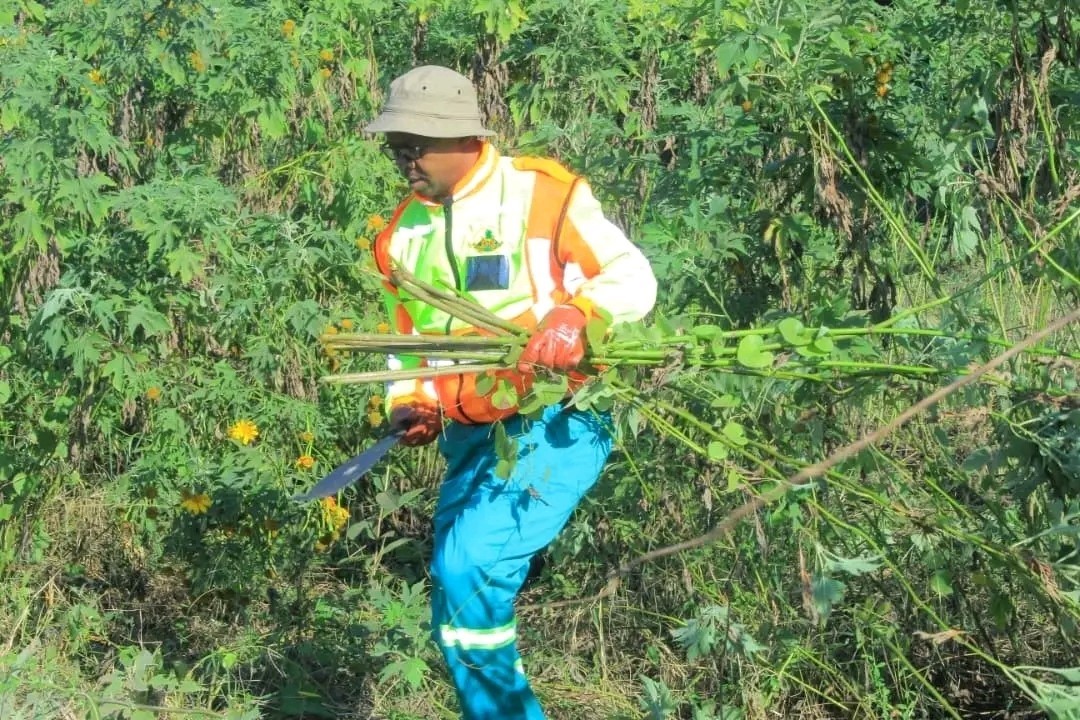
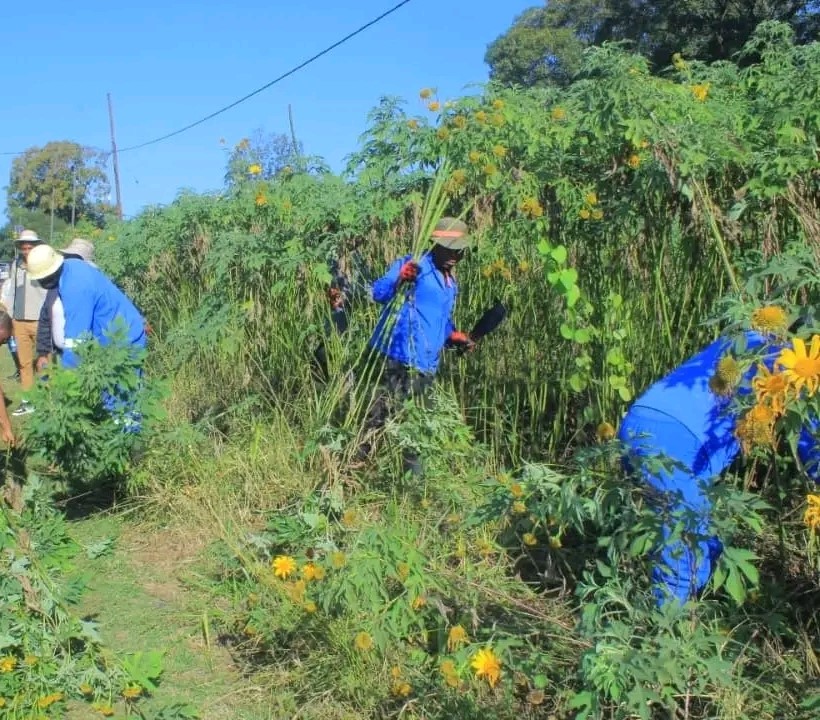
MALKERNS – The Malkerns Town Council, in partnership with Umdoni Farm and the Ministry of Agriculture, has launched a coordinated initiative to convert the invasive Mexican sunflower (Tithonia diversifolia) into low-cost organic fertiliser and botanical pesticides, positioning the plant as a practical response to rising fertiliser and crop protection costs.
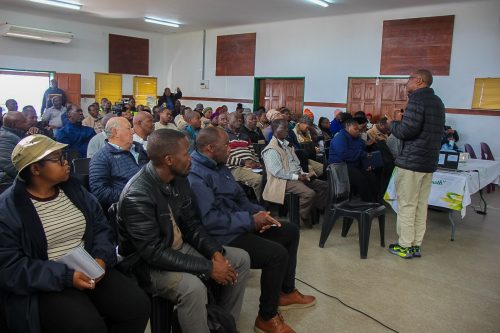
The strategy was unveiled on 23 June 2026 during a Harvest Day event that brought together researchers, agricultural extension officers, students and farmers to demonstrate how an invasive plant widely found along roadsides and abandoned fields can be repurposed into a high-value agricultural input.
From Invasive Weed to Agronomic Resource
Although often classified as an invasive species in many tropical and subtropical regions, Tithonia diversifolia has been widely studied across Africa, Asia and Latin America for its strong nutrient recycling capacity.
Research from institutions such as the International Centre for Tropical Agriculture (CIAT) and various soil fertility studies across Africa shows that the plant’s biomass contains significant levels of nitrogen, phosphorus, potassium, calcium and magnesium, making it highly effective as a green manure and compost accelerator.
Dr. Simangele Ngwenya, a researcher at Umdoni Farm, said the plant should not be viewed purely as an ecological threat, but as an underutilised agricultural resource.

Laboratory analysis confirms its suitability as a low-cost alternative to imported synthetic fertilisers, particularly for smallholder farmers facing rising input costs.
“Innovation in agriculture is not always about introducing something new,” Dr. Ngwenya said. “It is about finding value in what already exists within our own landscapes.”
How Farmers Can Use Mexican Sunflower
Field demonstrations highlighted four key practical uses:
Green manure: Fresh biomass incorporated into soil for rapid nutrient release and improved crop growth.
Compost booster: Speeds up decomposition due to its low carbon-to-nitrogen ratio.
Liquid fertiliser: Fermented leaf extracts used for foliar or soil application.
Botanical pest control: Natural compounds may help suppress fungi, repel insects and reduce nematode activity.
Experts note that effectiveness depends on correct preparation and integration into broader pest management systems.
SOIL HEALTH AND CLIMATE BENEFITS
Agronomic studies show that repeated application of Tithonia diversifolia can improve soil organic matter, water retention and microbial activity, especially in degraded soils.
These benefits align with climate-smart agriculture approaches that promote locally available biomass as a substitute for costly external inputs.
YOUTH INNOVATION AND TRAINING
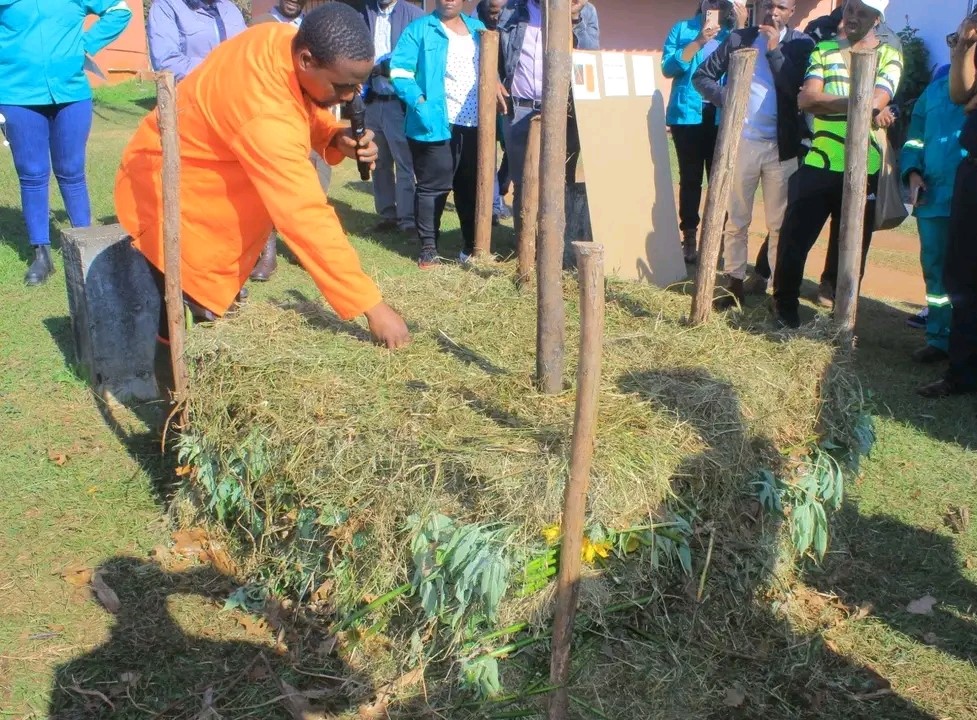
UNESWA horticulture students showcased compost and organic input formulations developed at the Luyengo Campus, demonstrating how academic research can be translated into practical farmer solutions.
SCALING CIRCULAR AGRICULTURE
At Umdoni Farm, stakeholders observed vermicomposting systems that convert organic waste into nutrient-rich fertiliser under controlled conditions of moisture, aeration and feedstock management.
Project Manager Synate Hlatshwako said the initiative is designed to strengthen farmer resilience by converting invasive biomass into productive agricultural inputs.
“This is not just about removing an invasive plant,” he said. “It is about turning it into value, nutrition and income for agribusinesses.”
INSTITUTIONAL ALIGNMENT
The programme brings together key agricultural actors:
- Ministry of Agriculture: policy integration for low-cost organic inputs
- UNESWA: testing and validation of compost products
- Research institutions: nutrient release and soil performance monitoring
- Environment authority: invasive species management alignment
THE BROADER IMPLICATION
The Malkerns initiative reflects a broader shift toward circular agriculture systems that reframe environmental challenges as production opportunities.
For Eswatini, the model offers a pathway to reduce input costs, improve soil health and strengthen resilience in smallholder farming systems.
Ultimately, the message is clear: agricultural innovation is not always imported, it can be extracted from what already grows locally, even along the roadside.