

BY: PHESHEYA KUNENE | EDITOR
SIMUNYE – For decades, sugar has been one of Eswatini’s economic cornerstones, generating about E7.7 billion annually, contributing 6.3 percent to the country’s Gross Domestic Product, supporting nearly 30 percent of the national workforce and remaining one of its leading export earners.
But the business of sugar is changing. Faced with weakening global prices, rising production costs, climate shocks and an increasingly competitive international market, the industry is undergoing a fundamental transformation.
Instead of relying solely on the sale of raw sugar, producers are turning sugarcane into electricity, biofuels, industrial alcohol and other high-value products while pursuing new markets across Africa.
The shift signals more than a change in strategy, it reflects a broader effort to future-proof one of Eswatini’s most strategic industries against an increasingly uncertain global economy.
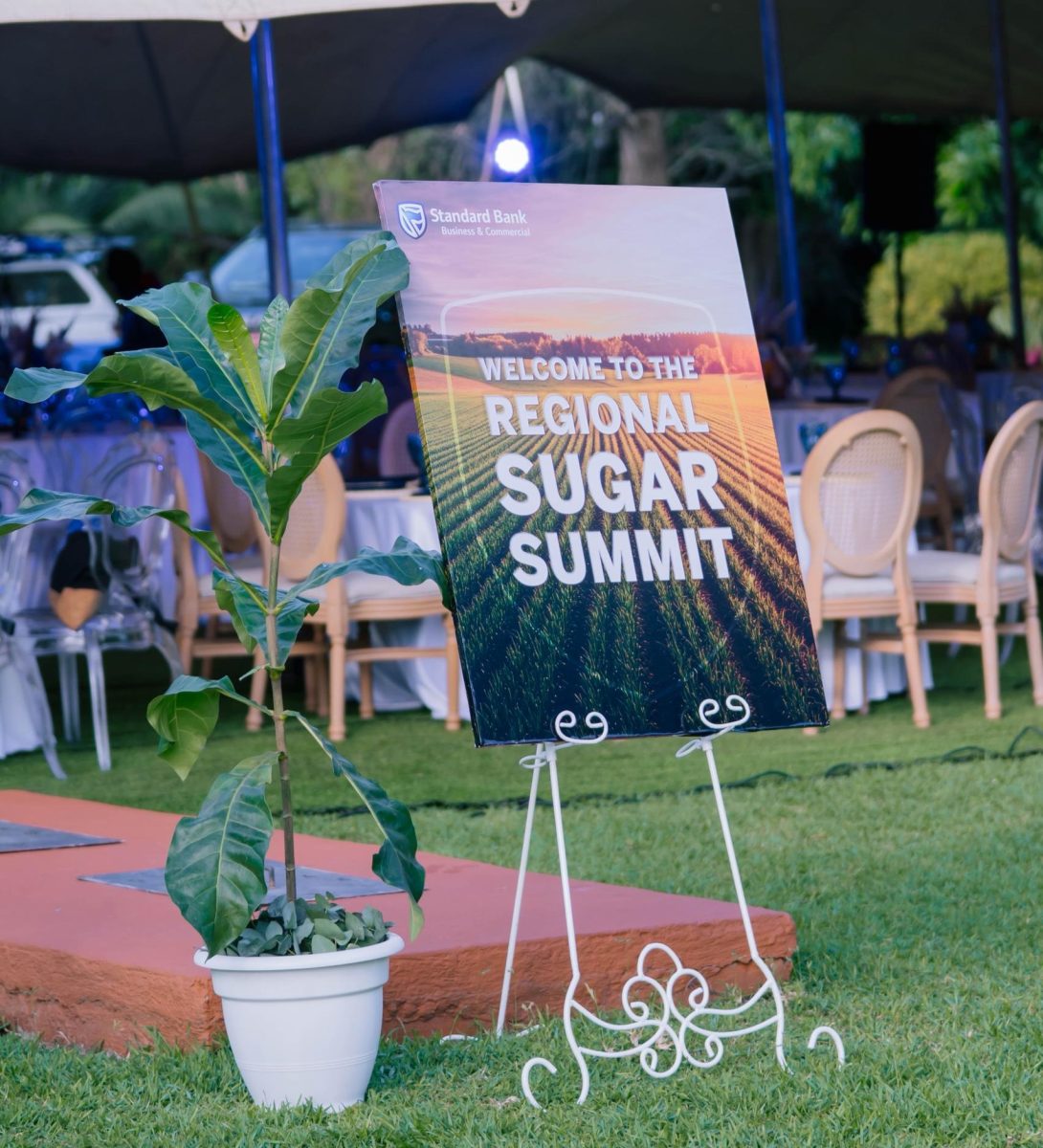
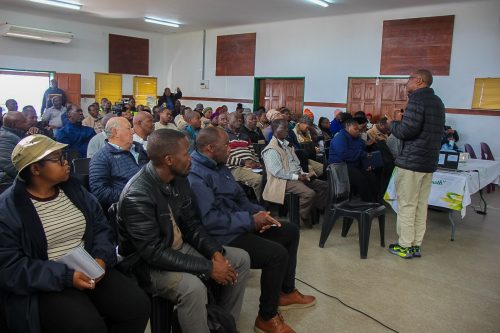
The conversations that unfolded at the Standard Bank Regional Sugar Summit held in May at Simunye Country Club highlighted an uncomfortable reality confronting the industry across Southern Africa. A projected regional sugar surplus of nearly two million tonnes, coupled with subdued global prices, rising fuel and fertiliser costs, and increasingly frequent climate shocks, is placing unprecedented pressure on producers.
For Eswatini, the stakes could hardly be higher.
According to figures presented by Eswatini Sugar Association Chief Executive Officer Banele Nyamane, the country produces approximately 640,000 tonnes of sugar annually, making it one of Africa’s most efficient sugar producers despite its relatively small geographical size. The industry ranks among the world’s most cost-efficient producers, contributes about a quarter of Eswatini’s export earnings and remains a major source of employment, directly and indirectly supporting thousands of households across the Lowveld and beyond.
Yet, like many commodity industries, sugar is increasingly exposed to forces beyond farmers’ control.
Global production has continued to expand, led largely by Brazil, India and Thailand, while demand growth has slowed in several developed markets due to changing consumer preferences, health campaigns and sugar-reduction policies. At the same time, international supply has remained strong, creating downward pressure on prices. The OECD-FAO Agricultural Outlook projects that future demand growth will increasingly come from developing economies, particularly in Africa and Asia, even as producers face greater competition and market volatility.

For growers in Eswatini, these global trends are colliding with domestic realities.
Production costs for small-scale growers are projected to increase from around E53,213 per hectare to more than E62,408, while climate variability has reduced average cane yields from approximately 100 tonnes per hectare to around 90 tonnes. Extended dry spells, erratic rainfall and destructive hailstorms have become increasingly common, forcing producers to invest more simply to maintain output.
For decades, success in the sugar industry depended largely on producing more cane and extracting more sugar.
Today, industry leaders argue that the future lies elsewhere.
Rather than viewing sugarcane purely as a source of sugar, companies are increasingly treating it as the foundation of a broader bio-economy capable of generating electricity, renewable fuels, industrial chemicals and other value-added products.
Perhaps the most visible transformation is taking place in energy production.
Bagasse—the fibrous residue left after sugar extraction—was once regarded largely as a milling by-product used to fuel boilers. Today, it has become a valuable renewable energy resource.
Ubombo Sugar is investing approximately E1.5 billion to expand its electricity generation capacity from 17 megawatts to 40 megawatts, allowing surplus renewable electricity to be exported into Eswatini’s national grid. Company executives revealed that energy generation already contributes close to 20 percent of corporate profits, demonstrating how renewable energy has evolved from a support function into a significant commercial enterprise.

The Royal Eswatini Sugar Corporation (RES) is pursuing similar opportunities through expanded cogeneration projects at its Simunye and Mhlume mills, which continue to rank among Sub-Saharan Africa’s best-performing sugar mills.
Beyond improving company profitability, increased electricity generation offers wider economic benefits by reducing dependence on imported power while strengthening the country’s energy security.
If electricity represents one pillar of the industry’s future, biofuels may represent another.
Molasses, long regarded as a secondary product of sugar production, is rapidly gaining strategic value. RES has already expanded production of Extra Neutral Alcohol used in pharmaceuticals, premium beverages, cosmetics and sanitiser manufacturing.
Attention is now shifting towards Sustainable Aviation Fuel (SAF), produced through the Alcohol-to-Jet pathway.
As international aviation comes under mounting pressure to reduce carbon emissions, demand for SAF is expected to grow significantly over the coming decades. Unlike conventional sugar exports, sustainable aviation fuel commands considerably higher international prices because airlines must increasingly comply with global decarbonisation requirements.
For Eswatini, the opportunity extends well beyond agriculture.
It represents potential entry into advanced manufacturing, clean energy and high-value export markets that are expected to expand as countries pursue net-zero emissions targets.
Government sees diversification as central to the industry’s future.
Addressing delegates during the summit, Minister of Commerce, Industry and Trade Manqoba Khumalo said Africa must move beyond exporting raw commodities and instead strengthen agro-processing and manufacturing across the sugar value chain.
He pointed to opportunities in ethanol production, pharmaceuticals, confectionery manufacturing, speciality sugars, sustainable packaging and other downstream industries capable of generating greater economic value than raw sugar exports alone.
The Minister further reaffirmed Government’s commitment to expanding market access through regional trade arrangements, including the Southern African Customs Union, the COMESA-EAC-SADC Tripartite Free Trade Area and the African Continental Free Trade Area (AfCFTA).
For Eswatini, whose economy has traditionally depended heavily on preferential export markets in Europe, the United Kingdom, the United States and Southern Africa, expanding regional trade could become increasingly important as Africa’s consumer markets continue to grow.
Yet diversification alone will not solve the industry’s challenges.
Access to finance remains one of the biggest constraints facing smallholder growers.
Many farmers operate on Swazi Nation Land and therefore lack conventional title deeds required as collateral for commercial loans. This has historically limited their ability to invest in irrigation systems, mechanisation and modern farming technologies.
Recognising these barriers, Standard Bank Eswatini used the summit to introduce financing models tailored specifically to the realities of sugar production.
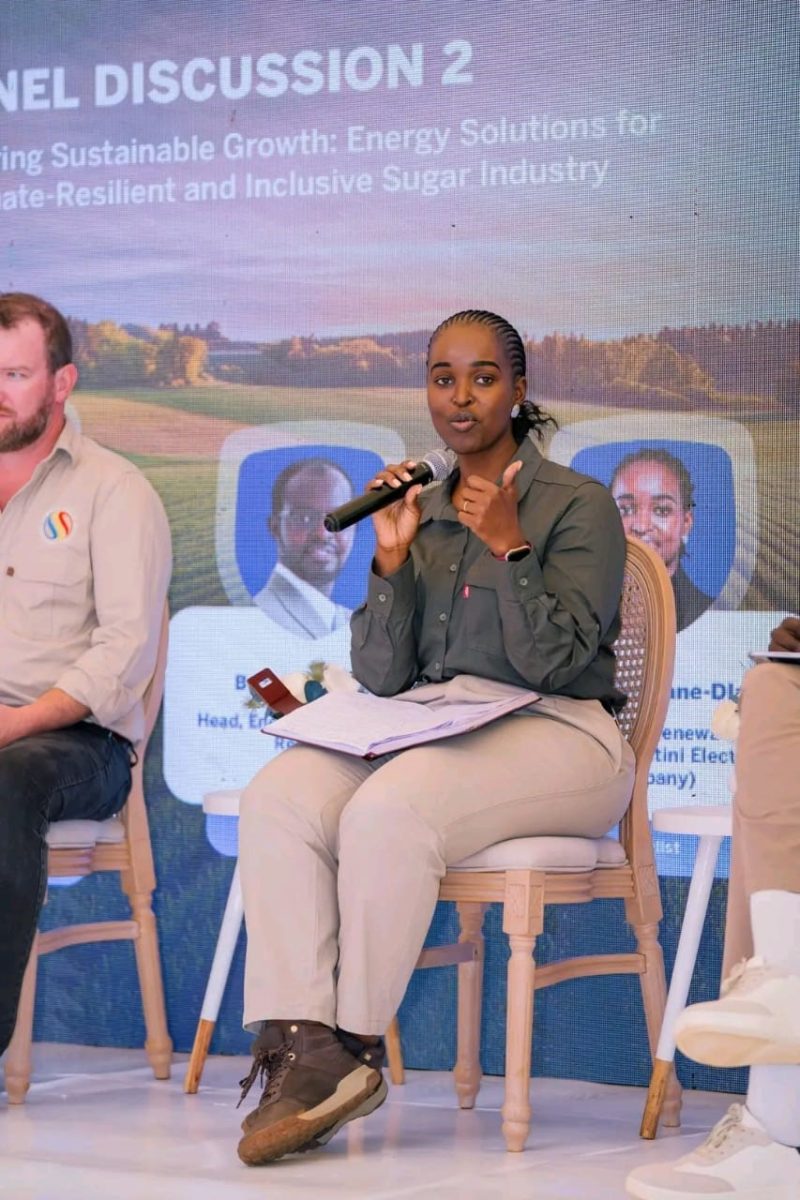
The bank unveiled digital credit solutions designed to speed up loan approvals using production history and milling contracts rather than lengthy manual assessments. It also introduced invoice discounting, allowing growers to access up to 80 percent of the value of their delivery invoices shortly after supplying cane to mills, improving cash flow between harvests.
Equally significant was the introduction of structured unsecured lending, where financing is secured through growers’ tripartite supply agreements with millers rather than physical property, making credit more accessible to farmers operating on communal land.
Specialised financing packages targeting precision agriculture, solar-powered irrigation systems, mechanisation and other climate-smart technologies were also announced as part of broader efforts to improve productivity and resilience.
Technology featured prominently throughout the discussions.
From satellite monitoring and artificial intelligence to precision irrigation and data-driven crop management, delegates agreed that digital innovation will increasingly shape the competitiveness of the regional sugar industry.
However, Royal Eswatini Sugar Corporation Managing Director Nick Jackson cautioned that technological progress alone would not guarantee success.
“The challenge we are facing with AI is the fact that we have all this technology and fantastic satellite stuff, but the difficulty is the shift with people. Technology is moving quickly; people are not,” he observed.
His remarks perhaps captured the broader challenge facing the industry.
Infrastructure can be built. Technology can be purchased. Finance can be mobilised.
But building the skills, confidence and institutional capacity needed to embrace change may ultimately determine whether the industry’s transformation succeeds.
The message emerging from the summit was therefore not that sugar is in decline.
Rather, it is that the traditional business model built almost exclusively on exporting raw sugar is reaching its limits.
The next phase of growth will depend on how successfully Eswatini converts sugarcane into a platform for industrialisation, renewable energy, advanced manufacturing and regional trade.
That transition will not be without challenges.
Climate uncertainty is likely to persist. Input costs remain volatile. International markets will continue to fluctuate. Competition from major global producers will remain intense.
Yet Eswatini also enters this new era with significant advantages: a highly efficient industry, established milling infrastructure, experienced growers, expanding regional trade opportunities and growing investment in innovation.
The country’s competitive edge may no longer depend solely on how much sugar it produces.
Increasingly, it will depend on how much value it can extract from every tonne of cane harvested.
The story of Eswatini’s sugar industry is therefore no longer simply about filling sugar bowls across the world.
It is about generating electricity, producing cleaner fuels, creating higher-value exports, supporting rural livelihoods and positioning one of the country’s oldest industries for a future where resilience, innovation and diversification matter as much as the sweetness of the crop itself.