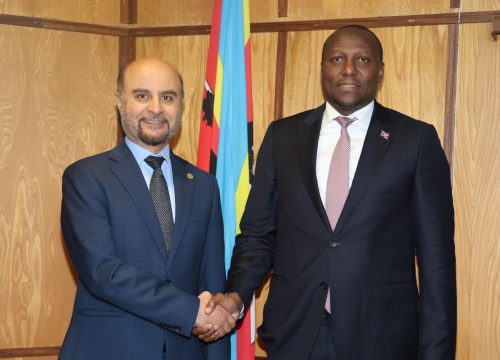
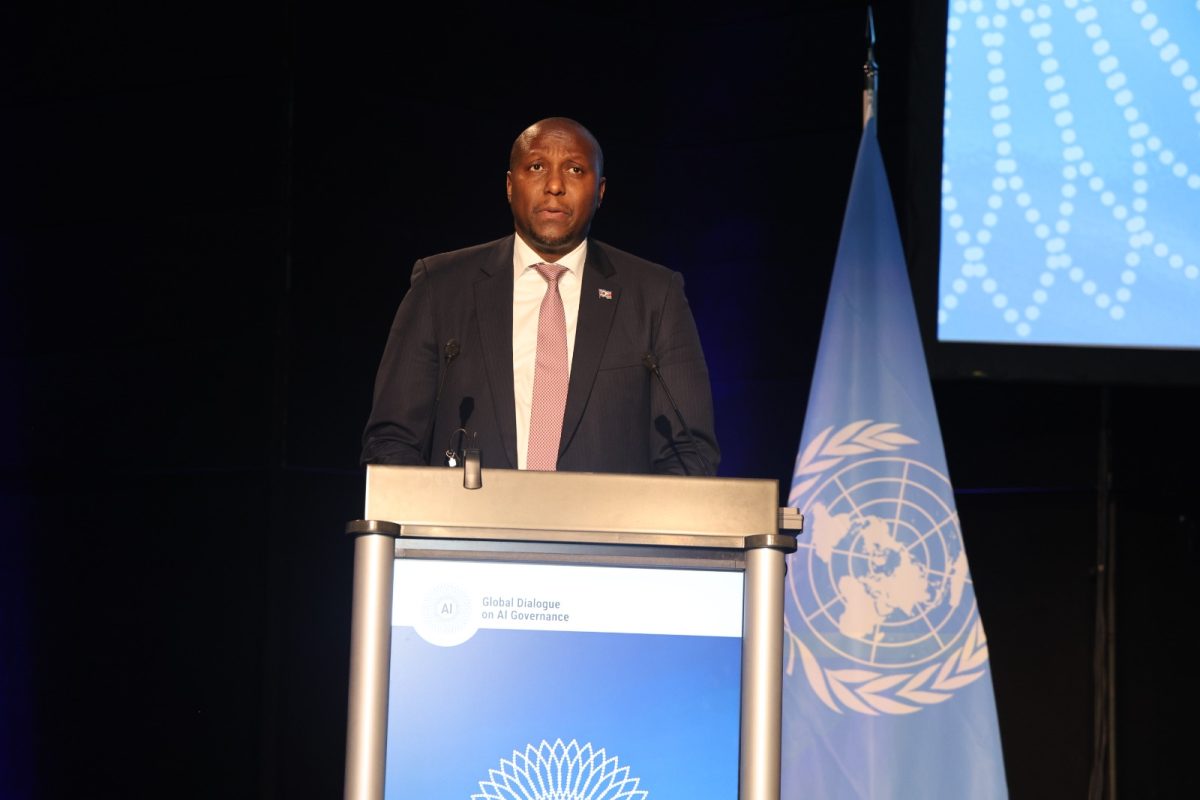
GENEVA — The success of artificial intelligence should not be measured by the sophistication of machines, but by whether a farmer can access better climate information, Prime Minister Russell Mmiso Dlamini told world leaders at the opening of the United Nations’ first-ever Global Dialogue on AI Governance in Geneva on 6 July 2026.
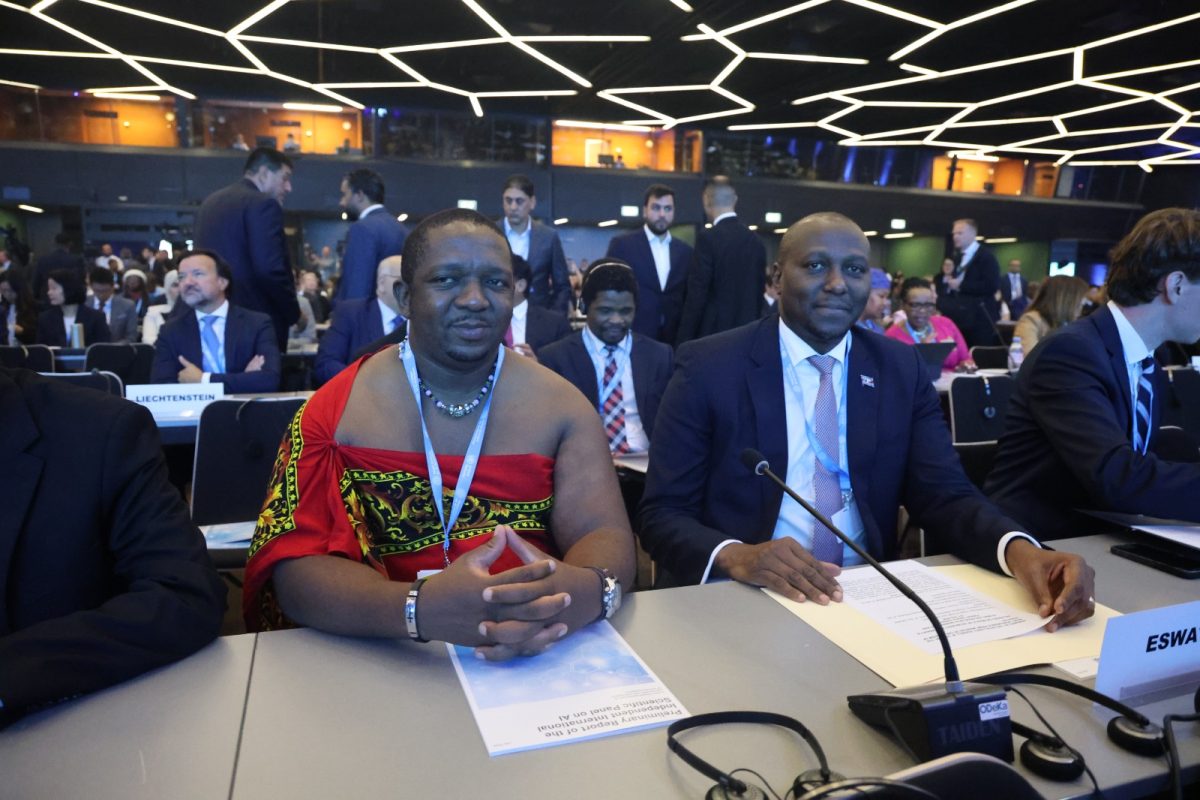
Delivering remarks on behalf of His Majesty King Mswati III at the two-day summit at Palexpo, the Prime Minister placed food security, climate resilience and rural livelihoods at the heart of Eswatini’s message to the international community — a deliberate signal that for small and developing states, the AI debate is not abstract. It is about production, services and survival.
“The promise of AI will not be measured by the sophistication of machines alone,” the Prime Minister said. “It will be measured by whether a farmer can access better climate information, whether a child can learn safely, whether a patient can receive better care, whether public services become more accessible, and whether nations can innovate without surrendering their values or sovereignty.”
A seat at the table — for every country
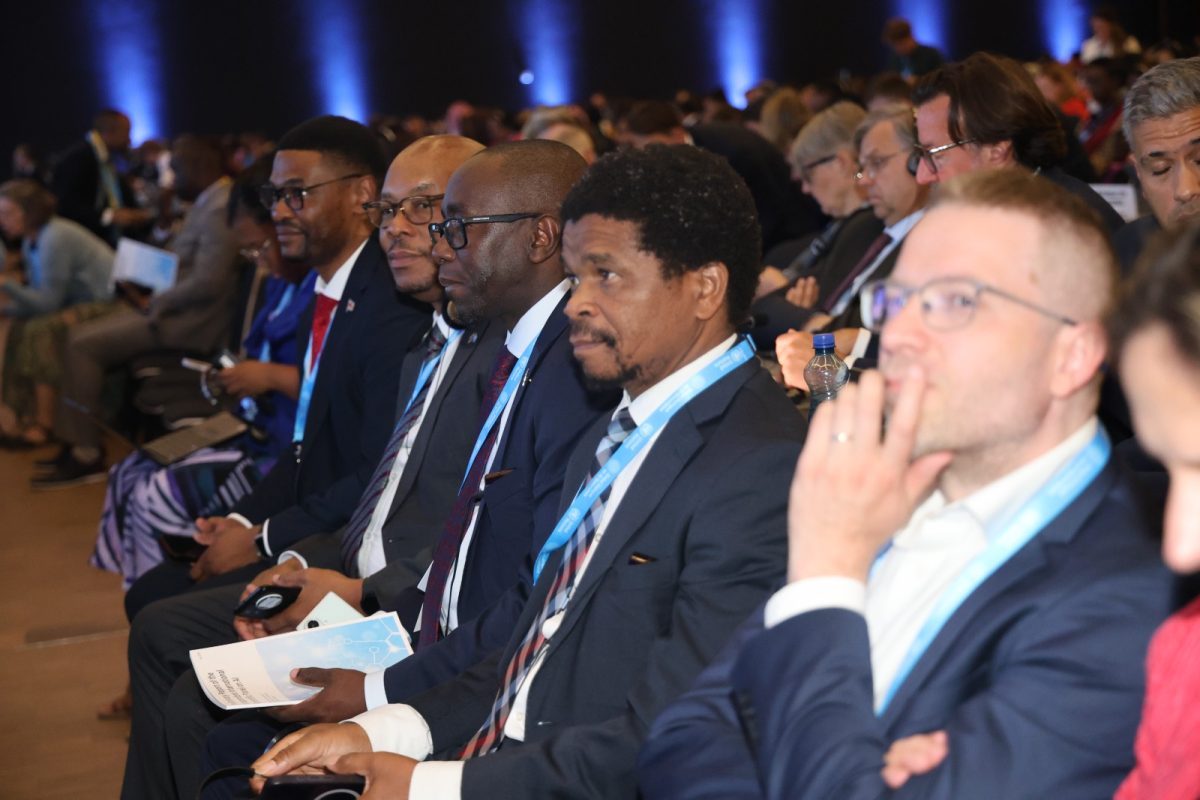
The Global Dialogue on AI Governance is the first international platform convened by the UN General Assembly where all 193 member states sit alongside the private sector, civil society, academia and the technical community to shape common approaches to governing artificial intelligence. It flows from the Global Digital Compact adopted at the 2024 Summit of the Future, with a second session scheduled for New York in May 2027.
The choice of co-chairs — the ambassadors of El Salvador and Estonia — was itself a statement: smaller states, not only the technological superpowers, are meant to have an equal voice in how AI is governed. That framing dovetailed directly with Eswatini’s intervention.
“We must not become mere consumers of technologies designed elsewhere, trained on realities unlike our own and deployed without regard to our development priorities,” the Prime Minister told the plenary. “Equitable growth in AI requires equitable capacitation.”
Global Context
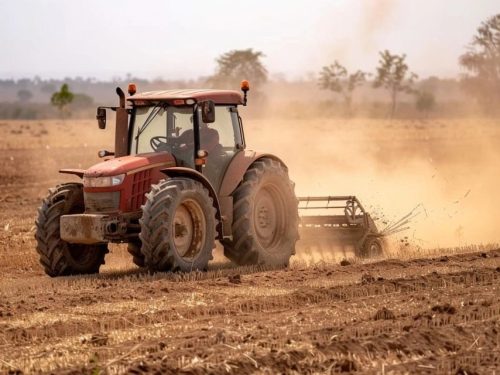
For Eswatini’s agricultural sector, the stakes the Prime Minister described are immediate. AI-driven tools are already reshaping how farmers worldwide access weather forecasting, pest and disease diagnostics, market pricing, irrigation scheduling and credit scoring. The question the Geneva summit is wrestling with is who those tools are built for — and whether smallholder farmers in Southern Africa will be served by them or bypassed altogether.
The Prime Minister argued that AI governance for countries like Eswatini “must begin with a simple principle: technology must serve people,” listing food security first among the practical needs AI must address, alongside healthcare, education, public administration, climate resilience, job creation and sustainable economic growth.
He also warned against a one-size-fits-all digital future. AI tools, data and development pathways, he said, “must be infused with cultural sensitivity and respect for different normative traditions, languages, social contexts and standards” — a point with direct relevance for agricultural extension services, where advice delivered in the wrong language, or built on foreign farming systems, routinely fails at the farm gate.
Eswatini’s own foundations
The Prime Minister pointed to the Kingdom’s National Fourth Industrial Revolution Strategy as the framework guiding what he called “responsible human-machine collaboration,” alongside investments in coding, data science and AI training for young people through national institutions of learning.
But he was equally direct about the limits of goodwill. “Voluntary principles are important, but they are not enough,” he said, calling for enforceable rules — nationally and across borders — with audits, remedies and assigned responsibilities, and stronger safeguards for privacy, cybersecurity and data protection.
He drew a firm line on human oversight: “AI systems must not self-regulate, nor should they be permitted to determine their own growth paths outside clear human authority.”
The protection of children received unusually strong emphasis for a heads-of-state forum. “No society should outsource childhood, learning or moral formation to machines,” the Prime Minister said.
A summit under warning lights
Eswatini’s intervention landed at a summit already sobered by science. The UN’s Independent International Scientific Panel on Artificial Intelligence presented its first report during the Dialogue, warning that AI capabilities are advancing faster than governments’ capacity to understand or regulate them. UN Secretary-General António Guterres used the opening to press for far-reaching global controls on the technology.
Geneva is hosting an unprecedented concentration of AI policy activity this week, with the Dialogue running alongside the World Summit on the Information Society Forum and the ITU’s AI for Good Global Summit — a signal that the world is attempting to move from talking about AI to governing it.
For Eswatini, the message carried home from Palexpo is a practical one: the Kingdom intends to shape the tools that will shape its farms, clinics, classrooms and public services — not simply receive them.
Agribusiness Media will continue tracking what the Global Dialogue’s outcomes mean for agriculture, agri-finance and rural digital services in Eswatini and the region.