

BY PHESHEYA KUNENE – EDITOR
SHISELWENI – Construction of the E2.6 billion Mpakeni Dam has reached 47% completion, with the Eswatini Water and Agricultural Development Enterprise (EWADE) confirming that the project remains on schedule for completion in 2028.
The dam, which forms part of Phase I of the Mkhondvo-Ngwavuma Water Augmentation Project (MNWAP), is expected to transform agriculture by irrigating up to 30 000 hectares of farmland from St Philips to Siphambanweni, while also improving domestic and industrial water supply in one of Eswatini’s most drought-affected regions.
EWADE Chief Executive Officer Dr Samson Sithole said the visible progress on site reflects more than infrastructure development, but a direct investment into farmers’ livelihoods and national food security.
“Progress you can see, impact you can feel. Every step forward on site represents more than construction. It is about creating opportunities, supporting livelihoods, and strengthening the backbone of our agricultural sector,” said Sithole.
He said reliable water access would unlock agricultural productivity, reduce dependence on rain-fed farming, and improve resilience against climate shocks that continue to affect smallholder and commercial farmers alike.
“With completion set for 2028, this dam will play a vital role in improving water access and unlocking long-term growth for the communities we serve. This is development that matters, practical, visible, and built for people,” he added.
The project is being implemented by EWADE with funding support from the Government of Eswatini and the African Development Bank, with PowerChina serving as the main contractor.
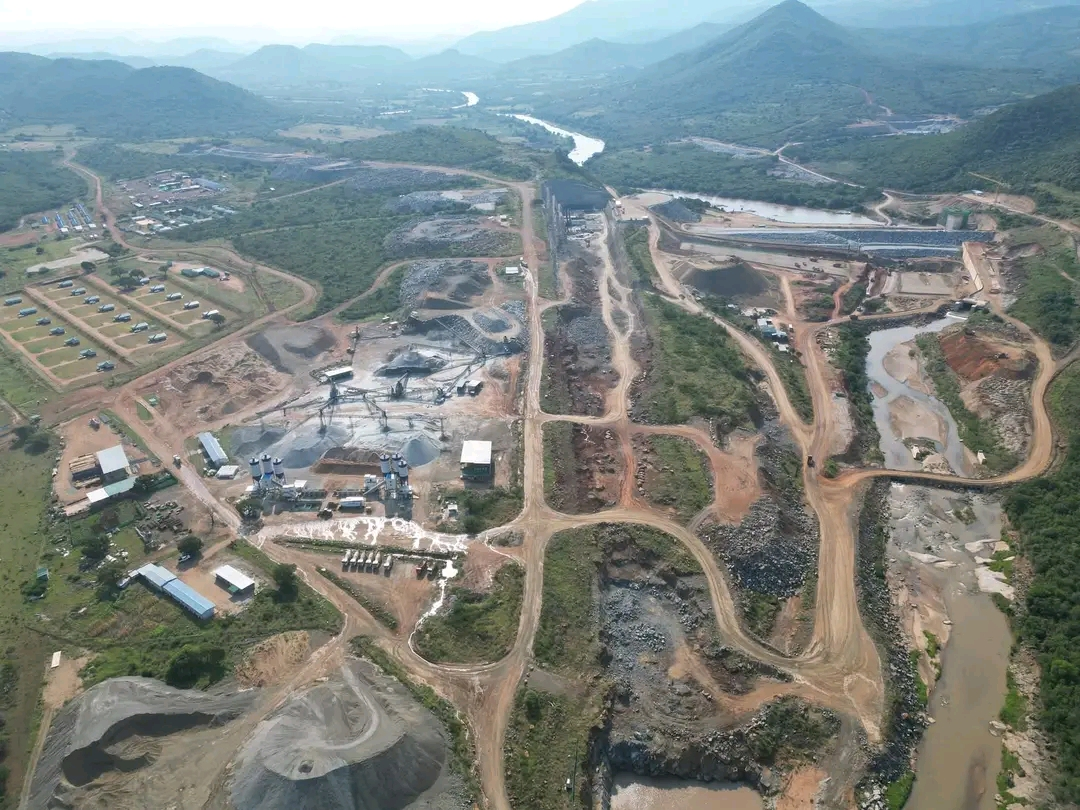
The site of Mpakeni Dam
His Majesty King Mswati III previously toured the project and described it as a strategic national investment that would strengthen food security, stimulate rural economic growth, and expand irrigation opportunities for emaSwati farmers.
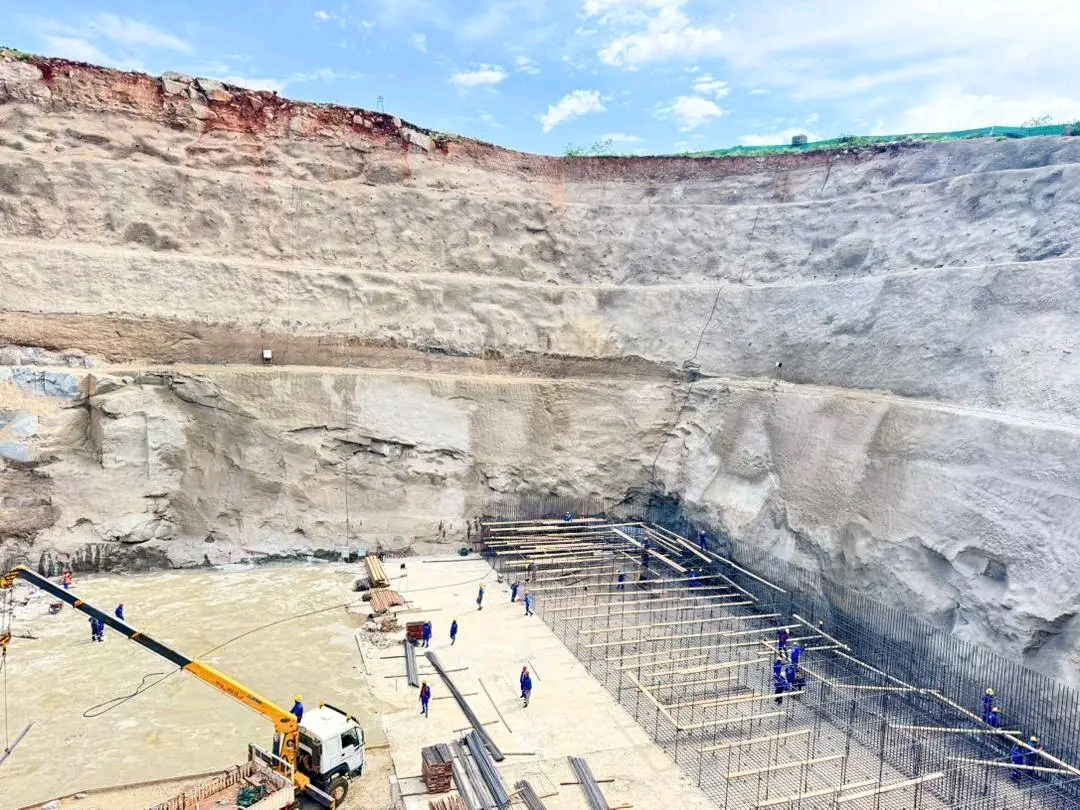
The dam structure includes a 52-metre-high clay-core rockfill embankment, a major spillway system, intake towers, and associated permanent access roads. Construction of the diversion channel was completed ahead of schedule in June 2025, allowing full dam wall construction to proceed.
The project has already created employment for more than 700 people, while 50 out of 114 affected households have been resettled into modern homes, supported by a dedicated E10 million livelihood restoration programme that includes backyard gardens, beekeeping, and agricultural support.
For farmers, the project arrives at a critical time.
Erratic rainfall, prolonged dry spells, and rising production costs have placed severe pressure on the agricultural sector, particularly on smallholder farmers who depend heavily on rain-fed production.
Eswatini National Agricultural Union (ESNAU) Chief Executive Officer Tammy Dlamini said the project represents hope for farmers who have struggled with unpredictable seasons and recurring drought losses.
“For farmers, water is not a luxury; it is production itself. Mpakeni Dam is the kind of long-term intervention agriculture has needed for years. Reliable irrigation means better yields, improved planning, reduced losses, and stronger income security for farming households,” said Dlamini.
He said the project would especially benefit crop farmers, horticulture producers, livestock farmers, and nursery operators who rely heavily on a consistent water supply for production and expansion.
“When irrigation improves, the entire value chain benefits. Nurseries will supply more plants, input suppliers grow, transport improves, markets expand, and rural economies become stronger. This is not just a dam, it is an agricultural engine,” he said.
Dlamini added that climate-smart agriculture could no longer be optional.
“We are dealing with changing weather patterns. Farmers must move from survival farming to planned production supported by irrigation, water harvesting, and modern systems. This project helps make that shift possible,” he said.
The Mpakeni Dam is also expected to support cotton, horticulture, and other high-value crop schemes while reducing dependence on imported food and improving national agricultural competitiveness.
For many in Shiselweni, the dam is no longer just a construction site; it is becoming a promise of stability. As concrete rises and water security draws closer, farmers are watching not just a dam being built, but the foundation of a more productive agricultural future.