

BY: PHESHEYA KUNENE | EDITOR
MANZINI – As the country seeks to modernise its agricultural sector, strengthen food security and attract more young people into farming, one organisation is quietly helping to cultivate the next generation of agricultural leaders, one classroom at a time.
The Eswatini Agriculture Teachers Association (ESATA) brought together more than 120 schools from across the country for the National Agriculture Quiz Competition 2026, an initiative designed not only to test agricultural knowledge but also to equip learners with critical thinking, problem-solving and practical skills needed in modern agriculture.
Hosted at Salesian High School, the competition attracted learners from primary, junior secondary (JC) and EGCSE levels, alongside officials from the Ministry of Agriculture, the Ministry of Education and Training, teachers, agricultural stakeholders and private sector partners.
Under the theme “Cultivating Knowledge for Sustainable Agriculture”, learners competed through written and oral rounds covering crop and livestock production, agribusiness, environmental sustainability, agricultural science and general agricultural knowledge.
The competition highlighted a growing recognition that agriculture is no longer simply about planting crops and raising livestock. It increasingly requires innovation, analytical thinking, business management and technical knowledge, skills that ESATA believes should be nurtured from an early age.
ESATA Chairperson Simo Mkhatshwa said the strong turnout demonstrated growing interest in agriculture among young people and reflected the commitment shown by schools and teachers across the country.
“We are encouraged by the number of schools that participated and the enthusiasm shown by learners. This competition is about more than winning prizes. It is about equipping young people with agricultural knowledge, building confidence and helping them understand the opportunities that exist within the agricultural sector,” said Mkhatshwa.
He congratulated all learners who participated, as well as the schools and teachers who continue to support agricultural education.
“The future of agriculture depends on how we prepare young people today. We want learners to see agriculture not only as a school subject but as a career, a business and a solution to many of the challenges facing our country. Next year, we intend to make the competition even bigger, starting from regional competitions and progressing to the national finals.”
The level of competition demonstrated just how much agricultural knowledge exists within Eswatini’s schools. In both the primary and JC categories, finalists finished level on points, forcing organisers to introduce tie-breaker rounds before winners could be determined.
The closely contested finals reflected not only academic excellence but also the growing quality of agricultural education being delivered in schools.
Among the standout performers was Sicelo Mavuso of Moyeni High School, who won the EGCSE category after excelling in both the written and oral rounds. His victory follows the school’s recent success in another national agriculture competition focused on maize, bean production and farming techniques.
Mavuso scored 70 percent to secure first place ahead of Sindiswa Shabangu of St. Anne’s High School on 65 percent and Samukelisiwe Malinga of St. Christopher’s High School on 60 percent.
Speaking after receiving his award, Mavuso attributed his success to hard work, faith and a passion for agriculture.
“I thank God for this achievement. I worked hard and prepared thoroughly for the competition. Agriculture is something I genuinely enjoy, and I encourage other learners to focus on their studies and pursue what they are passionate about,” he said.
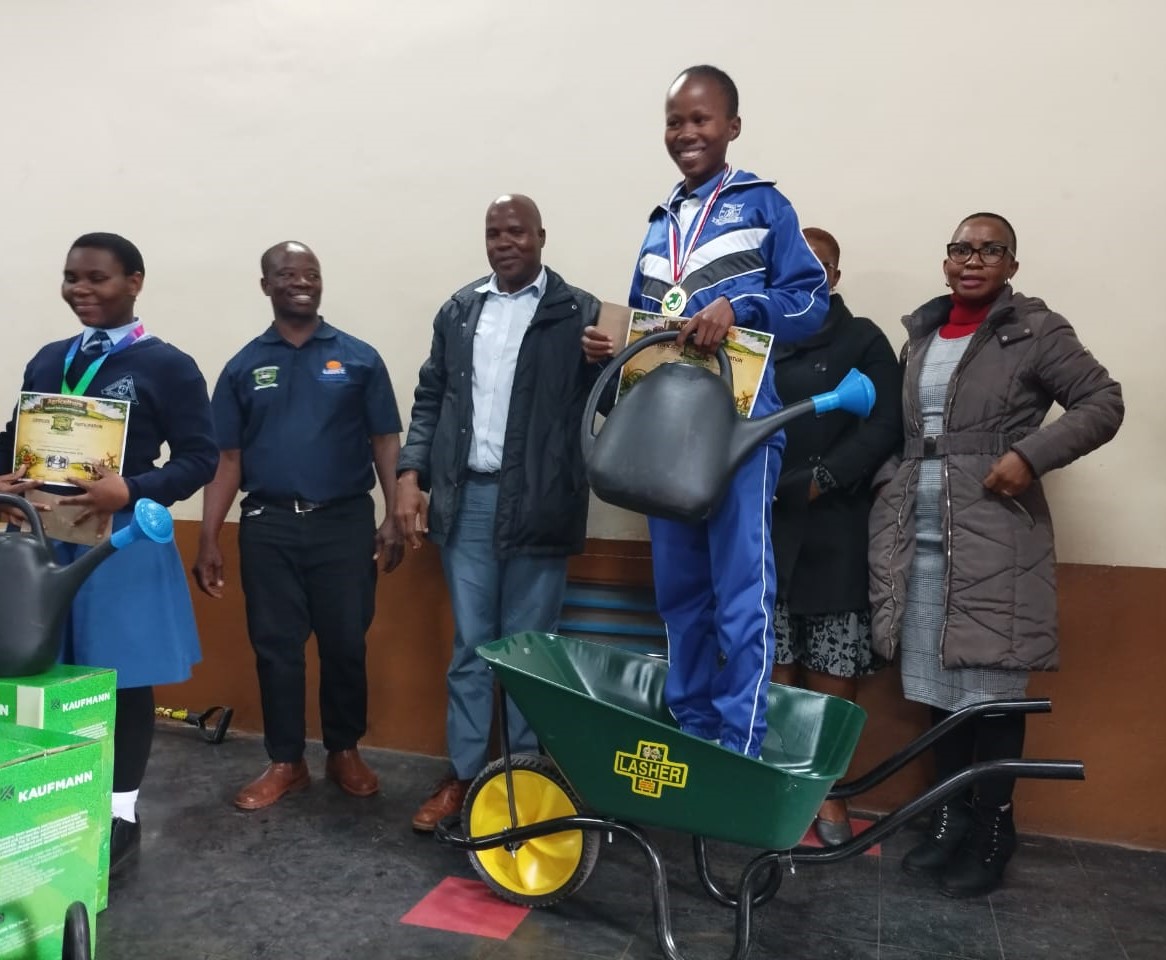
In the JC category, Nkosenhle Mamba of Shewula High School emerged victorious, followed by Lindelwa Shoba of Hillside High School and Siphesihle Vilakati of Mjingo High School.
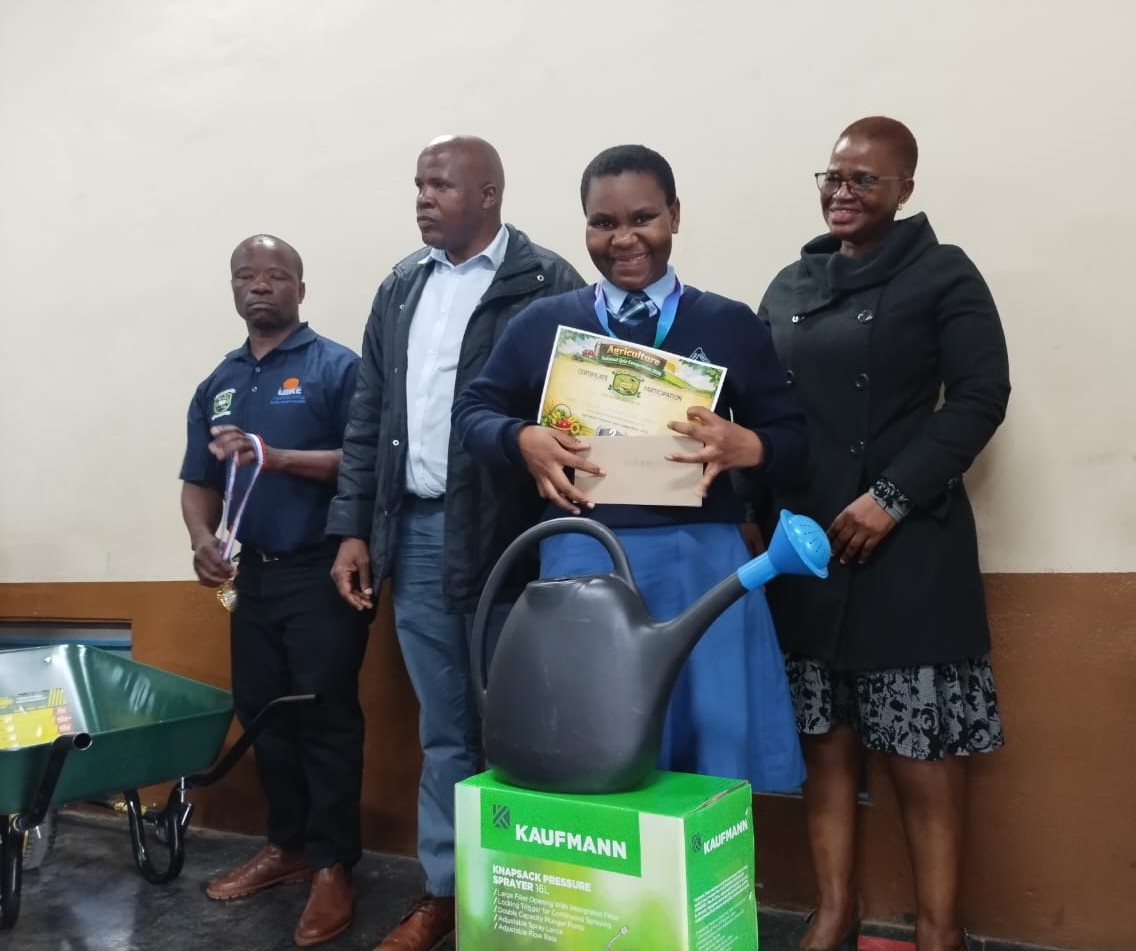
Mamba said dedication and hard work had helped her secure the national title while proudly representing the Lubombo Region.
“I worked hard for this competition and I am happy that my efforts have paid off. I encourage other learners to take their studies seriously because education can open many opportunities,” she said.
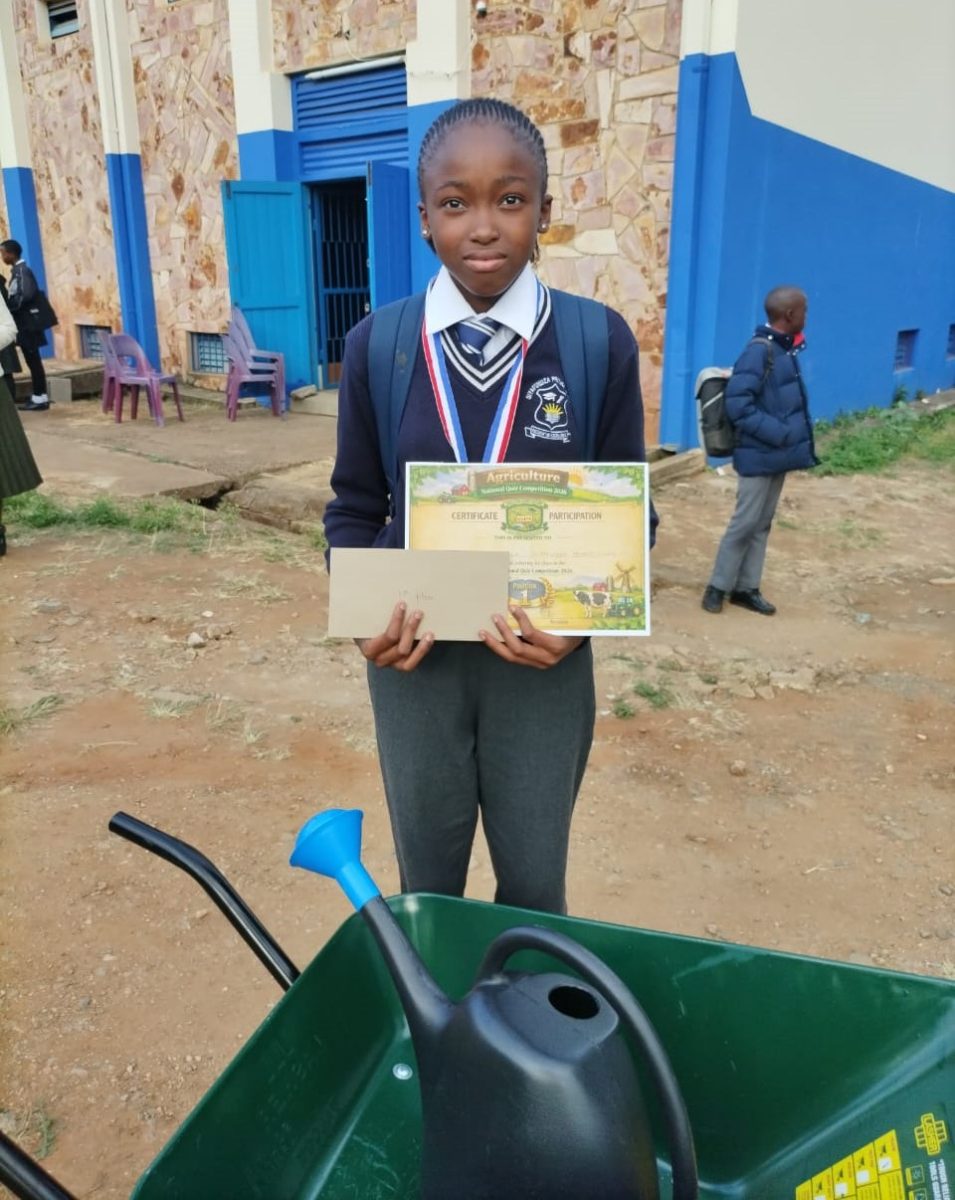
The primary school category was won by Aphiwe Dlamini of Siyafundza Private Primary School, ahead of Miles Ngwenyama of Siteki Nazarene and Phiwayinkhosi Tsabedze of Manzini Nazarene Practising School.
Dlamini said months of preparation had culminated in a memorable victory.
“I studied day and night for this competition and I am proud to have represented my school well. This shows that hard work produces results,” she said.
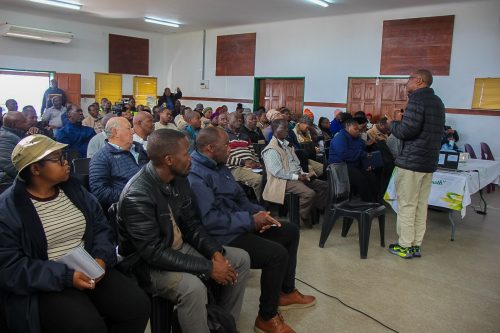
Throughout the day, the atmosphere inside the packed hall reflected a growing enthusiasm for agriculture among young people. Learners confidently tackled questions requiring technical knowledge, problem-solving abilities and quick thinking.
Officials and educators repeatedly encouraged learners to view agriculture as a commercial enterprise capable of creating employment, generating income and contributing to national development.
The prizes awarded reinforced that message.
Winners received wheelbarrows, watering cans, spades and other farming tools alongside certificates, medals and Mr Price vouchers ranging from E100 to E200. Many learners and teachers expressed surprise and appreciation at the scale of the rewards, saying they had not expected such valuable prizes.
Agricultural input suppliers and retailers, including Khuba Traders and Arrow Feeds, were among stakeholders supporting the initiative, reflecting growing private-sector interest in agricultural education and youth development.
The practical nature of the prizes was intentional. Rather than rewarding learners with symbolic gifts alone, organisers sought to place tools directly into the hands of young people who may one day become farmers, agripreneurs and agricultural professionals.
The role of ESATA in this process extends far beyond organising annual competitions.
The association has for years worked to strengthen agricultural education in schools by supporting agriculture teachers, promoting innovation in agricultural learning and creating platforms where learners can apply classroom knowledge in practical and competitive environments.
Agricultural education specialists have long argued that exposing learners to agriculture at a young age strengthens food literacy, improves problem-solving skills and increases the likelihood of youth participation in farming and agribusiness. International research by organisations such as the Food and Agriculture Organization (FAO) has consistently highlighted agricultural education as an important tool for building future food security and developing skilled agricultural workforces.
For Eswatini, where agriculture remains a vital contributor to livelihoods, employment and economic activity, such initiatives carry significant long-term value.
The Ministry of Agriculture continues to promote youth participation in farming as part of efforts to modernise the sector, improve productivity and strengthen food security. Similarly, the Ministry of Education and Training has increasingly emphasised practical, skills-based learning that prepares learners for both employment and entrepreneurship.
The ESATA National Agriculture Quiz Competition sits at the intersection of those national priorities.
It transforms agriculture from a classroom subject into a pathway for innovation, opportunity and enterprise.
As learners left the competition carrying medals, certificates and farming tools, they also carried something equally valuable: a deeper understanding of agriculture’s role in shaping the country’s future.
The competition may have crowned a handful of winners, but its broader achievement was demonstrating that Eswatini’s next generation of farmers, agripreneurs, researchers and agricultural leaders is already taking shape in classrooms across the country.