
BY: PHESHEYA KUNENE | EDITOR
MANZINI – A state-backed irrigation and input support programme is accelerating smallholder commercialisation in Eswatini, with measurable gains in output, revenue, and rural incomes.
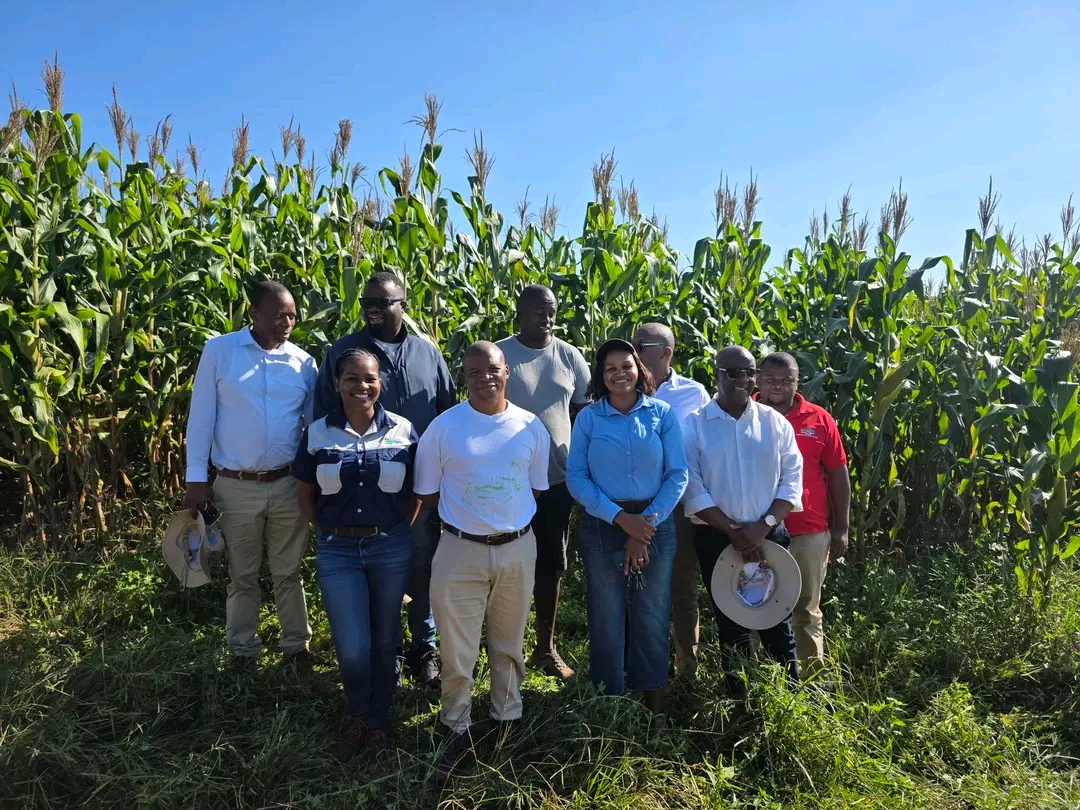
Fresh data from the Eswatini Water and Agricultural Development Enterprise (EWADE) shows that 13 farmers in Sigangeni have planted 85.5 hectares under the Hamba Ubuye Commercial Maize Project, backed by more than E840,000 in inputs.
The cluster is projected to deliver 342 metric tonnes of maize, generating over E2.1 million in revenue, a sharp illustration of how targeted financing and technical support are reshaping smallholder productivity.
The figures reflect a broader structural shift. Across the country, EWADE-supported clusters are moving farmers from subsistence to commercially viable production units, anchored on irrigation access, input financing, and coordinated market linkages.
Smallholder farmers are now playing a direct role in lifting national output, as grouped production allows them to pool resources, access mechanised support, and improve economies of scale in both planting and harvesting.
EWADE Chief Executive Officer Dr Samson Sithole said the programme was designed to unlock productivity while building a sustainable agricultural base.
“What we are seeing is a transition from subsistence to structured, market-oriented farming. Through targeted support, farmers are able to increase yields, improve quality, and participate meaningfully in the value chain,” he said.
He added that the cluster model was central to improving efficiency and scale.
“By organising farmers into clusters, we are able to optimise input distribution, strengthen technical support, and enhance market coordination. This improves both productivity and profitability at farmer level,” said Sithole.
Evidence from other clusters reinforces the trend. In Gege, 26 farmers cultivating 169 hectares under the same programme are expected to produce 676 metric tonnes, with projected revenues exceeding E4.25 million. In Sicunusa, eight farmers, including youth participant Mr Johnson, have planted 207 hectares with expected output of 828 metric tonnes, translating to over E5.2 million in potential earnings.
For farmers on the ground, the impact is tangible. One beneficiary from the Gege cluster said access to financing and coordinated support had fundamentally changed their operations.
“Before this programme, production was limited and uncertain. Now we have inputs on time, technical guidance, and a clear market. It has improved both our yields and our income,” the farmer said.
The Hamba Ubuye initiative, structured as a revolving fund, provides inputs upfront and allows repayment post-harvest, ensuring continuity and scale across seasons. Since its launch, the programme has expanded significantly, now supporting hundreds of farmers and covering thousands of hectares nationally.
Complementing this is the Smallholder Agricultural Productivity Enhancement and Marketing Project (SAPEMP), another EWADE-led initiative targeting rural transformation. With a budget of approximately E800 000, SAPEMP has already reached over 40 chiefdoms, focusing on capacity building, market access, and value chain integration for smallholder farmers.
The combined effect of these programmes is beginning to register at sector level. By strengthening irrigation infrastructure, improving access to inputs, and linking farmers to formal markets, EWADE is reducing production risk while increasing output consistency, key constraints that have historically limited Eswatini’s agricultural potential.
Analytically, the model addresses three persistent bottlenecks: capital access, technical inefficiency, and fragmented market participation. By resolving these simultaneously, the programme is not only raising yields but also improving farm economics and rural liquidity.
With over 155 000 emaSwati already impacted, more than half of them women, the initiative is also reshaping the demographic profile of agriculture, drawing in youth and formalising participation in the sector.
As Eswatini pushes to reduce maize imports and strengthen food security, EWADE’s cluster-based approach is emerging as a central pillar in the country’s agricultural strategy, turning smallholder farming into a more predictable, scalable, and commercially viable enterprise.