

BY: PHESHEYA KUNENE | EDITOR
MBABANE – Government has moved to calm nerves over surging fuel prices, insisting the situation remains under control, even as producers warn of tightening cashflows, shrinking margins, and rising operational risk across Eswatini’s agricultural value chain.
In recent public remarks, Minister of Finance Neal Rijkenberg acknowledged the pressure stemming from global oil market volatility but stressed that government interventions were designed to cushion the economy from severe shocks.
“We are actively managing the impact of global fuel price increases through targeted interventions, including the strategic use of our fuel cushion. The intention is to ensure stability in the economy and avoid sudden shocks that would disrupt businesses and households,” the minister said in one of his economic update briefings.
His comments come as diesel prices, now hovering around E25 per litre, continue to strain production systems, particularly in agriculture where fuel is a foundational input across land preparation, irrigation, processing, and distribution.
On the ground, however, the pressure is already acute.
In Mbabane’s Sidvwashini Industrial Sites, Droxford Foods founder Dr Hlongwane said the volatility in fuel pricing was creating operational uncertainty that extends far beyond transport costs, directly affecting procurement strategy, pricing decisions, and business sustainability.
“The constant movement in fuel prices creates uncertainty in how we plan. You limit how much stock you bring in because prices might drop, but buying in smaller volumes is more expensive per unit. That immediately raises your cost base,” he said.
He explained that smaller processors, unlike larger firms with storage capacity, are unable to absorb cost shocks over time.
“Bigger players can hold stock and stabilise their pricing. As a small producer, you do not have that luxury. You are forced to either reduce margins or operate at break-even just to retain customers. That is not sustainable,” he said.

The consequences, he added, are structural.
“When margins collapse, cashflow becomes constrained. Once cashflow weakens, everything is affected, salaries, operations, growth. If that continues, you become unattractive to financiers. At that point, the business is at risk,” he said.
Dr Hlongwane further pointed to the compounding effect of fuel across the value chain.
“It is not just procurement. Transport costs rise, logistics costs rise, everything escalates simultaneously. The effect is exponential,” he said.
A similar pattern is emerging at farm level.
Businesswoman, farmer and processor Sonia Paiva said fuel increases were directly eroding profitability while constraining expansion across farming operations.
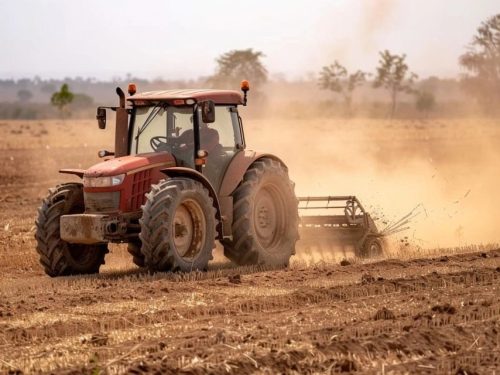
“The increase in fuel significantly raises production costs, from land preparation and irrigation to transporting inputs and produce. This reduces margins and in some cases forces us to scale down or increase prices, which affects competitiveness,” she said.
She noted that the impact extends beyond immediate costs into longer-term viability.
“Fuel price hikes increase the cost of running machinery and irrigation systems. At the same time, suppliers adjust their prices upward. The combined effect is that overall production becomes more expensive, profitability declines, and growth becomes limited,” she said.
Paiva warned that sustained cost pressure could slow investment across the sector.
“Over time, this reduces the ability to reinvest, expand operations, and build resilience. It becomes a cycle that is difficult to break,” she said.
The Ministry of Agriculture has acknowledged the risk, particularly as winter production intensifies. Irrigation-dependent crops such as vegetables are especially exposed, with diesel-powered pumping systems driving up input costs at a critical stage of the season.
Principal Secretary Sydney Simelane recently noted that fuel inflation has direct implications for national output.
“When fuel costs rise at this scale, the entire cost structure of farming shifts. Farmers respond by reducing planting area or input use, and that directly affects yields and overall production,” he said.
Beyond production, the pressure is feeding into processing and market dynamics.
Eswatini’s agro-processing segment, including emerging value-addition enterprises like Droxford Foods, sits at the intersection of import costs and domestic supply constraints. Rising fuel prices increase the cost of importing raw materials while simultaneously raising the cost of distributing finished goods.
The result is a narrowing of margins across the entire chain.
Economically, the implications are broader still. Fuel is embedded in every stage of the food system, from farm inputs to retail distribution. As costs rise, upward price adjustments become inevitable, raising concerns about food affordability and inflation.

Government’s E334 million intervention through the Strategic Oil Reserve Fund has provided temporary relief. Yet producers argue that structural exposure to imported fuel leaves the sector vulnerable to recurring external shocks.
For now, the official position remains one of control and caution against panic. But at farm and factory level, the signals are less reassuring. With global oil markets still volatile and further regional price adjustments expected, Eswatini’s agricultural sector is entering the winter season under mounting cost pressure, where the margin for error is rapidly narrowing.