
BY: PHESHEYA KUNENE | EDITOR
MANZINI — Eswatini’s sugar industry has placed the upcoming Standard Bank Regional Sugar Summit at the centre of its strategic recalibration, signalling a shift from dialogue to decisive action as cost pressures, climate volatility, and global market uncertainty converge on one of the country’s most critical export sectors.
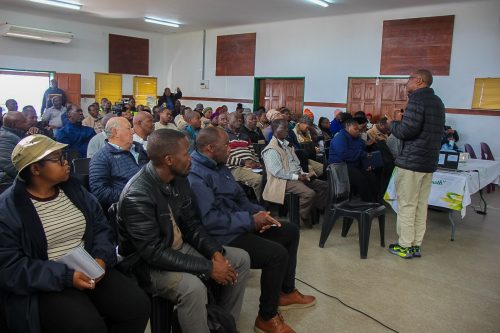
With the summit set for Friday at Simunye Country Club, industry leaders are positioning the gathering not merely as a convening platform, but as a high-level intervention point for a sector that now finds itself at an inflection moment.
At the core of that positioning is Banele Nyamane, Chief Executive of Eswatini Sugar, who framed the summit as both a diagnostic exercise and a forward-looking strategy session for a regional industry under strain.
Nyamane indicated that the significance of the summit lies in its ability to convene decision-makers across the value chain at a time when the operating environment has become structurally more complex and less predictable.
“Eswatini Sugar looks forward to engaging with those who will be attending the summit, both domestic and regional, to discuss matters that affect the sugar industry. This will also be a great opportunity to learn from those that will be in attendance,” he said, underscoring the dual imperative of collaboration and knowledge exchange.
His remarks reflect a broader industry reality. Eswatini, the fourth-largest sugar producer in Africa and a top-ten net exporter globally, remains deeply integrated into regional and international markets. The country produces between 600 000 and 700 000 tonnes of sugar annually, with over 70 percent destined for export markets, making competitiveness and cost efficiency non-negotiable.
Yet those fundamentals are under increasing pressure.
Nyamane pointed to a tightening cost structure, where input inflation, particularly fuel and energy, is steadily eroding margins across the value chain, from cane production to milling and export logistics.
“Sugar producers are mainly affected by high production costs, climate variability which affects the sugarcane crop and yields, as well as global sugar price volatility,” he said.
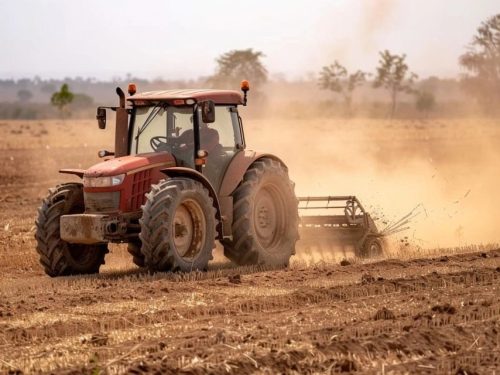
In recent months, the escalation of fuel prices has emerged as a central fault line. With diesel powering irrigation systems, haulage, and processing operations, the industry is confronting a cost environment in which efficiency gains are struggling to keep pace with input inflation.
“Fuel price increases put cost pressure on the industry, as several operations rely on fuel as an input. It therefore requires players to adapt their operations to remain viable,” Nyamane added, pointing to an industry increasingly forced into operational recalibration.
Beyond cost pressures, the summit is expected to interrogate a deeper structural question, how to reposition the sugar industry within a rapidly evolving regional and global trade architecture.
Nyamane stressed that regional collaboration is not simply advantageous, but essential for scaling value addition and unlocking new market opportunities.
“As a key sugar producer and exporter in the region, it is important for the industry to understand the landscape and dynamics in the region. Collaboration with regional players allows for growth through value-addition and for the development of regional value chains,” he said.
That emphasis aligns closely with the broader agenda of the summit, which is anchored on value chain integration, market diversification, and the alignment of finance with productivity.
From a financial perspective, the role of capital is expected to dominate proceedings.
Nyamane highlighted the importance of structured financing in bridging the gap between production potential and actual output, particularly for both smallholder and large-scale growers operating under tightening liquidity conditions.
“With Standard Bank, a key financier as the host, industry players should be able to learn of structured financing that is available for both small and large-scale operations. It would be worthwhile to appreciate the value of a productivity-finance nexus, and how developing value chains can unlock potential for long-term sustainability,” he said.
This framing places financing not as a peripheral issue, but as a central lever for transformation, especially in a sector where capital intensity, infrastructure demands, and climate risks are rising simultaneously.
For Mvuselelo Fakudze, Chief Executive of Standard Bank Eswatini, the summit represents a deliberate attempt to align capital with strategy, and strategy with outcomes.
Fakudze described the gathering as a catalyst designed to unlock efficiencies and strengthen linkages across the sugar ecosystem.
“The sugar industry is not merely a commodity sector, it is a powerful engine for inclusive development. This summit is designed to unlock the full potential of the value chain by fostering the collaboration and innovation required to thrive in a shifting global environment,” he said.
His remarks reflect the bank’s broader positioning as a facilitator of sectoral transformation, particularly through cross-border financing structures and integrated value chain solutions.
Crucially, Fakudze located the importance of the summit beyond balance sheets and production metrics, pointing instead to its socio-economic implications.
“Stronger collaboration in the sugar sector supports stable livelihoods for farmers, improved incomes for smallholder growers, and sustained employment across the value chain. For emaSwati, this platform enables high-level decisions that strengthen household resilience, drive rural development, and enhance both food and energy security,” he said.
This linkage between agriculture, livelihoods, and macroeconomic stability is particularly pronounced in Eswatini, where the sugar industry contributes approximately 4.6 percent to GDP and remains the largest private sector employer, supporting thousands of households across rural communities.
As the sector prepares to converge in Simunye, expectations are increasingly anchored not in rhetoric, but in delivery.
The industry is seeking clarity on how to navigate a tightening cost environment, how to leverage regional trade frameworks such as the African Continental Free Trade Area, and how to transition toward a more diversified, value-added production model that is less exposed to commodity price cycles.
What emerges from the summit will therefore be measured less by declarations and more by the extent to which it produces actionable pathways, particularly in financing, technology adoption, and market access.
For Eswatini’s sugar industry, the stakes are unambiguous.
The convergence of rising input costs, climate risk, and global competition is forcing a strategic reset. The Standard Bank Regional Sugar Summit, by design or necessity, now carries the weight of that transition.
Whether it delivers the blueprint for a more competitive and integrated regional sugar economy will define not only the trajectory of the sector, but also its continued role as a cornerstone of Eswatini’s economic architecture.