
BY PHESHEYA KUNENE
MANZINI – Agriculture feeds 70 percent of rural households in Eswatini but contributes just 7 percent to GDP, leaving the sector vulnerable to climate shocks.
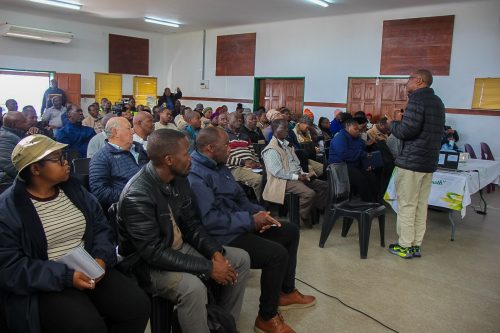
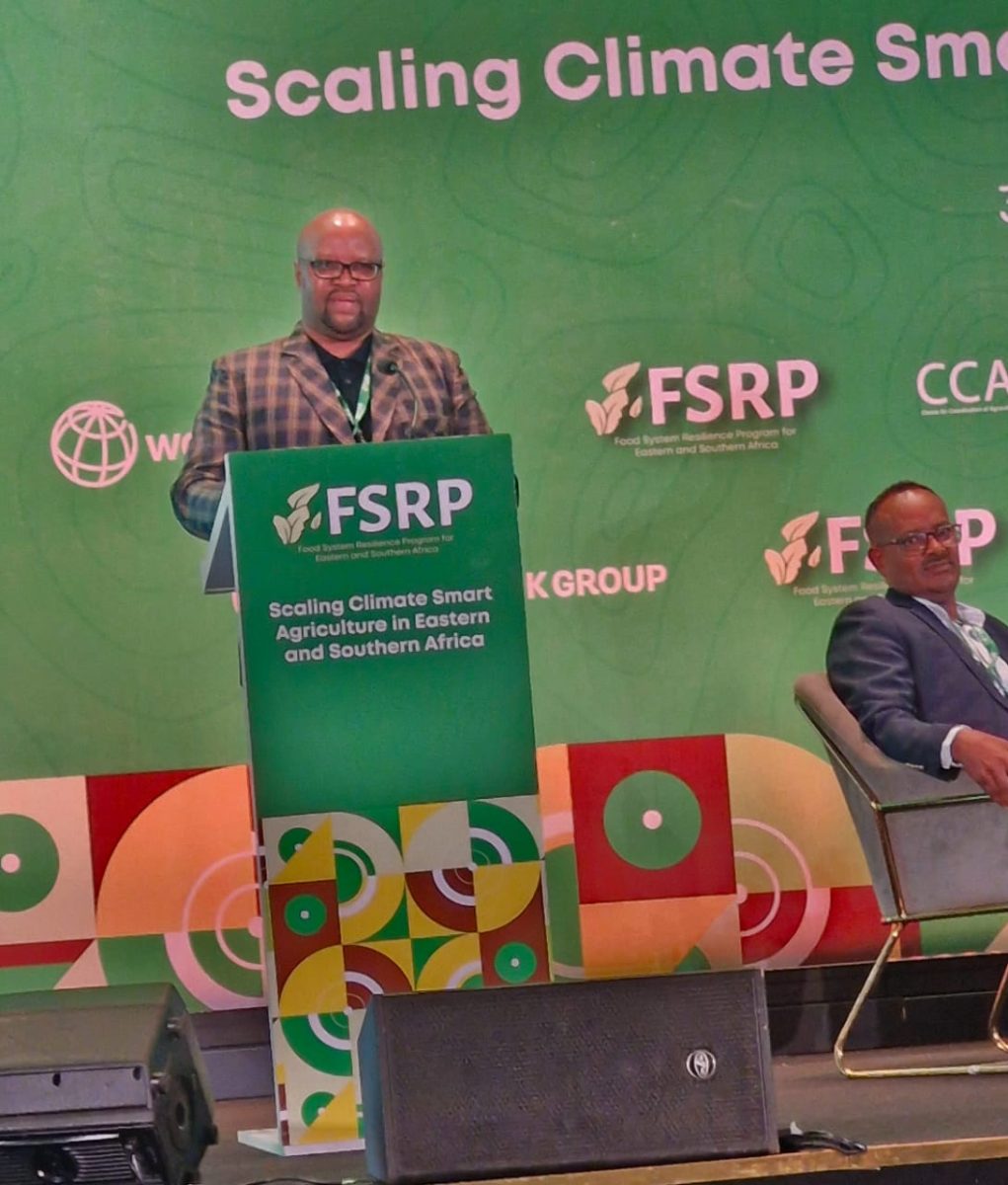
At the CSA Connect Africa dialogue, CCARDESA Executive Director Professor Cliff Dlamini called for a bold three-step strategy to embed Climate-Smart Agriculture across policies, farms, and communities.
Speaking alongside delegates from the World Bank and IGAD, Professor Dlamini said Eswatini, heavily reliant on rain-fed smallholder farming, must accelerate efforts to strengthen resilience and productivity.
He outlined three critical scaling mechanisms: scaling up, scaling out, and scaling deep.
“Scaling up anchors climate-smart practices in policy and institutions. Scaling out spreads proven solutions to more farmers and communities. Scaling deep changes mindsets and cultural practices. All three are vital for real transformation,” he said.
Agriculture at a Crossroads
While agriculture remains central to livelihoods, its GDP contribution has declined over the last two decades amid economic shifts and climate pressures. Around 13.8 percent of the formal labour force works in agriculture, with many more depending on subsistence farming on Swazi Nation Land.
Climate variability, including erratic rains and prolonged droughts, has worsened food insecurity. Nearly 29 percent of the population faces severe food shortages, and child malnutrition rates remain high. Smallholder farmers struggle with limited access to financing, irrigation, and modern technology, highlighting the need for national programmes aligned with regional and international climate finance instruments.
Financing Resilience
Professor Dlamini stressed that predictable financing is key to scaling CSA in Eswatini.
“Transforming agrifood systems requires long-term, reliable finance. Government commitment through domestic budgets and strategic use of external climate funds is essential,” he said.
Initiatives such as the E851 million Smallholder Agriculture Productivity Enhancement and Marketing Project (SAPEMP), funded by government, IFAD, and the Green Climate Fund, aim to assist around 17 000 smallholder farmers and create 7 500 jobs, linking climate-resilient production to market opportunities.
Politics and Expertise Must Join Forces
Dlamini emphasised the need for political will to match technical capacity.
“Without both, scaling will stall. Policymakers must work closely with scientists, economists, and practitioners to unlock systemic change,” he said.
The CSA Connect Africa dialogue brought together policymakers, development partners, private sector players, and research institutions in what organisers described as a political-technical convergence aimed at turning strategy into action.
From Strategy to Fields
As Eswatini faces increasing climate risks and a growing population, CSA cannot remain a concept on paper. It must be backed by coherent policy, robust financing, and sustained partnerships to protect food security, strengthen rural livelihoods, and transform the Kingdom’s agrifood systems for future generations.
During the opening session, Professor Dlamini reiterated the pivotal role of development finance and regional collaboration. His key messages included:
Strengthening government commitment to finance CSA programmes
Linking national initiatives with regional and international CSA programmes
Promoting collaboration and strategic partnerships for impact
He shared the stage with Tim Robertson (World Bank FS CAP TTL), Olivia Owen (Ambassador of New Zealand to Ethiopia and the African Union), Daher Elmi (IGAD Director of Agriculture and Environment Division), and Ibrahim Elmi (Secretary General, Ministry of Agriculture of Djibouti), reaffirming strong political support for scaling CSA across Africa.