

By SIBUSISIWE NDZIMANDZE| JOURNALIST
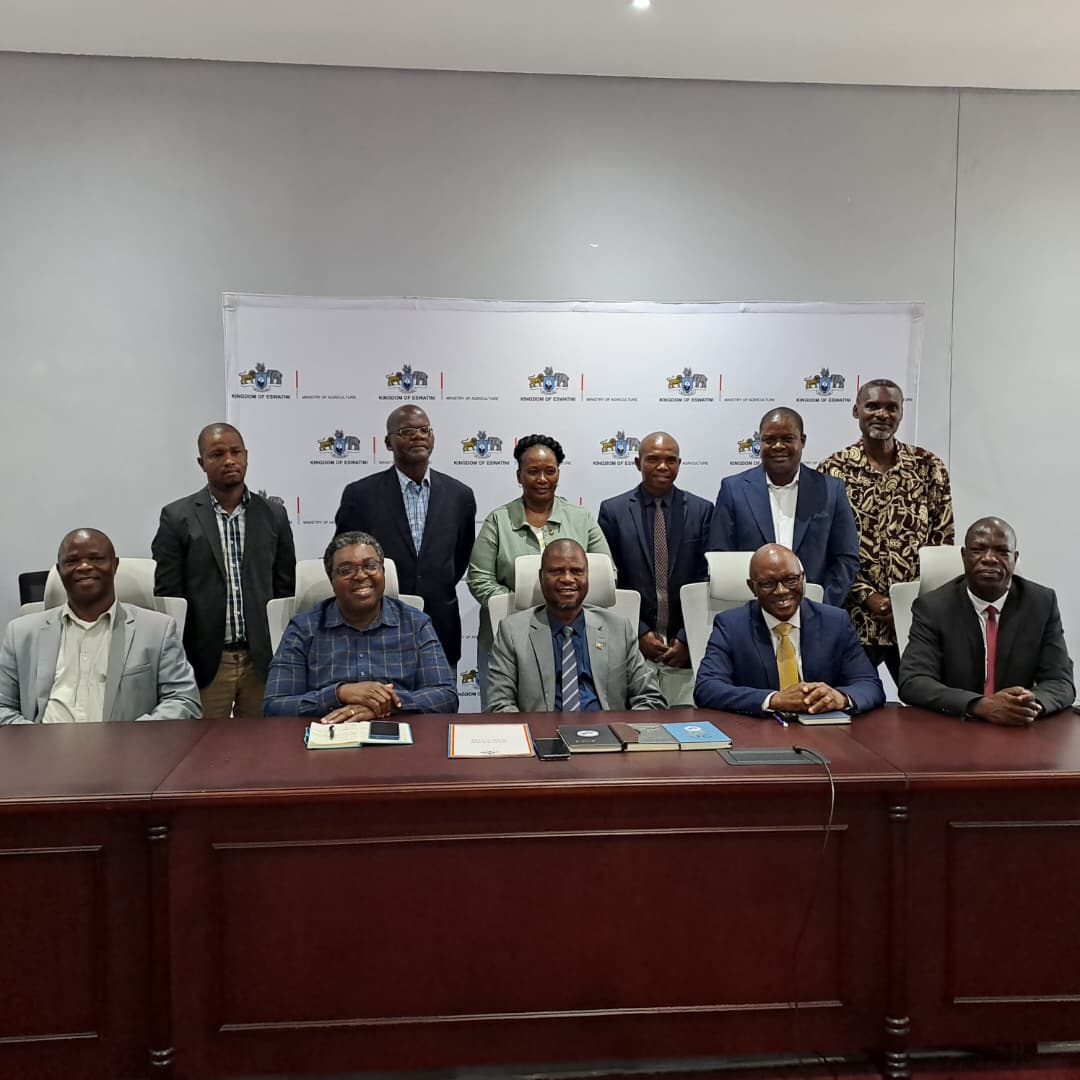
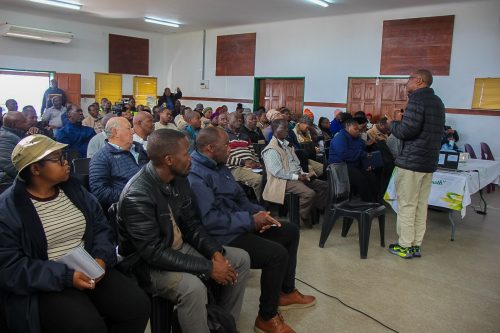
MBABANE — Government has placed irrigation-led value-chain development at the centre of Eswatini’s cotton revival strategy with the unveiling of a new committee for the Eswatini Cotton Board, tasking it with restructuring the sector around reliable water supply, scaled production and industrial processing.
The Minister of Agriculture, Mandla Tshawuka, said the new committee must urgently realign the cotton industry to the Ministry of Agriculture’s 2023–2028 Strategic Plan, which prioritises service delivery and decentralisation, food sovereignty, and wealth creation, with irrigation identified as the foundation for sustainable growth.
The reset signals a deliberate shift away from rain-dependent cotton farming towards an irrigation-driven production system that feeds a fully integrated industrial value chain — from farm to factory.

Irrigation as the foundation of industrial growth
At the heart of the government’s approach is the understanding that industrialisation in agriculture cannot be sustained without water security. Cotton, a long-season crop that takes about six months to mature, has historically struggled under Eswatini’s rainfall variability, limiting yields, consistency and scale.
By anchoring cotton production to irrigation, the government aims to stabilise output, ensure predictable supply to processors and unlock investment across the value chain, including ginning, spinning and textile manufacturing.
The new Cotton Board committee has been mandated to drive this transition, ensuring that irrigation development, production planning and processing capacity move in tandem.
Production figures highlight urgency and opportunity
Recent production data illustrates both progress and constraint. During the 2025 season, Eswatini produced approximately 900 metric tonnes of cotton, while the country’s ginnery operated at around 10 percent of its installed capacity.
This leaves a 90 percent production gap, underscoring the urgency of shifting to irrigation-supported production systems capable of supplying consistent volumes to existing and planned processing facilities.
Farmer participation has increased, with the number of cotton farmers rising from about 200 in 2022 to 400 in 2025. While this growth reflects renewed interest in the crop, output remains limited by dry-land farming and climate exposure.
The figures point to a sector with expanding participation but constrained by structural weaknesses that irrigation-led production is intended to resolve.
Reaffirming the Cotton Board’s mandate
Established under the Cotton Act of 1967, the Eswatini Cotton Board is mandated to regulate and develop cotton production nationwide. Minister Tshawuka said the appointment of a new committee marks a governance reset aimed at strengthening oversight, improving delivery and aligning the Board more closely with national development priorities.
He stressed that all agricultural parastatals must operate within the Ministry’s strategic framework, with irrigation-led service delivery forming a critical pillar of farmer support.
“Service delivery is not a favour; it is an obligation,” the Minister said, adding that farmers must be treated as customers and partners in a commercially viable system rather than passive beneficiaries.
From irrigation to industry: structuring the full value chain
Minister Tshawuka challenged the new committee to manage cotton as a complete, irrigation-anchored value chain — from primary production and defoliation through to ginning, spinning and finished textile products.
Under-utilised ginning infrastructure, he said, reflects a mismatch between processing capacity and farm-level production — a gap irrigation is expected to close by enabling higher, more reliable yields.
Expanding downstream processing will increase the value retained within the economy, create employment beyond the farm and raise farmer incomes. “Farmers are farming for a living,” the Minister said. “Our responsibility is to ensure cotton creates wealth.”
CEO outlines irrigation-led turnaround strategy
Providing operational insight, Daniel Khumalo, Chief Executive Officer of the Eswatini Cotton Board, said climate variability remains the industry’s most significant constraint, making irrigation non-negotiable for long-term growth.
Cotton is planted within a narrow seasonal window, typically October and November, when rainfall is expected. Most farmers currently rely on dry-land farming, exposing yields to rainfall shocks. With the crop’s long maturity period, extended dry spells significantly reduce output.
To address this, Khumalo said the Board’s turnaround strategy is firmly anchored on irrigation-led expansion. In the short term, farmers who already have access to irrigation infrastructure are being encouraged to enter cotton production, helping stabilise supply to the ginnery.
In the medium to long term, irrigation development linked to national water projects is expected to support large-scale expansion and industrial growth.
Linking irrigation to national infrastructure projects
Minister Tshawuka underscored the strategic importance of the Mkhondvo–Ngwavuma Water Augmentation Project, where cotton has been identified as a key anchor crop.
The project is expected to support large-scale irrigation, agro-processing facilities and an industrial park focused on textile production. While implementation is being led by the Eswatini Water and Agricultural Development Enterprise (EWADE), the Minister said the Cotton Board must remain actively involved from planning through to execution to ensure seamless integration across the value chain.
Mechanisation, particularly harvesting equipment, will also be critical as irrigated production enables larger planting areas and commercial-scale operations.
What irrigation-led development means for farmers
For farmers, the shift to irrigation-led cotton production is expected to translate into more reliable yields, stable incomes and a guaranteed market as ginnery utilisation increases.
Reduced dependence on rainfall will lower production risk, while coordinated input supply, extension support and access to mechanisation are expected to improve productivity. As processing and textile activities expand, additional jobs are likely to be created in rural communities, strengthening local economies.
Institutional reform and future scope
Looking ahead, the Minister said government is undertaking broader institutional reforms to ensure parastatals are aligned to current economic realities. Within this framework, the Cotton Board’s mandate may eventually expand beyond cotton to include other industrial and cash crops, allowing irrigation infrastructure and value-chain systems to serve multiple sectors.
Board composition
The Board of the Eswatini Cotton Board consists of:
Samson Mandla Mavuso
Victor Machawe Masilela
Daniel Khumalo
Bheki Aazorn Nzima
Linda Msibi
Bhekiwe Hlophe Dlamini
Nkosingiphile Dlamini
Sikelela Freddy Fakudze
Rogers Joseph Mamba
Delivering the irrigation-led mandate
In closing, Minister Tshawuka urged the new committee to act with urgency and discipline, particularly in closing the 90 percent production gap between current output and available processing capacity.
“Cotton is not just an agricultural crop; it is an industrial opportunity,” he said. “If we invest in irrigation and build the value chain properly, cotton can end hunger, create jobs and generate lasting wealth for Eswatini.”