

BY: PHESHEYA KUNENE | EDITOR
MANZINI — Inflation in Eswatini may be cooling, but for farmers, the real cost of production is proving far more stubborn.
Eswatini’s annual inflation rate slowed to 1.6% in March 2026, down from 1.9% in February and significantly lower than 3.8% recorded in March 2025, according to the Central Statistical Office (CSO), offering short-term cost relief while exposing deeper structural risks for the agricultural sector.
The latest Consumer Price Index (CPI) report shows a marginal month-on-month decline of 0.1%, signalling a temporary easing in the cost of living. Prices of goods rose by 1.9%, while services increased by 2.0%, with the main inflationary pressure stemming from housing, water and electricity. Meanwhile, categories such as transport, clothing, restaurants and health recorded slower price increases, with some showing slight declines.
For agriculture, however, the headline figure tells only part of the story.
Economist Welcome Nxumalo said the current inflation slowdown should be interpreted with caution, warning that external shocks could quickly reverse the trend and place renewed pressure on farmers.
He explained that while domestic inflation appears contained, underlying global dynamics remain volatile.
“The easing to 1.6% suggests short-term stability in consumer prices, but agriculture operates within a broader cost structure that is heavily exposed to global markets,” he said.
“Fuel, fertiliser and logistics remain highly sensitive to international developments, and any disruption in supply chains will transmit directly into farming costs.”
Nxumalo pointed out that geopolitical tensions, particularly in key oil- and fertiliser-producing regions, continue to threaten price stability. He noted that nitrogen-based fertilisers, which are critical for crop production, are closely linked to global energy markets.
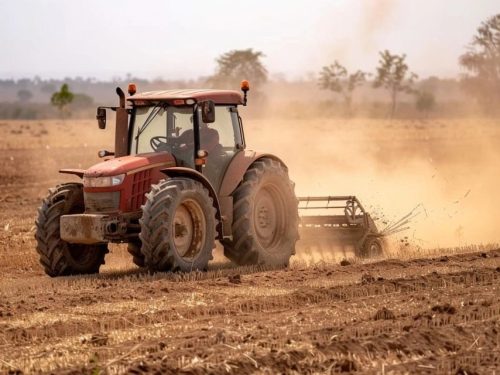
“A rise in international oil prices will inevitably push up fuel costs locally, increasing tractor hours, irrigation expenses and transport costs,” he said.
“At the same time, fertiliser prices are likely to face upward pressure due to constrained global supply. This creates a dual cost squeeze for farmers, even in a low-inflation environment.”
He added that this dynamic could ultimately suppress productivity. “If input costs rise while output prices remain relatively stable, farmers may scale back production, which could reduce yields and affect national food security.”
Providing further economic context, economist Sanele Sibiya said the decline in inflation reflects subdued demand and relative stability in key consumer categories, but warned that agriculture does not benefit evenly from such trends.
“Lower inflation does not necessarily translate into lower production costs for farmers,” Sibiya said.
“The sector is input-intensive and import-dependent. Even when consumer inflation slows, farmers can still face rising costs due to exchange rate pressures, global commodity prices and supply chain inefficiencies.”
He added that the agricultural sector remains vulnerable to imported inflation. “Eswatini relies heavily on imported fertiliser, agrochemicals and machinery. Any weakening of the currency or increase in global prices will erode margins, regardless of what the domestic CPI suggests.”
From an industry perspective, Bheka Tsabedze, a local innovator and supplier of cattle tracking GPS devices to livestock farmers, said the inflation trends have mixed implications for agribusiness operators.
“On paper, lower inflation should ease pressure on farmers, but for those of us importing agricultural technology, costs remain high and unpredictable,” Tsabedze said.
“Exchange rate fluctuations, shipping costs and global component prices still affect our pricing. When farmers are under pressure, they delay investment in technologies like GPS tracking, even though these tools improve efficiency and herd management.”
He noted that affordability remains a key constraint. “Farmers are prioritising immediate survival costs such as feed and veterinary care. This affects uptake of innovations, which in the long run are essential for improving productivity and resilience.”
Historically, Eswatini’s inflation has shown significant volatility. The decline from 3.8% in March 2025 to 1.6% in March 2026 reflects easing pressures in key consumption categories, but analysts caution that this stability may be cyclical rather than structural.
For policymakers, the data presents a delicate balancing act. Lower inflation creates room for supportive economic measures, but persistent risks in global commodity markets could quickly reverse gains.
For farmers, the implications are more immediate.
Lower inflation may stabilise consumer demand and input costs in the short term, but rising uncertainties around fuel, fertiliser and logistics threaten profitability. The result is a sector caught between temporary relief and long-term vulnerability.
As Nxumalo put it, “Agriculture does not operate in isolation. Even when inflation is low, the real question is whether farmers can produce efficiently and profitably. Right now, the cost pressures are simply shifting, not disappearing.”
In practical terms, this means farmers must increasingly focus on efficiency, input optimisation and market alignment to remain viable. The broader message is clear: while inflation may be easing on paper, the structural cost pressures facing Eswatini’s agricultural sector remain firmly in place.