


BY SIBUSISIWE NDZIMANDZE | JOURNALIST
Additional reporting by Phesheya Kunene | Editor
MALKERNS — As the 2026 dry bean planting season gets underway across Eswatini, a Ministry of Agriculture researcher based at the Malkerns Agricultural Research Station is urging farmers to approach the crop as a deliberate commercial enterprise, rather than a fallback option. Nicholas Manana, a Research Officer in the Ministry of Agriculture, says this season presents a critical opportunity to reduce the country’s reliance on bean imports — but only if farmers apply correct agronomic practices from the outset.
Eswatini consumes an estimated 7,000–8,000 tonnes of dry beans annually, yet local production remains below 2,000 tonnes, leaving a substantial deficit that is largely met through imports. This persistent gap represents income that could be retained within the local farming sector, while strengthening national food security.
According to Manana, closing the production gap will depend less on expanding planted area and more on precision agronomy, certified inputs and timely decision-making.
“Beans can be profitable, but only when farmers follow correct agronomic practices — from soil testing and seed choice to spacing and timely management,” he said.
Soil Testing Comes First
Manana stressed that soil testing is not optional in dry bean production and should be the first step taken before planting. Beans perform best in soils with a pH range of 5.2 to 6.5, which supports effective nutrient uptake and root development.
“If you are a bean farmer, the first thing you must do is soil testing so that you know which fertiliser is needed,” he said.
He warned that late soil testing often delays planting, as laboratory results can take time to be returned. Where soil pH falls below the recommended range, farmers are advised to follow laboratory recommendations before planting. In cases where soil testing has not been conducted, standard guidance includes applying 250 kg per hectare of 2:3:2 (22) or 150 kg per hectare of 2:3:2 (37) as a basal fertiliser.
Planting Time and Land Preparation Are Critical
Beans are sensitive to excess moisture and temperature extremes, making planting time a critical decision. Manana explained that beans do not require heavy rainfall and should be planted once intense rains have subsided.
Planting periods vary by agro-ecological zone. In the Highveld, planting can begin when rainfall declines, while Middleveld farmers typically plant from January to March. In the Lowveld, farmers are advised to delay planting until February due to high temperatures earlier in the season, although irrigation allows for additional planting windows.
Proper land preparation is equally important. Beans have weak stems and require fine to medium tilth soil to ensure good crop establishment.
“Rough or cloddy soil can damage young plants and reduce plant stand,” Manana said.
Seed Choice, Spacing and Plant Population
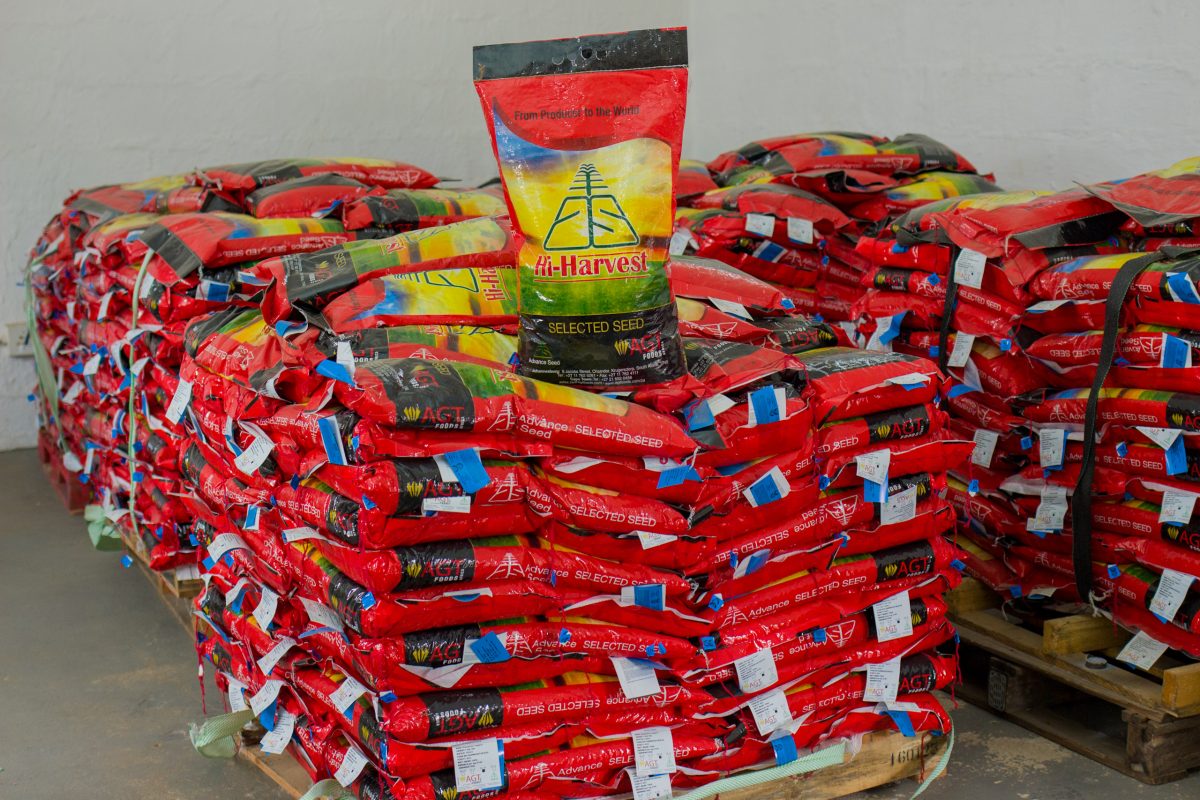
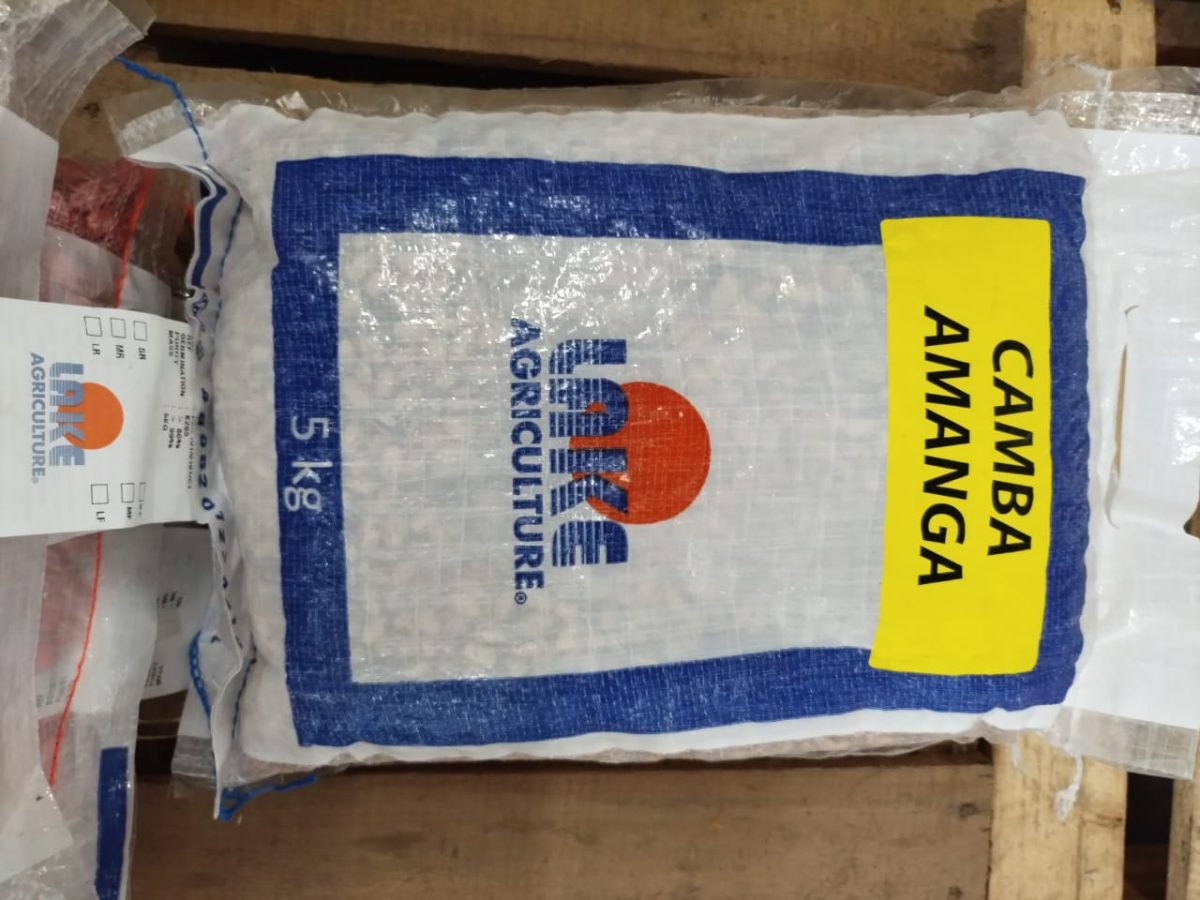
Certified seed plays a central role in achieving good yields. Bean varieties available locally include AS 148, CAP 2000, AS 9216, Camba Manga, Kunjengenyama, and others, each suited to specific planting windows and maturity periods.
Camba Manga is a fast-maturing variety that can be useful when planting is delayed, although its yield potential is lower than that of longer-maturing varieties.
Correct spacing is essential to achieve optimal plant population and yield potential:
- 45–60 centimetres between rows
- 7.5–10 centimetres between plants
- Seed rates of 70–100 kilograms per hectare, depending on seed size
Manana cautioned farmers against using maize spacing of 90 centimetres, noting that this significantly reduces yields even when additional rows are added.
Certified seed sold through registered outlets is regulated and tested for germination and quality to ensure farmers receive reliable planting material.
Fertilisation, Weed Control and Risk Management
Although beans are legumes capable of fixing nitrogen, poor crop performance may require supplementation. Nitrogen fertiliser should be applied before the flowering stage, as incorrect timing can delay pod and seed formation.
Weed control is most critical during the first five weeks after planting, when beans are particularly vulnerable to competition for moisture, nutrients and light.
To reduce production risk, Manana recommended crop rotation, particularly with maize, as a way to improve soil fertility, break pest and disease cycles, and strengthen overall system resilience.

From Subsistence Crop to Commercial Opportunity
Under good management, dry beans can yield 1.5 to 2 tonnes per hectare, while irrigated fields have the potential to reach up to 3 tonnes per hectare.
The National Maize Corporation (NMC) currently pays farmers around E28,000 per tonne. Estimated costs per hectare is E25,000.
Manana encouraged farmers to move beyond maize-only production systems and recognise beans as a viable commercial crop with both nutritional and financial benefits.
“There is money in bean farming. Beans are nutritious, they improve the soil through rotation, and the certified seed available in shops is improved,” he said.
As the planting window narrows, the message from the Ministry of Agriculture is clear: knowledge, certified inputs and agronomic discipline will determine whether this season deepens Eswatini’s dependence on bean imports — or marks a shift towards stronger local production.

Nicholas Manana, Research Officer, Malkerns Research Station, Ministry of Agriculture.