BY: SBU MNGADI | EDITOR-IN-CHIEF
Sixty-one lots, a E46,000 semen sale and a top price of E130,000 — Impofu Ranching’s auction at Ingwavuma showed that Eswatini’s beef producers are no longer buying cattle. They are buying bloodlines.
LAVUMISA/NSOKO – Elite Boran genetics commanded the floor at Impofu Ranching’s annual production auction on Saturday, with the top-selling animal knocked down at E130,000 and a single semen lot fetching E46,000 — prices that place Eswatini firmly inside a Southern African market where the best African beef genetics now trade for the price of a house.
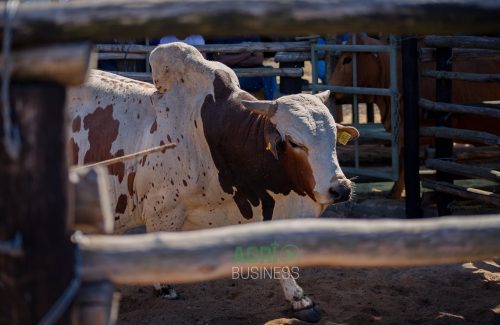
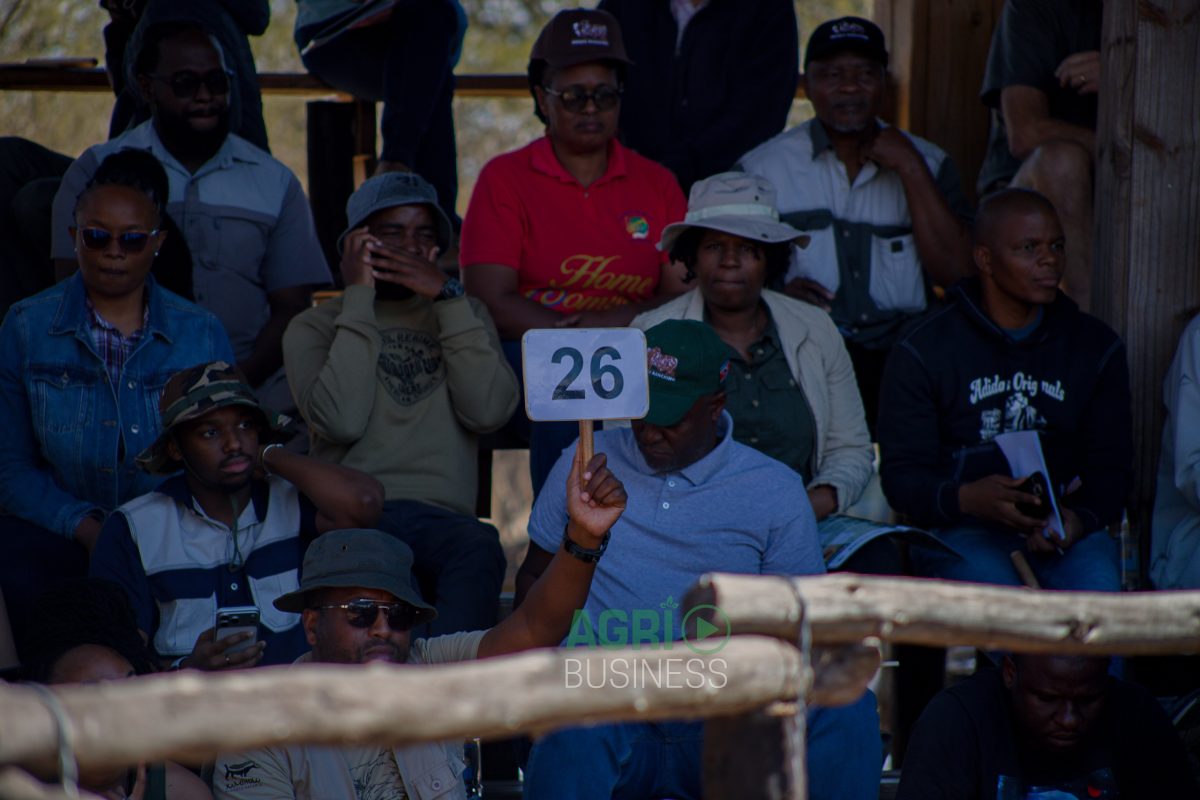
Held at Ingwavuma Game Reserve in the country’s dry southern lowveld and conducted by Auction Masters, the sale drew breeders, commercial farmers and livestock investors from Eswatini and neighbouring countries. Sixty-one lots of Boran and Nguni bulls, cows and heifers were offered, alongside charity Nguni bulls and a premium Boran semen lot.
One of the day’s defining moments was the sale of 100 straws of semen from the renowned Boran bull “Rasta”, currently in service in South Africa, for E46,000. The lowest bid on the day was E10,000, illustrating the spread of entry points available to producers at different stages of herd development.
While official turnover had not been released by the time of publication, the pace of bidding and the premiums paid suggest the sale generated well over E2 million — placing it among the strongest livestock auctions held in the Kingdom in recent years.
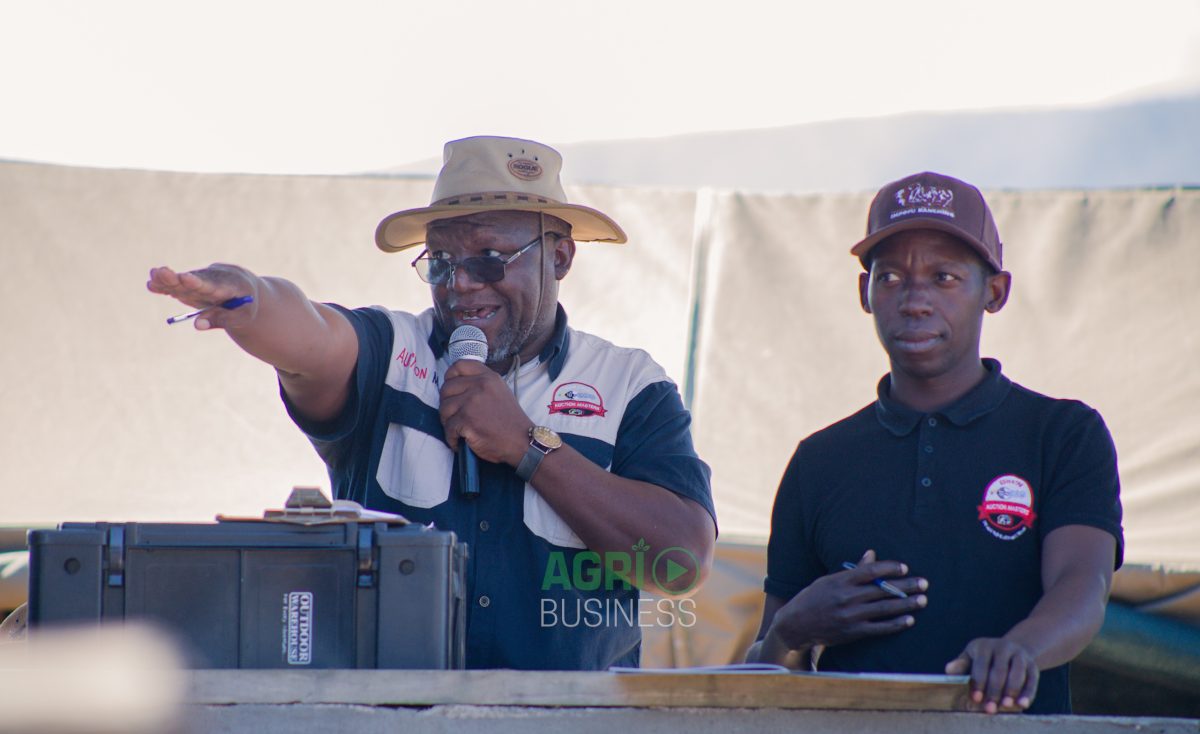
Auction Masters Marketing Officer Mlondi Msibi described the sale as a resounding success.
“We had a very successful auction with excellent attendance and strong participation from buyers. The highest-priced animal sold for E130,000, while the lowest bid was E10,000. We are grateful for the support shown by breeders and farmers, and we look forward to hosting another auction, possibly before the end of the year,” he said.
Msibi said the catalogue consisted mainly of Boran breeding females — mature cows and heifers — together with breeding bulls, with buyers showing particular appetite for animals carrying proven bloodlines and documented production records.
A herd built by the veld, not the feed trough
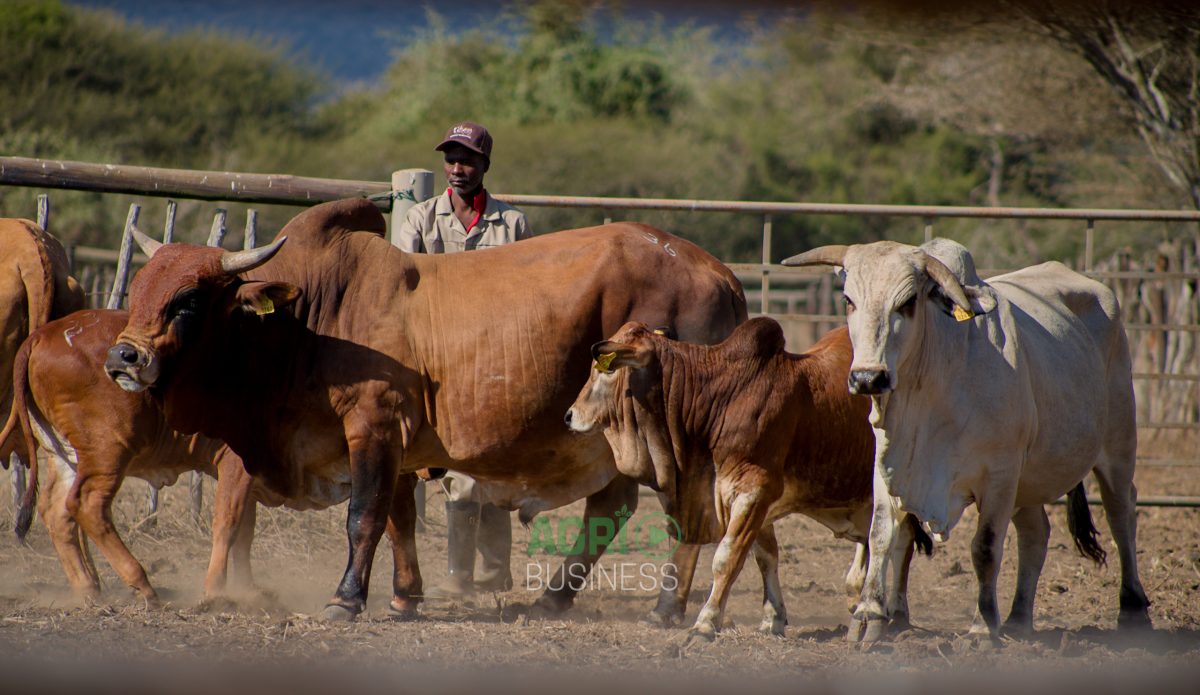
The animals on offer come off one of the region’s more unusual cattle operations. Impofu Ranching runs on Ingwavuma Game Reserve, a 3,514-hectare property between Nsoko and Lavumisa where stud cattle share the landscape with wildlife, including predators. The herd is veld-fed and free-ranging, with no supplementary feeding — a system that culls weak genetics before an auctioneer ever sees them, and one that gives buyers a credible read on how the animals will perform on their own farms.
The operation’s pivot to Boran dates back to 2013, when calves sired by Boran bulls visibly outperformed Black Angus crosses in the same conditions. The Angus bulls were sold, foundation stock was brought in, and the herd has since grown to roughly 700 purebred Boran stud animals. Selection is driven by temperament, structural correctness, adaptation and fertility records, with a target inter-calving period of 400 days.
Proceeds from the cattle enterprise feed back into Big Game Parks’ conservation work — a model that ties commercial beef production directly to the funding of wildlife protection in Eswatini.
Why Borans are commanding premium prices
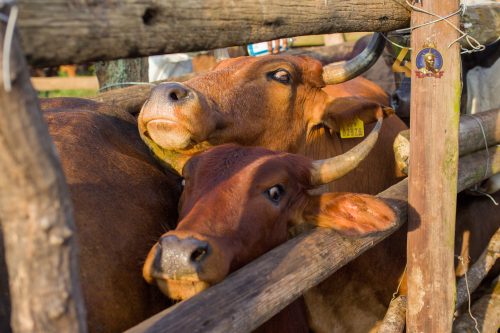
Speaking to Agribusiness Media, Jubela Reilly of Big Game Parks said the Boran has grown in popularity because it was developed and refined under African conditions, making it exceptionally well suited to Eswatini’s environment.
“Boran cattle have excellent disease resistance and natural tick resistance. Their hair contains natural oils, making it difficult for ticks to attach, while they are also highly heat tolerant, making them ideal for lowveld conditions,” he explained.
The science supports him. The Boran traces to the Borana pastoralists of southern Ethiopia and northern Kenya, where the breed has been shaped by roughly 1,300 to 1,500 years of natural and human selection in one of the harshest production environments on the continent. As a Bos indicus type, it carries a higher density of sweat glands than European breeds, a lower metabolic rate under heat stress, and dark pigmented skin that resists sunburn — which is why Borans keep grazing through the heat of the day when exotic breeds seek shade. The loose, motile skin and oily coat that Reilly describes make the animal a poor host for ticks and biting flies, and the breed shows the natural Bos indicus resilience to East Coast fever, with the Orma strain additionally noted for trypan tolerance.
He said the breed combines that resilience with productivity that commercial beef producers increasingly demand.
“They are very productive cattle and exceptional mothers. They have strong maternal instincts and a natural herding behaviour that protects calves from predators and other dangers.”
On the numbers, the Improved (Kenya) Boran matures at 550–850kg for bulls and 400–550kg for cows, with recorded dressing percentages of between 50.5% and 57.2% — figures that explain the breed’s standing with feedlot buyers. Calves are born small, at roughly 25–28kg, which delivers the calving ease that makes Boran females valuable as dams for larger exotic sires, yet weaners routinely exceed 50% of their dam’s body weight by nine months. Well-managed herds hold calving intervals close to 365 days, and cows commonly stay productive beyond 12 years, with documented animals still calving at 15.
Two further traits matter in a lowveld production system: a low maintenance requirement, meaning the animal converts poor-quality roughage efficiently and holds condition when grazing deteriorates; and compensatory growth, the capacity to recover condition rapidly once rain returns after drought.
“People are becoming more educated about the Boran. They carry more meat, they are chunkier animals and they are extremely productive. That is why you saw such strong demand and higher prices today,” Reilly said.
He noted that while Big Game Parks has spent many years promoting Nguni cattle for their adaptability and conservation value, the Boran has emerged as the preferred choice for many commercial producers chasing productivity.
“We believe both the Nguni and the Boran are excellent breeds for Eswatini. The Nguni remains an important indigenous breed, while the Boran offers outstanding commercial performance, particularly under our production conditions.”
The regional context: where E130,000 sits
Saturday’s top price reads differently when set against the wider market. In August 2024, a Boran bull named Cyclone sold for R8 million at Hurwitz Farming’s production auction at Davel in Mpumalanga — bought by Zimbabwean breeder Collen Tafireyi of Sinyo Boran Stud, and shattering the previous South African record of R4.4 million paid for a Bonsmara bull the year before. In June 2026, a pregnant Boran heifer topped R350,000 at the Pioneer breeders’ auction.
With the lilangeni at par with the rand, Eswatini’s E130,000 top price is not a record-breaker by regional standards — but that is precisely the point. It establishes a functioning local price signal for elite genetics inside the Kingdom, at a level serious commercial producers can actually reach, and it means Eswatini farmers no longer have to cross a border to buy proven Boran bloodlines.