BY: PHESHEYA KUNENE | EDITOR
HLANE—When Notsile Dlamini graduated with a qualification in Agricultural Extension from the University of Eswatini’s Luyengo Campus, she faced the same uncertain future confronting many young graduates: a shrinking job market and limited employment opportunities.
Instead of joining the queue for scarce jobs, the 27-year-old chose a different path. She turned to agriculture, not as a last resort, but as a business opportunity.
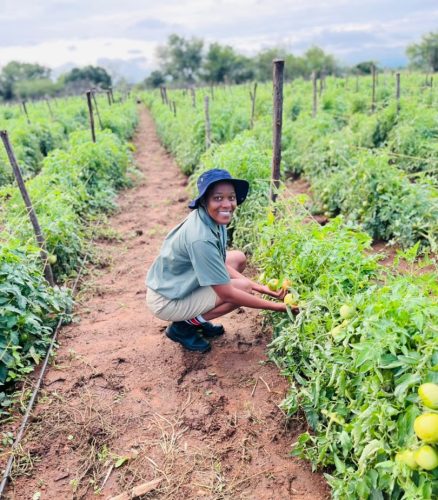
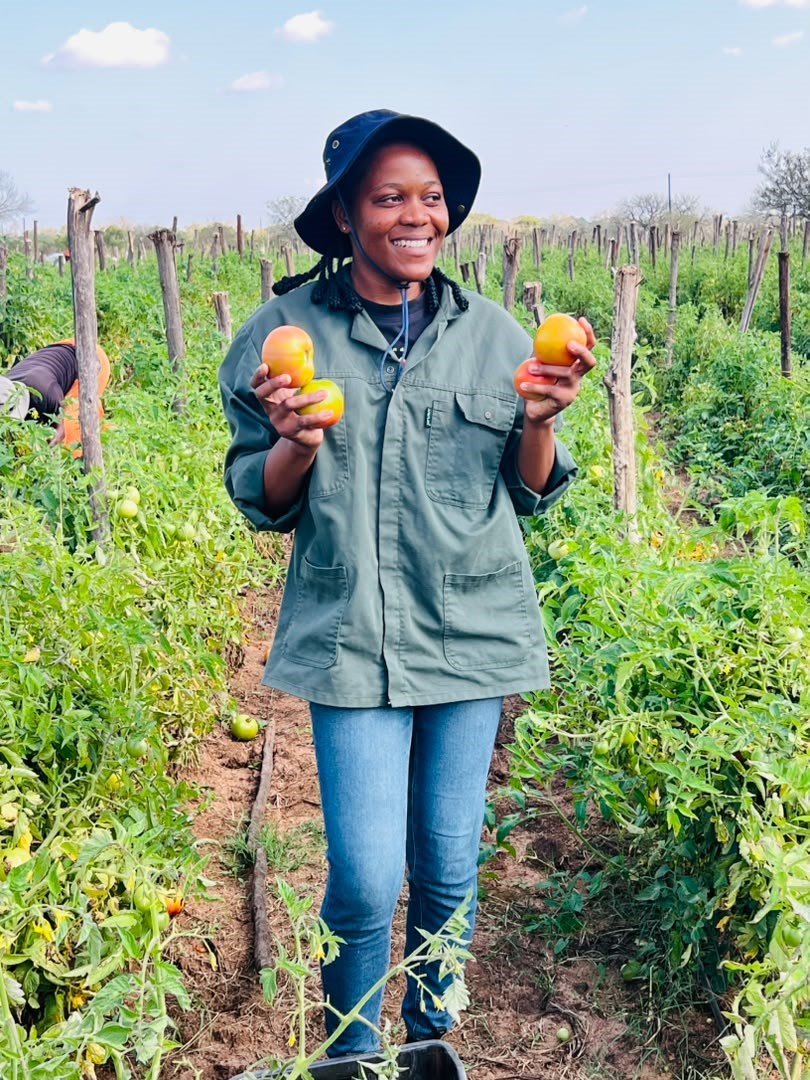
Today, Dlamini is the founder of Green Harvest Farm, a growing commercial vegetable enterprise in Hlane that is steadily proving how technical knowledge, climate-smart innovation and determination can be transformed into a viable agribusiness.
The young farmer, who recently completed the Innovative Climate-Smart Youth Tunnel Production Training Programme at the Women Farmer Foundation (WFF) in Sidvokodvo’s Riders Ranch, believes the programme gave her more than practical farming skills. It gave her the confidence to build the future she had always imagined.
“I refused to sit down and complain about unemployment. Agriculture gave me the opportunity to create my own job and become my own boss,” Dlamini said.
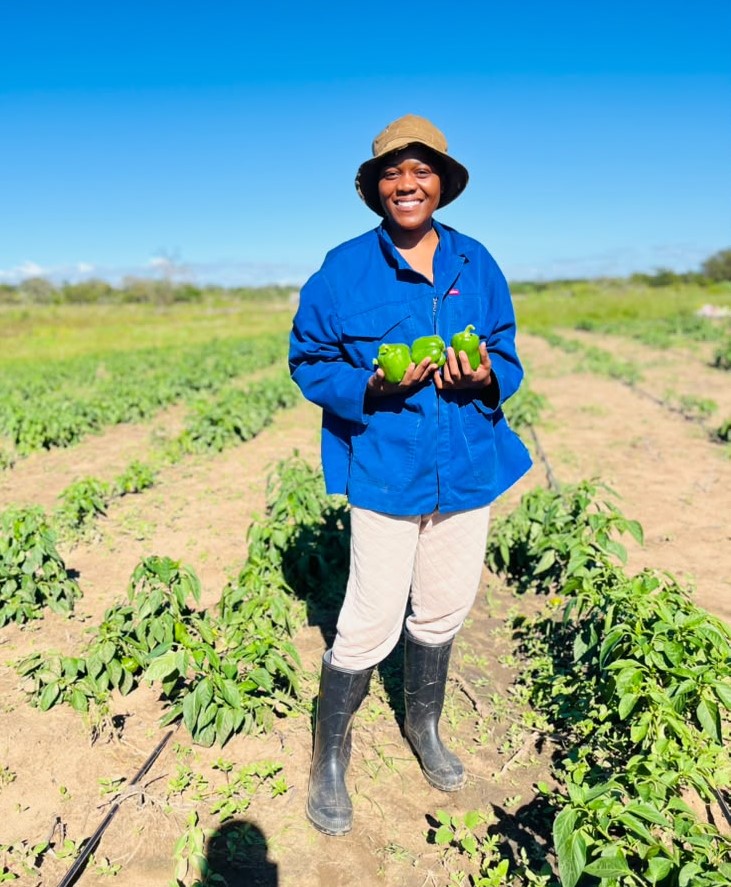
Her enterprise spans four hectares, although two hectares are currently under production. One hectare is dedicated to tomatoes and another to green peppers, while watermelons form part of her expanding production portfolio.
For Dlamini, every crop represents another step towards building a sustainable farming business.
From Classroom Knowledge to Commercial Farming
Unlike many first-generation farmers who enter agriculture through family tradition, Dlamini’s passion was nurtured through education.
Studying Agricultural Extension introduced her to crop production, farmer advisory services and agricultural development. However, she says it was the Women Farmer Foundation’s climate-smart training that transformed theoretical knowledge into commercial confidence.
The programme equipped participants with practical skills in tunnel production, sustainable farming, crop management, irrigation, pest and disease control, and modern production systems designed to withstand the growing challenges of climate change.
Just as importantly, it introduced participants to the realities of farming for the market.
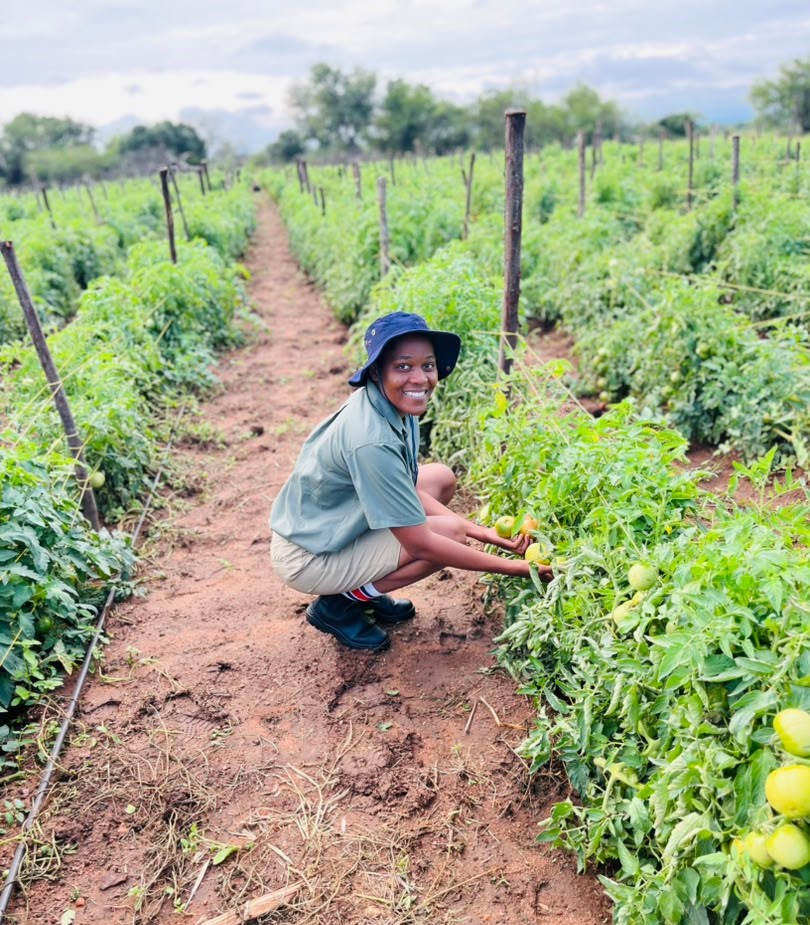
“The programme helped me understand what consumers want and how to produce crops that meet market demands,” she explained.
“It also changed my mindset. I began to see farming not simply as growing vegetables, but as running a business that can create employment and improve livelihoods.”
One Moment Changed Everything
Every successful entrepreneur has a defining moment.
For Dlamini, that moment arrived while attending one of the Women Farmer Foundation’s youth competitions.
Watching young farmers receive awards and recognition sparked something within her.
“Seeing youth farmers being recognised and empowered inspired me deeply,” she recalled.
“I told myself, ‘One day it should be me.’ From that day, I became determined to work harder because I now had the skills. The only thing left was to implement them.”
That decision marked the beginning of Green Harvest Farm.
Farming for a Changing Climate
As climate change continues to expose farmers to erratic rainfall, prolonged dry spells and increasingly unpredictable weather, Dlamini believes the future of vegetable production lies in protected agriculture.
The climate-smart tunnel farming techniques introduced during her training convinced her that the technology offers one of the most practical solutions for improving productivity while reducing production risks.
“Climate change has taught me that tunnel farming is the way to go,” she said.
“It protects crops from harsh weather conditions, reduces losses and allows farmers to produce quality vegetables more consistently.”
Her long-term strategy is already taking shape.
Income generated from her current farming operations will be reinvested into constructing tunnel infrastructure, enabling year-round production and improving the resilience of her business.
Learning Beyond the Field
Although Dlamini entered agriculture with formal qualifications, she believes farming continues to teach lessons that no classroom can provide.
Personally, she says the journey has strengthened her patience, discipline, resilience and self-belief.
Professionally, it has sharpened her understanding of crop management, commercial production and business planning.
“Every season teaches you something new,” she said.
“Agriculture requires continuous learning.”
Challenges That Shape Success
Like many young farmers entering commercial agriculture, Dlamini acknowledges that building a successful farming enterprise comes with challenges.
Understanding changing market demands while managing crops under increasingly unpredictable weather conditions remains one of her biggest hurdles.
Rather than allowing those obstacles to discourage her, she has embraced continuous learning.
She regularly seeks advice from experienced farmers while applying climate-smart practices such as efficient irrigation systems, crop rotation and integrated pest and disease management to improve production and minimise losses.
“I am still learning every day,” she said.
“Experience comes with every season.”
A Strong Support System
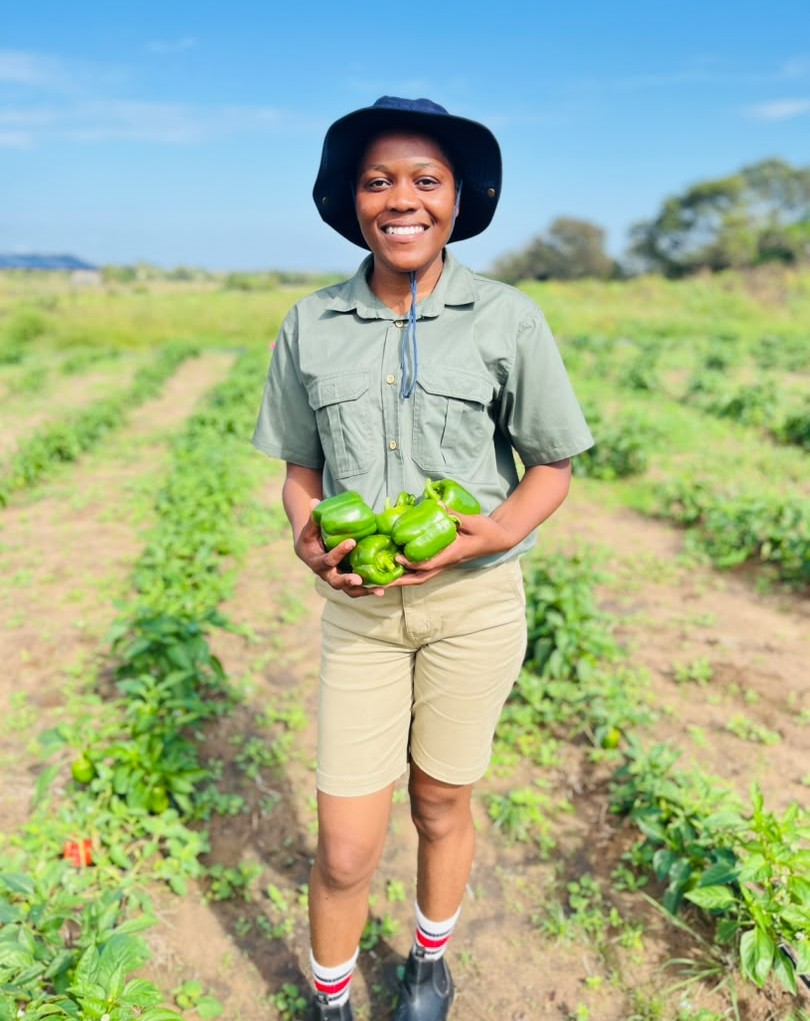
Behind Green Harvest Farm stands a family that believed in the dream long before the business began taking shape.
Dlamini credits her partner, mother, siblings and friends for providing constant encouragement throughout her journey.
Their support, she says, gave her the confidence to persevere during difficult moments and remain focused on achieving her goals.
Looking Beyond Vegetables
Although vegetable production remains the backbone of her enterprise, Dlamini is already planning the next phase of expansion.
The natural wetland on her property presents an opportunity to diversify into aquaculture, allowing Green Harvest Farm to combine fish farming with horticultural production.
Diversification, she believes, will strengthen the business while creating additional income streams and improving long-term sustainability.
It is a vision that reflects a growing trend among young agripreneurs who increasingly view farming as an integrated business rather than a single production enterprise.
Changing Mindsets About Agriculture
For Dlamini, one of the biggest misconceptions facing young people is the belief that agriculture is a career of last resort.
She argues that farming has the potential to generate employment, build wealth and contribute meaningfully to national food security when approached professionally.
Her message to aspiring farmers is straightforward.
“Believe in agriculture and never be afraid to start small,” she advised.
“Farming requires patience, commitment and continuous learning, but it has the power to transform lives. Trust in God, stay focused, continue learning and use your education to innovate.”
Then she paused before sharing the words that have become the philosophy guiding both her business and her life:
“There is no shame in starting small. The only shame is staying small all your life.”
For the young woman who once watched others receive awards and imagined herself standing among them, that dream is steadily becoming reality.
Today, Notsile Dlamini is no longer waiting for opportunity to find her.
She is cultivating it, one harvest at a time.