
BY: PHESHEYA KUNENE | EDITOR
MANZINI — Eswatini is losing more than E500 million every farming season importing maize and beans, pushing the country’s annual food import bill beyond E1 billion while thousands of local farmers struggle with weak support systems, limited mechanisation and shrinking production.
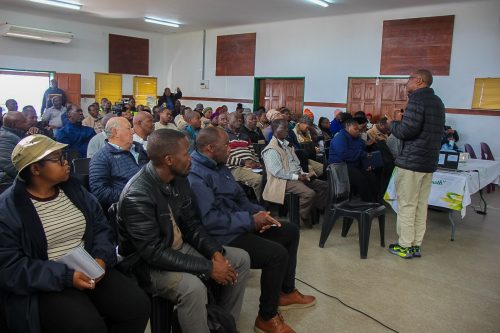
The fresh revelations emerged this week during the ESATA National Maize and Beans Schools Competition in Manzini, sponsored by headline partner Lake Agriculture.
The competition, hosted at Mfanyana Hall under the Eswatini Agriculture Teachers Association (ESATA), brought together schools, agricultural stakeholders, teachers, farmers and learners from across the country. Yet beneath the school garden displays, quizzes and crop exhibitions lay a far more serious national concern: Eswatini’s growing dependence on imported food.
National Maize Corporation (NMC) Farmer Development Officer Zakhele Nkonyane revealed that Eswatini currently requires about 142,673 metric tonnes of maize annually, but produces only around 77,000 metric tonnes locally.
That leaves a national shortfall exceeding 65,000 metric tonnes, costing the country approximately E394 million every season.
The situation is equally alarming for beans.
National demand stands at about 7,000 metric tonnes annually, yet local production remains slightly above 1,000 metric tonnes. The deficit costs the country another E143 million in imports.
Combined, Eswatini spends over E537 million per season importing maize and beans, translating to more than E1 billion annually flowing out of the local economy.
For a country with fertile land, favourable climatic zones and a long agricultural history, the figures expose a painful contradiction.
“We are exporting jobs, income and opportunities,” Nkonyane said.
“Money that should remain within Eswatini is benefiting farmers outside the country while our own farmers continue struggling.”
Nkonyane warned that heavy dependence on imports leaves Eswatini vulnerable to regional droughts, international price shocks and supply chain disruptions, particularly from South Africa, where most grain imports originate.
He said food insecurity remains a harsh reality for many households, with some emaSwati families still sleeping hungry despite the country possessing the capacity to produce much of its own staple food.
The NMC official urged citizens, especially young people, to stop viewing farming as mere hard labour and instead see it as a viable commercial enterprise.
According to NMC figures, one hectare of maize can generate revenue exceeding E34,000, with profits of more than E13,000 after production costs. Beans offer even stronger returns, with potential gross margins nearing E20,000 per hectare.
“In agriculture, think money,” Nkonyane told learners and farmers attending the competition.
“But money does not come easily. People must work hard, invest properly and treat farming as serious business.”
The warning comes as government and agricultural institutions intensify calls for food sovereignty amid mounting concern over the widening grain deficit.
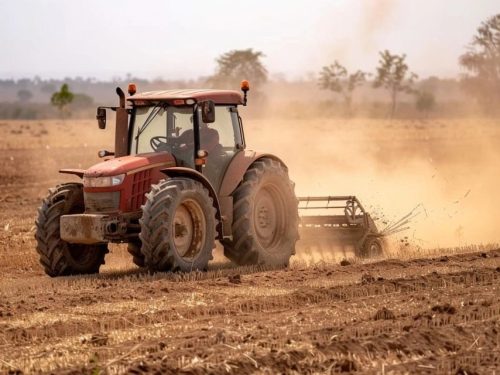
The NMC, which carries both a commercial and developmental mandate, has rolled out contract farming schemes, tractor hire services, youth incubation programmes and financing partnerships aimed at increasing local production.
Particular attention is now being placed on youth participation.
Nkonyane warned that many experienced farmers were ageing and dying, leaving a dangerous production gap that could worsen in coming years if younger generations fail to enter agriculture.
“If young people do not come into farming now, this food gap will continue growing,” he said.
NMC Executive Manager for Farmer Development and Mechanisation, Mangaliso Sihlongonyane, said mechanisation and commercialisation remain central to reversing the country’s dependence on imports.
“Our focus is to move farmers from subsistence farming into commercially viable production systems,” said Sihlongonyane.
“That means improving productivity, strengthening mechanisation and ensuring farmers have reliable markets.”
He said NMC continues working with institutions such as EWADE, NDMA, EADF and the Ministry of Agriculture to improve access to financing, tractors, transport and farming inputs.
Yet frustration among farmers continues to grow.
Recent reports that beans worth around E9 million are allegedly rotting in storage facilities due to procurement delays and regulatory complications have shaken confidence within farming communities.
Many farmers now fear the situation could discourage future bean production.
Farmer Mcebo Mnisi said the reports were deeply demoralising.
“I feel for the extension officers on the ground,” Mnisi said.
“The reported E9 million worth of rotting beans makes it very difficult to convince farmers to produce beans seriously. Farmers will now prefer informal markets because trust in the system is weakening.”
Muzi Tjwala said production costs remain too high for smallholders trying to scale maize production.
“It is expensive for small-scale farmers to produce maize,” he said.
“You can spend E14,000 and recover very little if conditions are poor. Farmers need machinery and stronger support.”
Wilber Mdluli echoed similar concerns, pointing to limited access to irrigation systems and large farming equipment.
“If the government had stronger machinery hire programmes for serious farmers, things would improve,” he said.
“Even irrigation systems for maize remain a major challenge.”
The criticism reflects wider frustrations within Eswatini’s agricultural sector, where farmers frequently complain about inconsistent support, delayed payments and policy interference.
Responding to the growing concerns, Tammy Dlamini said local producers were fully prepared to increase production created a more enabling environment.
“We cannot continue importing food that local farmers are capable of producing,” Dlamini said.
“Farmers are ready to deliver, but government and all stakeholders must strengthen systems that protect and empower local producers.”
He said agriculture remains one of the few sectors capable of simultaneously addressing unemployment, rural poverty and food insecurity if properly supported.
Analysts say the crisis exposes a deeper structural weakness within Eswatini’s economy: a nation with agricultural potential increasingly dependent on foreign food supplies.
According to previous reports, recurring droughts, weak irrigation investment and limited commercialisation continue undermining domestic grain production.
Yet experts argue the soaring import bill itself reveals the scale of untapped opportunity available to local farmers.
Every tonne imported represents a market local producers could potentially supply.
For now, however, Eswatini continues spending billions importing the very staples its farmers say they are ready to produce.