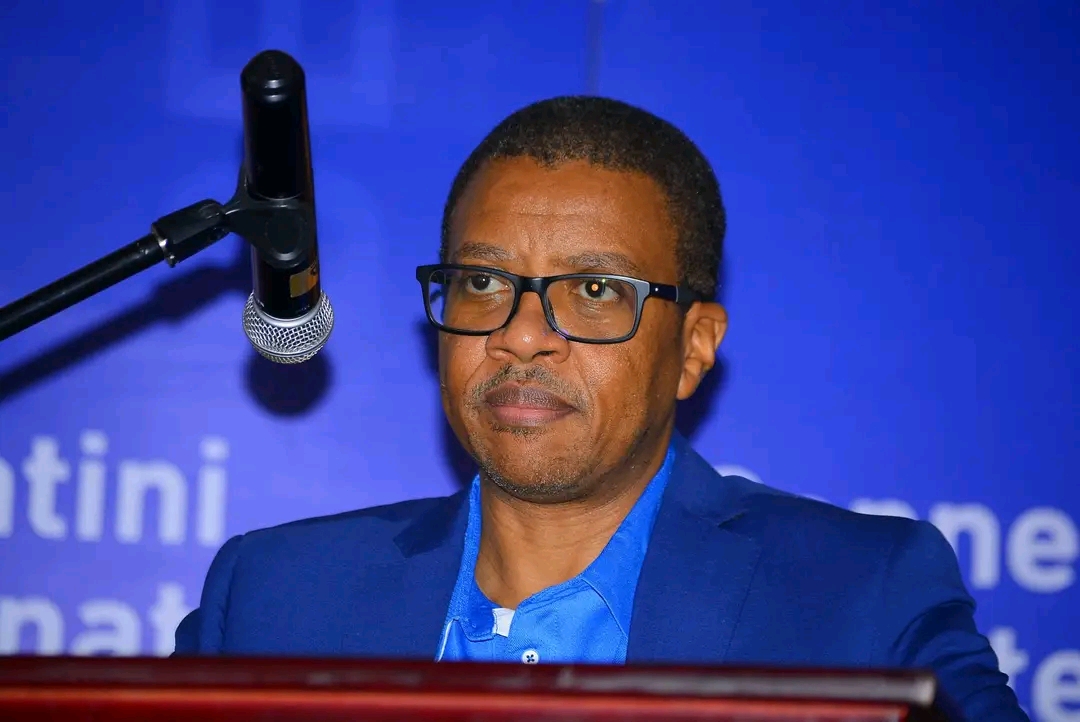
…Free training platforms, export networks and green economy opportunities place agriculture at the centre of Eswatini’s biggest trade showcase
BY: PHESHEYA KUNENE | EDITOR
MANZINI – A bag of honey, a crate of vegetables or a bottle of chilli sauce may soon mean far more than a market-day sale for Eswatini’s farmers.
At the launch of the 58th edition of the Eswatini International Trade Fair (EITF) 2026, agriculture quietly emerged as one of the biggest winners of the country’s flagship trade and investment showcase. Beneath the speeches about green economies and sustainable trade lay a sharper reality: Eswatini is increasingly positioning farmers, agro-processors and rural producers as serious commercial players in regional and international markets.
This year’s trade fair, scheduled to run from August 28 to September 6 at the Mavuso Trade and Exhibition Centre, carries the theme: “Unlocking Green Economy Opportunities for Sustainable Trade Promotion.”
But behind the polished banners and exhibition stands, the event is evolving into something far more practical for the agricultural sector, a business platform where farmers are being pushed beyond subsistence production into branding, processing, export readiness and commercial networking.
For many local producers, the trade fair is no longer simply about visibility. It is about survival, scaling and market access.
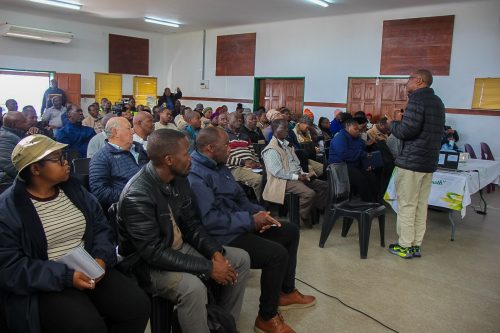
Speaking during the EITF 2026 rollout presentation, EITF Projects Manager Sibusiso Mnisi said organisers were expanding opportunities for exhibitors through free seminars, innovation platforms and regional activations designed to attract broader participation from SMEs, farmers and entrepreneurs.
Mnisi revealed that organisers were targeting 280 exhibitors this year, with subscriptions already surpassing expectations months before the event.
He further announced that seminar venues would once again be offered free of charge, encouraging farmers, agribusiness experts and innovators to host practical training sessions and discussions during the fair.
“Last year we hosted 15 seminars and attracted over 1 000 participants. This year the target is to reach 2 000 people through these knowledge-sharing platforms,” said Mnisi.

The free seminar model is expected to become a major attraction for the agricultural sector, particularly emerging farmers seeking technical knowledge on climate-smart agriculture, agribusiness financing, food processing, digital marketing and sustainable production systems.
For Eswatini’s growing network of local producers, the value of the trade fair increasingly lies in the connections made beyond the exhibition floor.
Among those preparing for the 2026 edition is Lujilo Honey, a local agribusiness specialising in honey production and value-added honey products.
The company won an award during the previous trade fair, a milestone its leadership says opened doors to new business opportunities and partnerships.
Speaking on behalf of the company, farmer and entrepreneur Vusi Nkambule said the trade fair had helped position the business before larger markets and commercial buyers.
“We are looking forward to this year’s event because it gives us a chance to market ourselves better, strengthen our brand and connect with new networks and markets,” said Nkambule.
“There is a lot we have gained from being part of the EITF.”
His remarks reflect a broader shift taking place within Eswatini’s agricultural economy, where farmers are increasingly being encouraged to think beyond raw production and enter value chains involving packaging, processing, branding and export marketing.
According to the Ministry of Agriculture and reports, agriculture remains one of Eswatini’s most important economic sectors, contributing significantly to rural livelihoods and employment. The sector supports more than 70 percent of rural households directly or indirectly, although many smallholder farmers continue to face market access challenges, climate shocks and limited value addition opportunities.
The trade fair is now being positioned as one mechanism to address some of those gaps.
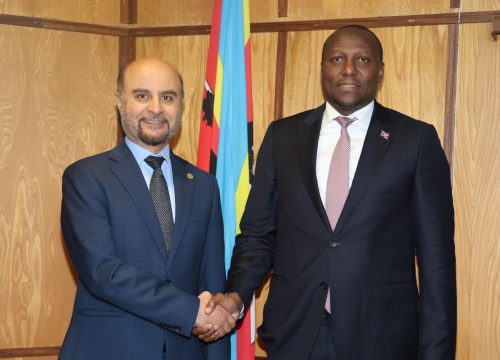
In his keynote address, the Minister of Commerce, Industry and Trade, represented by Principal Secretary Ambassador Melusi Masuku, said EITF 2026 would place stronger emphasis on sustainability, digitalisation and inclusive participation.
“We urge all exhibitors, from SMEs and large corporations to government bodies, to showcase their Environmental, Social and Governance frameworks,” the Minister said in remarks delivered during the launch.
The Minister further stressed that seminars and media platforms at the fair would focus heavily on green economy opportunities, including recycling, circular economy systems, green finance and sustainable production.
For farmers, this could open fresh opportunities in organic farming, renewable energy technologies, climate-smart irrigation, waste recycling and environmentally sustainable food production.
The Eswatini Investment Promotion Authority (EIPA) also confirmed that exhibition rates would not increase for a second consecutive year, a move aimed at keeping the platform accessible to MSMEs and small local businesses.
In his address, EIPA Chief Executive Officer Sibani Mngomezulu said the trade fair remained one of Eswatini’s most important economic engines for local enterprise development.
“What began decades ago has evolved into one of the most significant economic and business gatherings in our Kingdom,” he said.
Mngomezulu revealed that the 2025 edition attracted 282 exhibitors, including more than 22 foreign participants, while visitor numbers exceeded 70 000 people.

Industry analysts say those numbers matter for agriculture because the trade fair increasingly serves as a bridge between rural producers and urban consumers, wholesalers, retailers, financiers and export buyers.
The inclusion of green economy themes may also accelerate new conversations around sustainable farming and agro-processing.
Eswatini, like many countries in Southern Africa, faces growing pressure from climate change, water scarcity and rising input costs. As a result, climate-smart agriculture is becoming central to long-term food security strategies.
The fair’s emphasis on sustainability, ESG frameworks and green business practices suggests agriculture will no longer be viewed merely as food production, but as part of a wider green industrial economy.
Manzini City Mayor Councillor Xolani Masuku said the trade fair remained an important platform for inclusive economic growth.
“This trade fair must also serve as a catalyst for inclusivity. It must empower small and medium enterprises, open doors for youth and women entrepreneurs, and ensure that the benefits of economic growth are widely shared,” said Masuku.
For many farmers, that inclusivity may prove more valuable than trophies or exhibition banners.
It means access to buyers. Access to training. Access to finance. Access to ideas.
And in a country where thousands still farm primarily for survival, those opportunities may ultimately matter more than the fair itself.
By the time the gates of the 58th EITF open in August, Eswatini’s agricultural sector may arrive carrying more than produce.
It may arrive carrying ambition.