
BY: SIBUSISIWE NDZIMANDZE | JOURNALIST
NGCULWINI – Eswatini’s aquaculture sector remains small, but rising demand for fish, growing awareness around healthy diets and continued reliance on imported aquatic products are creating new opportunities for farmers willing to invest in fish production.
For Sibusiso Malaza, a fish farmer from Ngculwini, the opportunity became clear in 2019 when he started with a small 1 000-litre tank, no formal technical training and only a strong belief that fish farming could become a viable agribusiness enterprise in Eswatini.
What began as a small experiment operating on just a 1 cubic metre (1 000 litres) water system has since grown into a structured small-scale aquaculture operation producing tilapia for the local community.
Malaza says he entered fish farming after noticing a clear supply gap in the local market.
“I saw that there was demand for fish, but very few small farmers were producing it locally,” he said.
Eswatini’s fish demand is estimated at about 5 025 metric tonnes per year, while local supply remains far below national consumption needs. The Taiwan International Cooperation and Development Fund (ICDF) notes that nearly 90 percent of aquatic products consumed in Eswatini are imported, while local aquaculture is still dominated by small family operations.
Malaza believes this makes fish farming one of the country’s most promising but underdeveloped agricultural enterprises, especially in warmer areas such as the Lowveld, where tilapia performs better due to favourable water temperatures.
His journey gained momentum in 2021 after engaging Ministry of Agriculture extension officers at Malkerns Research Station. The officers advised him on aquaculture development and later guided him on pond construction, stocking and basic production management.
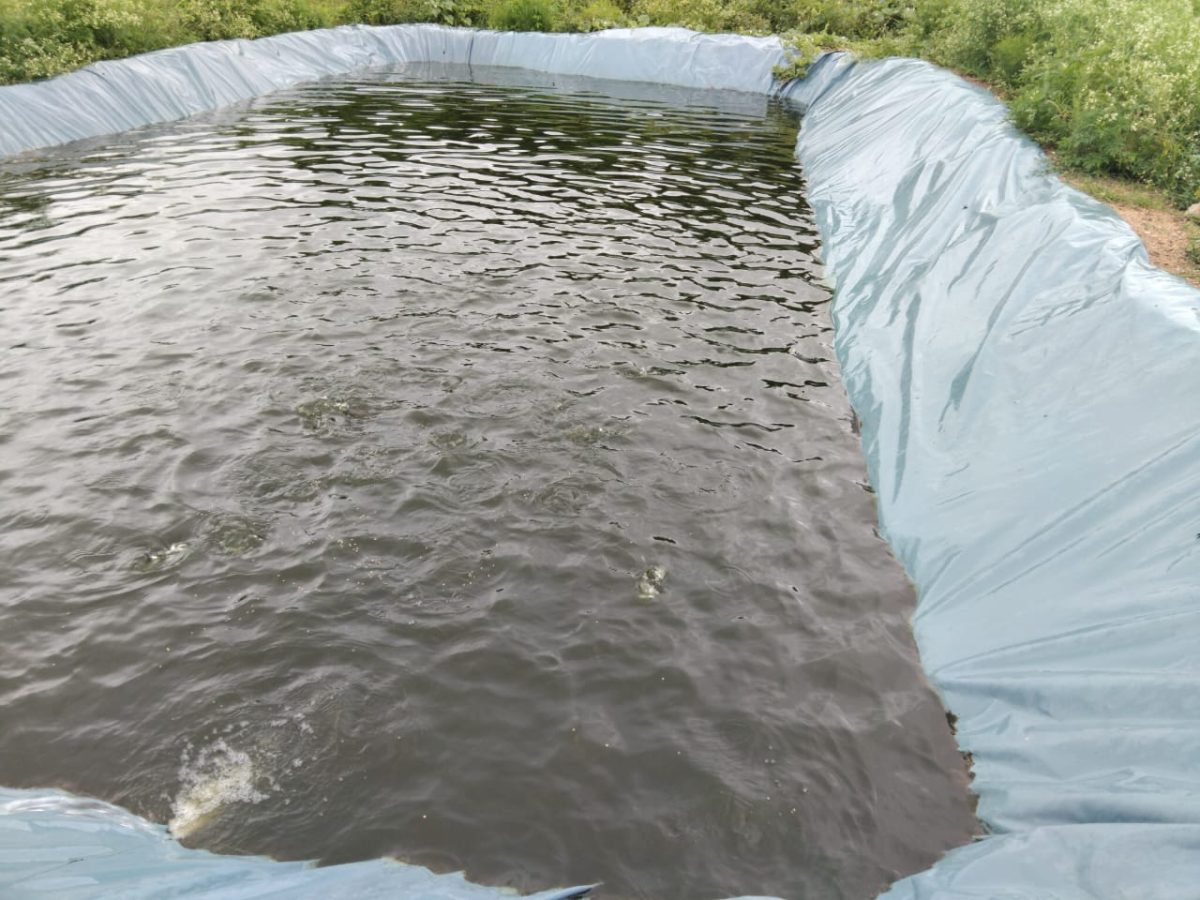
In 2023, Malaza moved from tank-based production to earthen ponds, which were inspected and approved. He was then supplied with 800 tilapia fingerlings. After six months of grow-out, he harvested, and sold the fish to the local community.
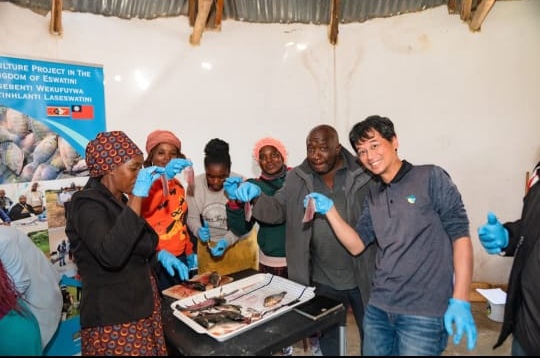
Further support followed in 2024 when he participated in aquaculture training involving the Ministry of Agriculture, Malkerns Research Station and the Taiwan International Cooperation and Development Fund (ICDF).
The ICDF, working with the Taiwan Technical Mission and the Ministry of Agriculture, has been supporting Eswatini’s aquaculture development through tilapia fry breeding, farmer training, technical guidance and the establishment of aquaculture systems aimed at improving production performance.
Its programme also focuses on strengthening local fingerling supply, developing low-cost alternative feed formulas and improving farmer capacity through technical training.
For farmers such as Malaza, this technical support has been important in moving fish farming from trial-and-error production toward better-managed aquaculture.
In 2025, Malaza received another batch of 1 000 improved tilapia fingerlings. This time, performance improved significantly.
“Within four months, some of the fish had reached about 400 grams and were ready for the market,” he said.
Malaza currently produces up to 2 000 tilapia fish and operates three ponds: two in the Highveld at Nkhaba and one in the Lowveld at Ngculwini. From his experience, the Lowveld pond performs better because tilapia grows faster in warmer water.
“Fish farming does well where it is warm. In the Lowveld, the fish grow faster because the temperature is favourable,” he said.
At Ngculwini, he uses borehole water and plans to install a solar-powered pumping system to reduce pumping costs and improve water supply reliability. He says water quality management is one of the most important parts of fish farming because poor water quality affects appetite, growth and survival.
He changes pond water every two to three weeks to maintain a healthier production environment.
Feed is another major cost driver. Malaza uses commercial starter, grower and finisher pellets, but says supply remains limited.
To reduce feed costs, he has introduced duckweed, an aquatic plant used as an alternative organic feed supplement. Duckweed is rich in protein and can help sustain fish growth when mixed properly with commercial feed.
For Malaza, this is one of the advantages of fish farming because farmers can produce part of the feed on-farm, reduce dependence on expensive commercial pellets and lower overall production costs without compromising growth performance.
“At the starter stage, we grind the pellets into powder. The fish do not eat much when they are still small, so one 25kg bag can last up to two months,” he said.
He also monitors feeding response by observing how quickly the fish consume feed. If the fish finish within about 30 minutes, it indicates growth and a need to adjust feeding levels.
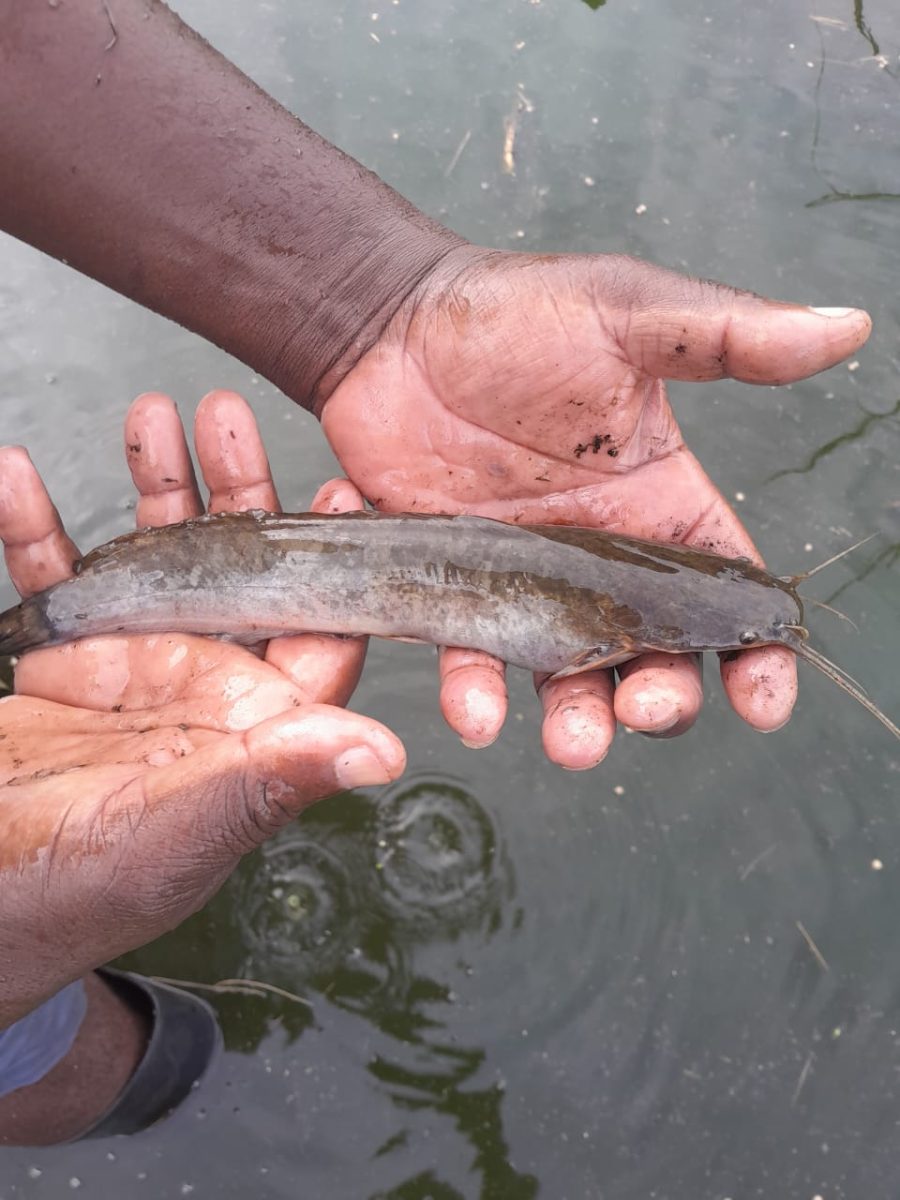
Malaza has also introduced a small number of catfish in a separate pond to assess their performance. He says tilapia can breed quickly, sometimes within two to three months, which may lead to overcrowding and competition if pond management is not controlled.
Despite the technical demands, he says the market is strong.
“The local community buys all the stock. The challenge is not the market. The challenge is producing enough fish consistently,” he said.
He now wants to scale production beyond 10 000 fish and eventually supply retail stores. However, lack of funding remains one of his biggest barriers.
For Malaza, aquaculture is not a shortcut enterprise, but it offers strong potential where farmers have water, training, good management, reliable fingerlings and access to feed.

“There is potential, but farmers must do it properly. Once the ponds are well built, approved and managed, fish farming can produce good results,” he said.
He now hopes to receive further training in fish breeding so he can produce his own fingerlings instead of relying only on external suppliers. Fingerlings currently cost about 80 cents each.
His story reflects both the opportunity and the constraints facing Eswatini’s aquaculture sector. Demand is clear, the market exists, and the Lowveld offers favourable production conditions. But for fish farming to grow into a stronger commercial value chain, farmers will need improved access to finance, quality fingerlings, affordable feed, technical training and reliable water infrastructure.