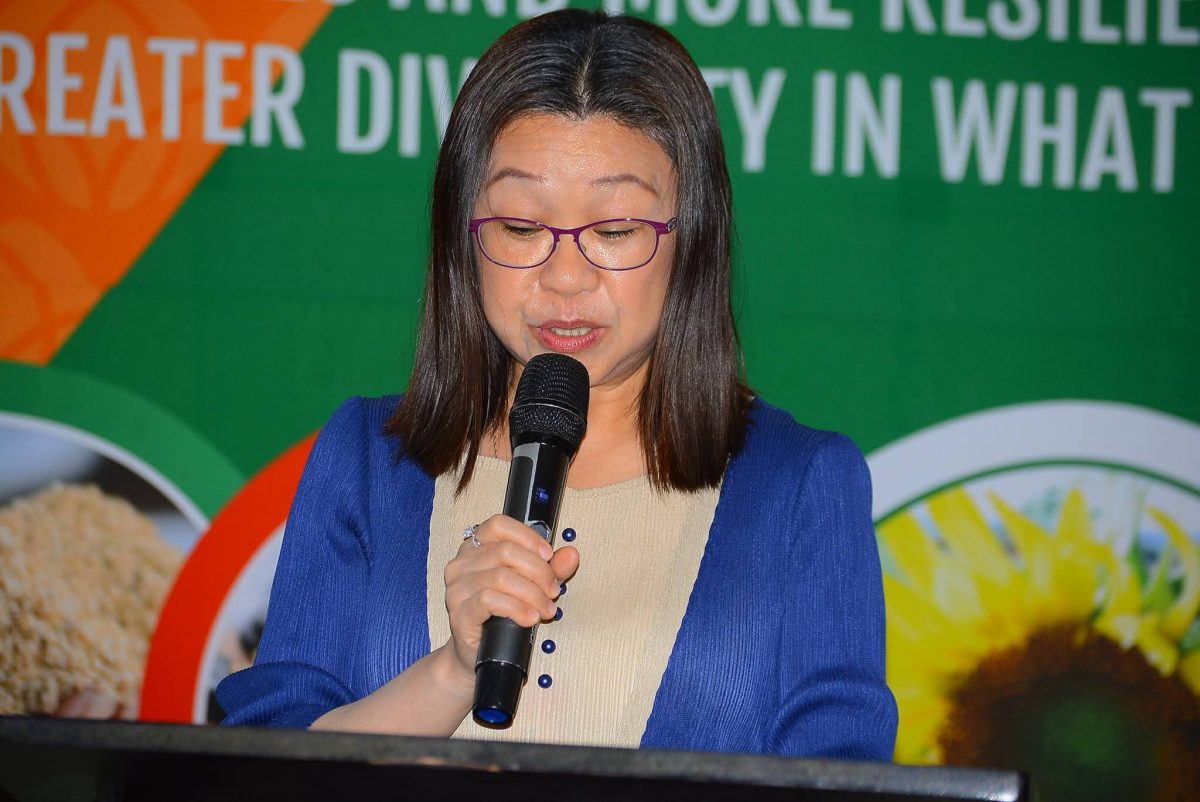
Taiwan-Africa Vegetable Initiative (TAVI) Project Manager from World Vegetable Center, Dr. Sophia Chan delivering her remarks at the TAVI Phase II Headteachers Inception Workshop 2026.
BY SIBUSISIWE NDZIMANDZE | JOURNALIST
MANZINI — Smallholder farmers are being called on to scale up production of traditional African vegetables as the Taiwan-Africa Vegetable Initiative (TAVI) Phase II moves to supply 42 participating schools with 95,000kg of produce in 2026, following supply gaps identified during the first phase where schools struggled with insufficient and inconsistent supply.
The new school component, launched during an inception workshop at the George Hotel in Manzini, marks a shift from pilot implementation to a more structured farm-to-school system aimed at improving learner nutrition while creating a more dependable market for smallholder farmers.Phase I had already laid the groundwork for expansion.
The programme supported 16 pilot schools and 8 control schools with gardening tools valued at E450,000, helping schools integrate traditional vegetable production into learning, nutrition and climate resilience. It has grown into a broader educational movement, reaching over 9,000 learners and building practical farming skills, confidence and interest in traditional vegetables among schoolchildren.
The 2026 expansion significantly raises both the programme’s reach and its production expectations. Under the new target, 42 schools across Eswatini are expected to receive fresh vegetables, reaching 22,868 children through school feeding, school gardens and nutrition education.
To sustain that system, smallholder farmers are expected to supply a combined 95,000kg of traditional African vegetables over the year.
That target highlights the main lesson from Phase I: while school gardens, teacher training, cook training and nutrition education helped build awareness and participation, schools still faced a major challenge in accessing sufficient and reliable vegetable supply.
Phase II is now directly addressing that gap by placing stronger emphasis on organised supply, improved coordination and deeper farmer participation.
Presenting the project overview, TAVI Project Manager from the World Vegetable Center Dr. Sophia Chan said Phase II is focused on strengthening collaboration, clarifying responsibilities and ensuring sustainable implementation across all participating schools.
“This is an opportunity for all of us to align on our shared objectives, strengthen coordination, clarify roles and responsibilities, and ensure effective and sustainable implementation,” she said.
Dr. Chan said the programme’s integrated model combines school gardens, school feeding and nutrition education, while also creating a direct link between schools and local farmers through a farm-to-school approach.
“Through this integrated model, we are not only improving access to nutritious food, but also creating learning environments where healthy habits can be practiced daily,” she said.
Speaking on behalf of the Ministry of Agriculture, Principal Secretary Representative Nhlanhla Motsa, Under Secretary, said the current phase is designed to move the initiative beyond pilot support and into more structured and commercially viable systems.
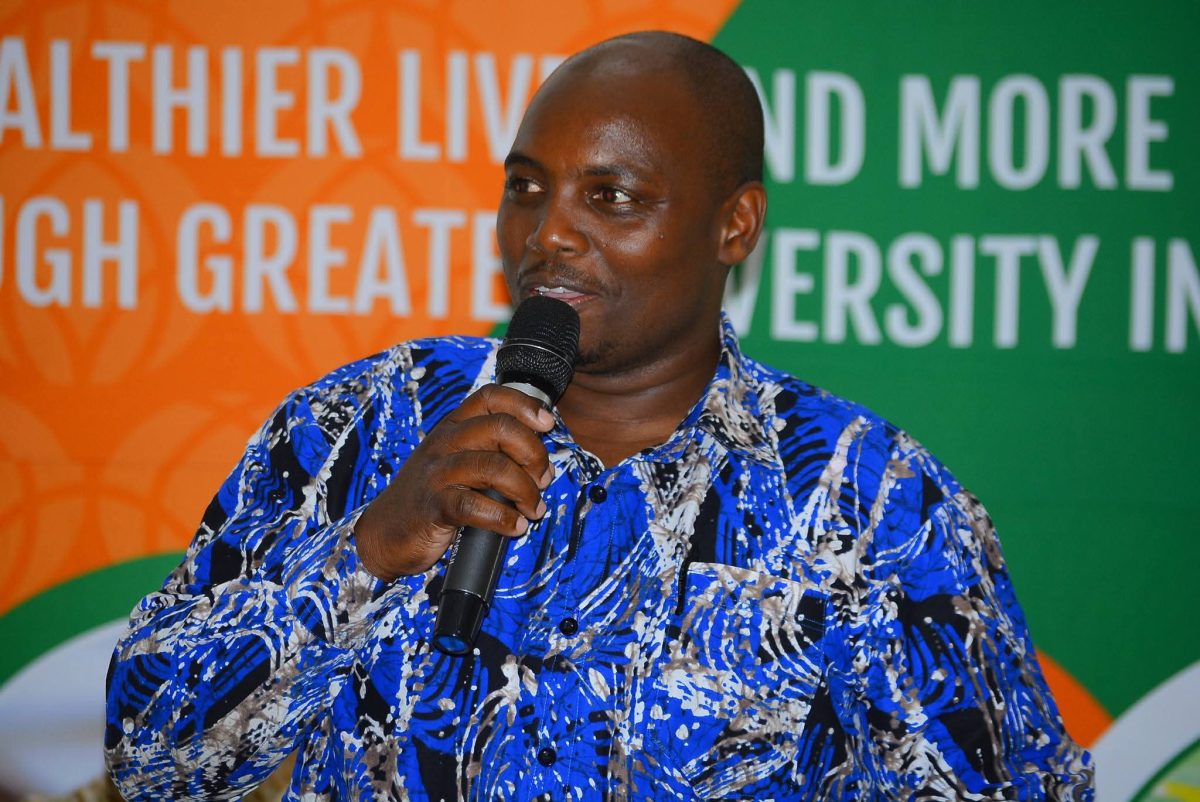
Ministry of Agriculture, Principal Secretary Representative Nhlanhla Motsa, Under Secretary delivering his remarks.
“Through this approach, we are not only improving nutrition in schools, but also creating sustainable market opportunities for our smallholder farmers,” he said.
Motsa said the programme is expected to work with at least 84 smallholder farmers to supply fresh traditional African vegetables directly to participating schools, strengthening the link between agriculture, nutrition and education while also improving livelihoods.
From the Ministry of Education and Training, the Lubombo Regional Education Officer (REO), Richard Dlamini said schools must now move beyond viewing traditional vegetables as a gardening activity and begin integrating them more deliberately into learner welfare, school feeding and practical education.
“This programme is not just about growing vegetables. It is about improving learner health, strengthening practical learning and ensuring that schools become centres of sustainable development,” the REO said.
He added that the initiative comes at a critical time, as schools continue to strengthen the link between education, nutrition and sustainable agriculture.
Nathi Dlamini, Senior Inspector of Schools in the Ministry of Agriculture, reinforced the need for schools to fully embrace indigenous vegetables as part of both production and feeding systems.
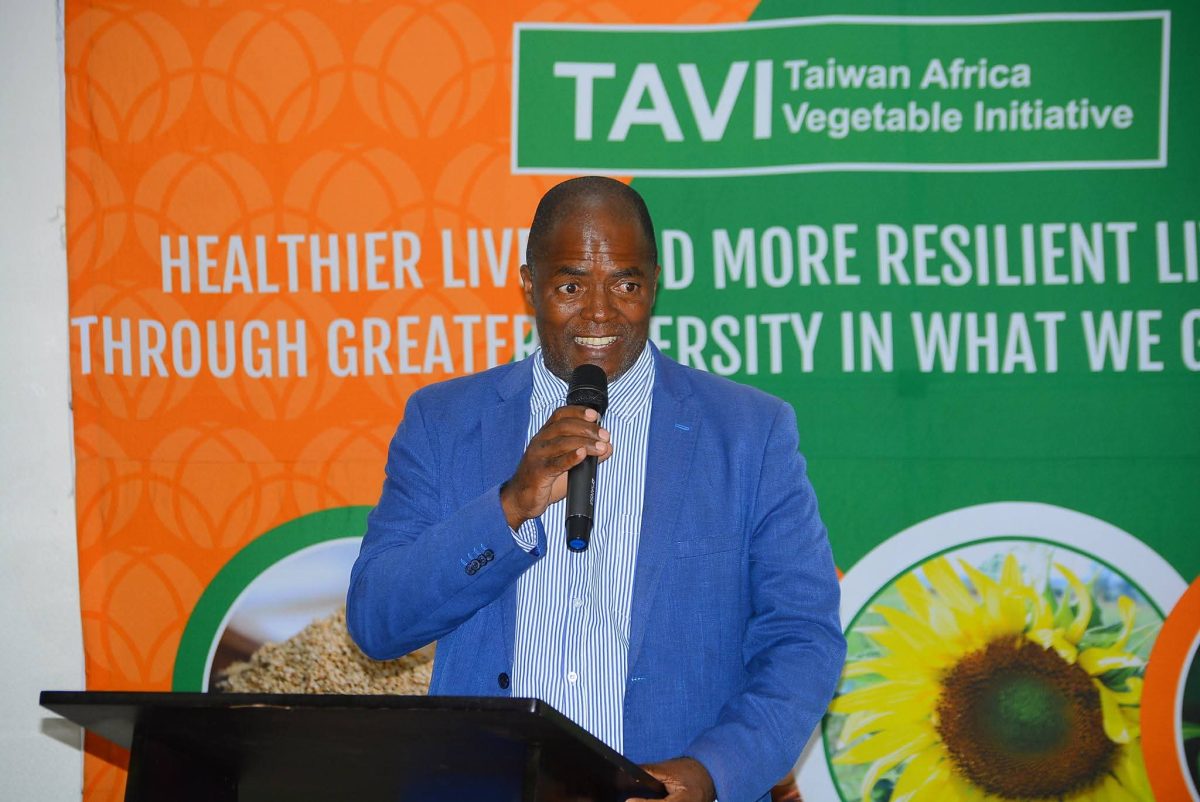
Ministry of Education and Training, Lubombo Regional Education Officer (REO), Richard Dlamini delivering his remarks.
He urged headteachers and focal teachers from the 42 participating schools to integrate the crops into school gardens and daily school meals.
“Early exposure is key to building lifelong consumption habits,” Dlamini said.
He noted that traditional African vegetables are nutrient-dense and climate-resilient, and that they play an important role in promoting dietary diversity, healthy body systems and sustainable agriculture.
At school level, however, concerns remain over production space. Thulani Thwala, Headteacher of Enhlanhleni Methodist Primary School, welcomed the programme and thanked TAVI, the Ministry of Agriculture and the Ministry of Education and Training for bringing the initiative to schools. But he said limited land remains one of the major barriers to expansion.
“We appreciate this programme, but land remains a challenge. If more land can be made available, schools and communities can expand production, create opportunities for young people and improve access to nutritious traditional vegetables,” he said.
Thwala also appealed to chiefs to consider allocating more land for cultivation, saying increased production would not only strengthen supply to schools, but also open up employment opportunities for young people while improving access to indigenous, health-promoting crops in communities.
His remarks captured the central challenge now facing Phase II: the schools are there, the demand has been quantified, and the market has effectively been created but production must now rise to match it.
To support delivery, Phase II is strengthening training for agriculture teachers, school cooks and focal teachers, while improving monitoring systems for both school gardens and feeding programmes.
The initiative is also using school competitions to encourage participation and maintain standards across school gardens, cooking, learner knowledge and nutrition-related activities.
The broader goal is clear. While Phase I introduced the model and built school-level awareness, Phase II is now trying to solve the supply problem through stronger farmer linkages, better planning and more deliberate implementation.For smallholder farmers, this creates a structured market opportunity.
For schools, it offers a pathway to more consistent access to fresh and nutritious vegetables. And for communities, it could mean improved nutrition, stronger local livelihoods and wider youth participation in agriculture.
The message emerging from the workshop was unmistakable: Phase I created the platform, but Phase II will be judged by whether production on the ground can rise to meet the demand now created.
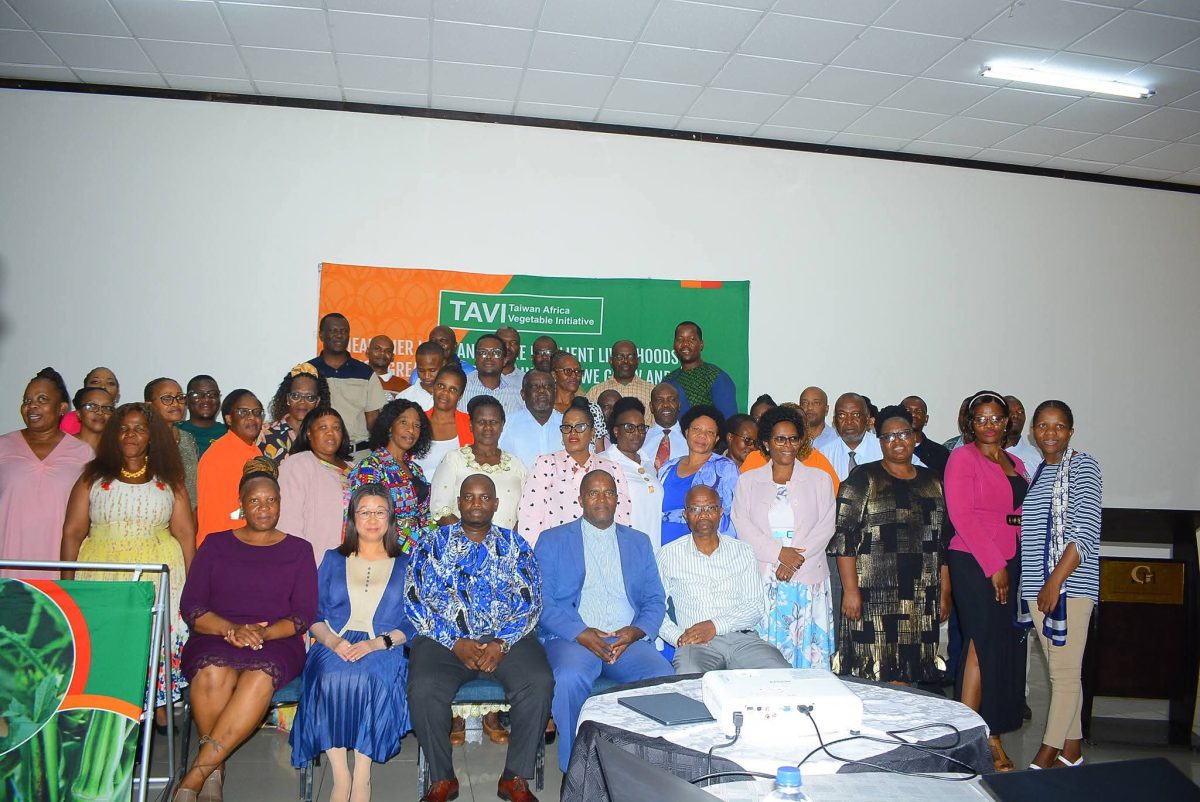
A group photo of participants attended the Taiwan-Africa Vegetable Initiative (TAVI ) Phase II Headteachers Inception Workshop.