
BY: MANDLENKHOSI SITHOLE
While the rest of the economic world studies history for inspiration, Eswatini’s agricultural policymakers and State-Owned Enterprises (SOEs) seem to study it for ghosts. Consider a history lesson they clearly missed.
After the Second World War, Japan’s economy was in tatters. Two American nuclear bombs had flattened their biggest industrial cities. The Japanese were defeated.
But America had learned an important lesson from history. If you cannot completely destroy an enemy, then convert them into a friend.
The Americans therefore went into Japan and helped their defeated enemy to rebuild their economy. This meant sending in capital and technical advice. The Americans shared many skills with them, the most important being how to mass-produce cars.
JAPAN’S REMARKABLE JOURNEY FROM STUDENT TO MASTER
The Japanese did not just blindly copy everything the Americans taught them. They asked themselves what worked and what did not. Moreover, they asked what they could improve.
What the Japanese saw was that their car manufacturing industry could only grow if it was export-oriented.
But why would anyone buy Japanese cars instead of American or European ones? How would the Japanese differentiate themselves in a world where Ford, General Motors, Mercedes-Benz, and Volkswagen were already known?
The answers to these questions hinged on two things. The first was that Japanese cars would need to be of better quality than those made by the rest of the world.
The second was that Japanese manufacturers would need to innovate processes that cut costs, instead of just relying on scale.
This is how Toyota – their most famous car brand – built a reputation for quality and innovated its famous production system called Lean. They accepted that they had to compete.
AGRO-GOLIATHOPHOBIA – THE IRRATIONAL FEAR OF GIANT PRODUCERS
The term Agro-Goliathophobia is not standard English. It is a word that has been coined solely for this article. Agro-Goliathophobia is the irrational fear of bigger regional producers. It is a silent killer of Eswatini’s economy.
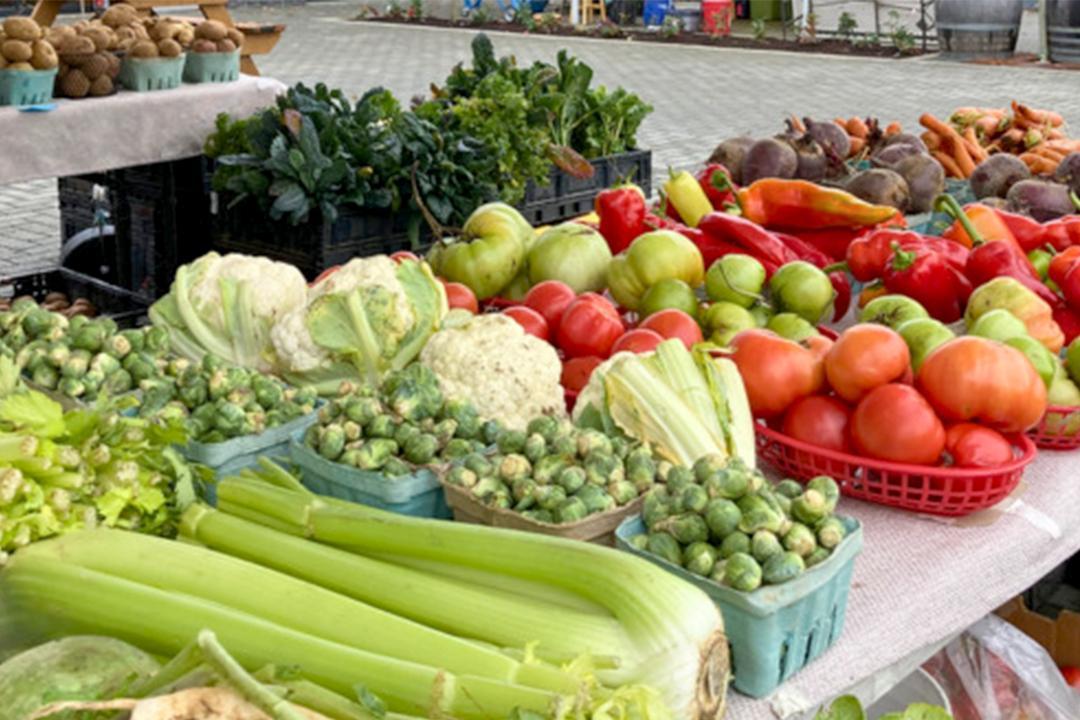
It is observed every day at all the country’s borders; it is the driving force of the country’s agricultural parastatals. Whenever a truckload of vegetables or dairy products is seen coming from South Africa, locals begin sweating and breathing heavily.
To calm them, the government allays their fears by allowing parastatals to impose import levies.
These levies are paid to the parastatals, added to the costs of the produce by retailers, and passed on to the poor consumer.
In extreme cases, imports from South Africa are banned entirely or monopolized by one parastatal. All this is done in the name of protecting the local producer who remains coddled like an adult who still lives off their elderly parents, because they fear being independent.
SACU’S FREE TRADE AGREEMENTS
The saddest part about all this is that the Southern African Customs Union (SACU) has agreements that promote free trade between its countries. (Articles 18 and 19 of the SACU Agreement, 2002: Amended, 2013)
These agreements mean all five member countries are encouraged to remove trade barriers with each other. But Eswatini, Lesotho, Botswana, and Namibia suffer from Agro-Goliathophobia; they all fear the giant next door.
The irony is lethal. Our policymakers are terrified of the very economy they depend on for survival. They love the SACU receipts that fund the national budget, yet they demonize the competitive marketplace that generates that wealth. It is the economic equivalent of a toddler hiding in their parent’s pocket while claiming the parent is a dangerous stranger.
ESWATINI MUST LEARN FROM JAPAN – LITERALLY
Due to deep structural poverty in Eswatini, the government of Japan quietly and respectfully sends hundreds of millions in food aid to Eswatini. It is time we asked them to help us help ourselves.
Let us say to the Japanese: “Thank you for the charity, but please do unto us what the Americans did unto you. Show us how to be more competitive agricultural producers.”
How can Eswatini farmers produce and transport premium-grade vegetables that Woolworths, Food Lovers’ Market, Checkers Hyper – and the rest of the world’s supermarkets – can put on their shelves?
How can we make Eswatini the Japan of Southern Africa? Until we stop fearing giants, we will remain in a stagnant economy whose consumers bear the cost of inefficiency in the name of protection.