

BY: PHESHEYA KUNENE | EDITOR
MANZINI — Eswatini’s sugar bean farmers will effectively be handed first call on the domestic market from September 1, 2026, when a total restriction on sugar bean imports takes effect. The opportunity is big. So is the test.
The restriction by the National Agricultural Marketing Board (NAMBoard), issued under the NAMBoard Act of 1985, means businesses that have traditionally looked beyond Eswatini for sugar beans will increasingly have to look across the fence at local farmers.
For growers, that changes the conversation from “Where is the market?” to “Can we supply it consistently?”
The policy comes after months of debate over imports and locally produced beans. In June, the Times of Eswatini reported that more than E9 million worth of locally produced beans were sitting unsold at National Maize Corporation (NMC) facilities, even as retailers continued importing cheaper beans from South Africa. NAMBoard subsequently introduced a requirement that importers source at least 25% locally before receiving import permits.
The September restriction takes protection considerably further.
Production is rising
The timing is significant because Eswatini’s bean industry is expanding.
According to figures cited by Inside Biz from the Ministry of Agriculture, NMC contracted 770 hectares involving 753 farmers, with 354 hectares actively under production during the first quarter. A further 174 hectares were contracted, while 1,386 farmers received training in Good Agricultural Practices.
The NMC producer price was reported at E21,875 per tonne.
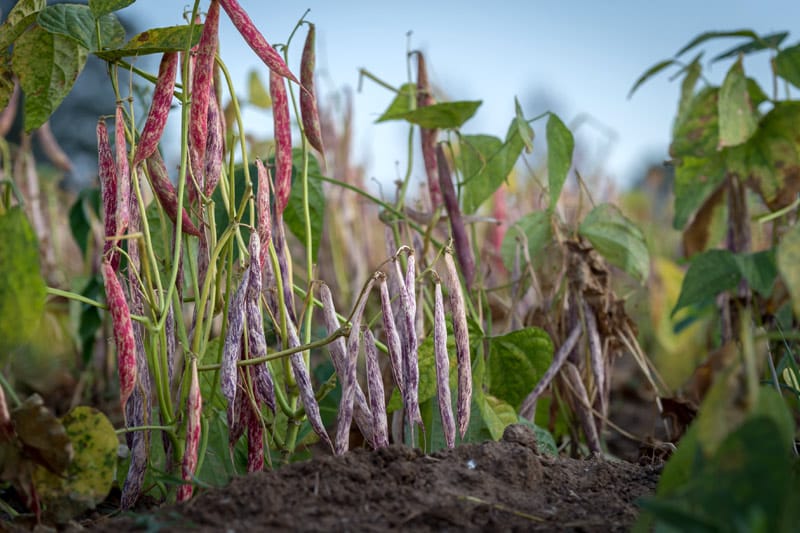
Yet there is a catch.
Only 0.34 tonnes were procured against a quarterly target of five tonnes, with high moisture content identified as a major problem.
That small statistic carries a big warning. Banning imports can create space on supermarket shelves, but government policy cannot put quality beans into the bag. Farmers must do that.
The farmer now has homework
For local producers, the ban should therefore not be interpreted simply as a signal to plant more hectares.
Farmers need to plant for a known market, use suitable seed, manage pests and diseases, harvest at the correct stage and pay particular attention to drying, grading, storage and moisture levels.
Post-harvest management matters because beans stored under poor conditions are vulnerable to fungal contamination. Research examining bean samples in Eswatini found substantial mycotoxin contamination across the value chain, while identifying poor post-harvest handling among the challenges facing domestic production.
The crop itself has considerable potential. Agronomic guidance previously published by Agribusiness Media indicates that well-managed dry beans can produce around 1.5–2 tonnes per hectare, with irrigated production reaching up to around 3 tonnes per hectare under suitable conditions.
Beans also fit neatly into more diversified farming systems. As legumes, they can form part of rotations with maize and other crops, helping farmers move away from maize-only production while spreading commercial and climatic risk.
Protection must produce competitiveness
There is, however, another side to an import ban.
Retailers and consumers still expect beans of reliable quality, quantity and price throughout the year. If domestic supply becomes inconsistent, shortages or price pressure could eventually force policymakers to reconsider restrictions.
That has happened before. In June, NAMBoard moved from an earlier restriction to a 25% local-sourcing requirement, saying decisions would be reviewed according to local stocks and market demand.
This means the September ban should be treated as a window in which the local industry must prove itself.
Farmers need production finance, extension support, irrigation where viable, mechanisation and quality seed. But investment is equally necessary after harvest: drying facilities, moisture testing, aggregation, grading, storage and dependable links between farmers, NMC, NAMBoard, processors and retailers.
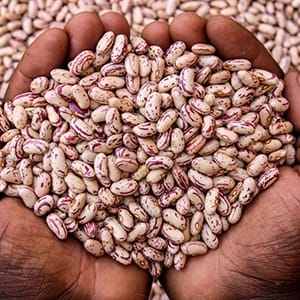
The prize is bigger than a protected bean market.
Historical research shows how dependent Eswatini has been on imports: NAMBoard data cited in a study of the country’s bean value chain showed imports accounted for 88% of dry beans supplied to consumers in 2021.
Replacing even part of that dependence with commercially competitive local production would keep more agricultural spending within Eswatini, strengthen rural incomes and move the country closer to its food-sovereignty ambitions.
From September 1, therefore, the gate closes on imported sugar beans, but another one opens for local farmers.
The market has been created. Now Eswatini’s bean farmers must grow enough, dry it properly, meet the grade and keep the shelves full.