

BY: PHESHEYA KUNENE | EDITOR
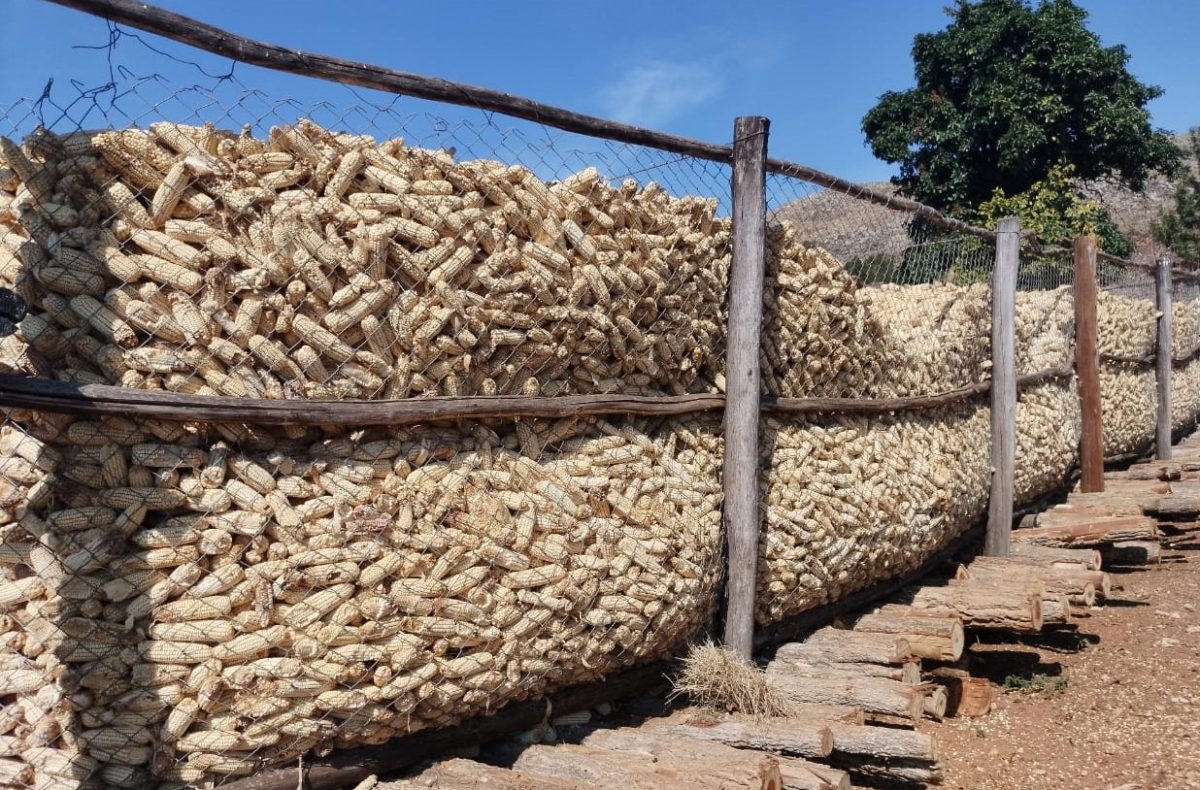
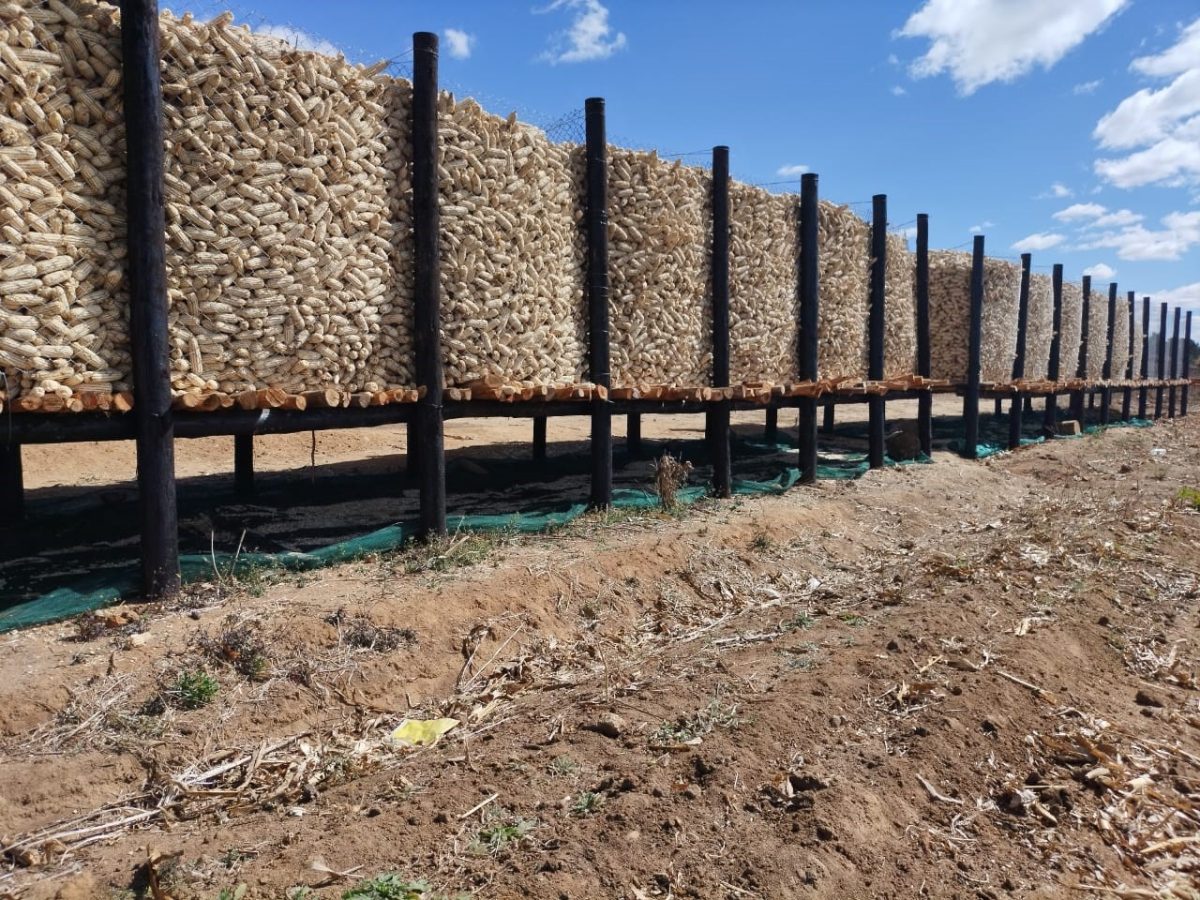
MBABANE — Eswatini’s Food Sovereignty and Sustainable Development programme scored 55% in Government’s 2025/26 performance assessment, as the Hamba Ubuye programme produced 12,308.76 metric tonnes of maize and achieved its production target.
The result places Food Sovereignty and Sustainable Development second among Government’s Programme of Action objectives, narrowly behind Social Protection and Security at 56%.
It also performed above the Government’s overall annual score of 48%.
Prime Minister Russell Mmiso Dlamini announced the results during a press briefing at Hospital Hill, saying the assessment was intended to strengthen accountability and improve delivery across Government.
“These institutions performed above the national average and demonstrated that effective planning, strong leadership and disciplined execution can produce meaningful results, even in a constrained operating environment,” Dlamini said.
The government assessed performance using three pillars: execution of plans, weighted at 80%; quality of execution at 15%; and timeliness of reporting at 5%.
Agriculture records gains
The agricultural scorecard shows strong progress in some areas, particularly food production and agricultural infrastructure.
The Hamba Ubuye food-security programme recorded 100% progress after producing 12 308.76 metric tonnes of maize. Government’s seed production and quality-control intervention scored 76%.
EWADE programmes involving dams, irrigation and farmer companies recorded 79% progress. Thirty farmer companies were established, 93% of targeted sugarcane was planted and 59% of other targeted crops were planted. Construction of Mpakeni Dam stood at 46%.
In other words, some parts of agriculture are moving with purpose.
The figures suggest that targeted public investment can lift domestic agricultural production. But a 55% overall food-sovereignty score also means considerable work remains before Eswatini can substantially reduce its dependence on imported food.
The score may be above average, but the fields are not yet full.
Livestock and technology lag
Some of the weakest agricultural scores point directly to where greater attention is required.
Livestock infrastructure recorded 28% progress, while the integration of ICT into agricultural practices stood at 33%. The government’s assessment also identified challenges involving climate-change institutional arrangements, land policy and the revitalisation of Rural Development Areas.
That is where the shine begins to fade.
These gaps matter because food sovereignty cannot be built on production alone.

Farmers need irrigation, quality inputs, extension services, finance, technology, storage, processing facilities and reliable markets. Producing more without strengthening the rest of the value chain risks leaving farmers with produce but no profitable route to market.
A bumper harvest sounds good. A bumper harvest without a buyer can quickly become a headache.
Eswatini National Agricultural Union (ESNAU) CEO Tammy Dlamini has previously argued that farmers can increase production, but need stronger markets and financing systems.
“We cannot continue importing food that local farmers are capable of producing,” Dlamini has said previously.
ESNAU has also advocated improved access to agricultural finance, insurance and markets as part of efforts to make farming commercially sustainable.
That becomes particularly important given Eswatini’s food deficit. FAO’s 2026 investment profile estimates annual maize requirements at about 140 000 tonnes, compared with domestic supply of approximately 75 000 tonnes. That leaves a gap of about 65 000 tonnes.
That gap is not only a warning. It is also a market.
For local farmers, those missing tonnes represent business waiting to happen.
FMD victory turns attention to exports
The Prime Minister also highlighted the Government’s response to Foot-and-Mouth Disease (FMD) among the achievements recorded under the current administration.
With the disease brought under control, the next challenge is rebuilding Eswatini’s position in international livestock markets, with the Government looking towards opportunities for beef and pork exports, including European markets.
That changes the conversation from disease control to market recovery.
The ambition raises the stakes for the livestock sector.
Accessing high-value international markets requires strong veterinary surveillance, animal identification and traceability, biosecurity, movement controls, modern abattoirs and processing facilities that comply with stringent sanitary standards.
This makes the 28% score for livestock infrastructure particularly significant.
Disease control may reopen the door, but infrastructure and compliance will determine whether Eswatini can walk through it.
The message for the livestock industry is simple: beating FMD is one battle. Winning back premium markets is the next one.
Government acknowledges bottlenecks
Dlamini acknowledged that implementation across Government continues to face obstacles.
He cited delayed budget releases, procurement bottlenecks, inter-ministerial coordination challenges, legislative delays, dependence on external funding partners and weaknesses in planning and reporting.
“These issues contributed significantly to slower implementation of several planned outputs across Ministries,” he said.
Such delays can be particularly costly in agriculture.
Farming does not wait for paperwork.
Seed delivered after planting season, irrigation completed after the rains or veterinary intervention arriving after disease has spread can mean an entire production cycle is lost.
Dlamini said lessons from the assessment would now guide planning, resource allocation and performance management.
“The government remains committed to continuously improving implementation performance and ensuring that public programmes translate into real improvements in the lives of emaSwati,” he said.
From 55% to greater self-sufficiency
For agriculture, the 55% score represents progress rather than completion.
Hamba Ubuye’s maize production, investments in irrigation and farmer companies show where Government interventions are producing measurable results. The next challenge is to extend that momentum to the weaker parts of the agricultural economy.
Livestock infrastructure needs faster investment. Agricultural digitalisation needs acceleration. Farmers need stronger access to finance, insurance, storage, processing and dependable markets.
The government should also increasingly measure food sovereignty against outcomes that matter commercially: how much domestic demand is supplied by local farmers, how much the food import bill falls, how farmer incomes change and how much agricultural produce Eswatini exports.
Because, in the end, the scorecard is useful, but the real exam is happening in the fields, feedlots, packhouses and markets.
The 55% score says agriculture is moving in the right direction.
The harder test will be whether that progress translates into more food produced locally, fewer imports, stronger exports and more profitable farms.