
BY: SIBUSISO MNGADI | EDITOR-IN-CHIEF

The National Agricultural Marketing Board (NAMBoard) has introduced monthly Area Planted reports designed to help vegetable farmers decide what to plant — and what to avoid — before putting a single seedling in the ground.
Published on the Eswatini Horticulture Information System (EHIS) at ehis.co.sz, the reports compare the hectares farmers have actually planted over the past three months against estimated national demand for each crop, then issue clear, crop-by-crop guidance for the month ahead. The goal is to break the costly cycle of oversupply and shortage that has long plagued the local horticulture market.
The latest report, dated 30 June 2026 and covering guidance for July, paints a picture of a market badly out of balance — with some crops severely under-planted and others heading for a glut.
The gaps: potatoes, carrots and onions wide open
Potatoes remain the biggest opportunity on the local market. Against an estimated national demand of 35.20 hectares per month, EHIS records show no potato plantings in April, just 1.17 hectares in May, and none in June. NAMBoard says farmers can expand potato production “with minimal risk of a market glut.”
The same applies to carrots and onions. Carrot plantings totalled a mere 0.06 hectares in June against a demand of 9.01 hectares, while onions came in at 2.26 hectares against a required 8.53. Cabbages are also under-planted — 0.15 hectares in June against 1.65 required — though NAMBoard cautions that the margin is narrow and expansion should be handled carefully.
The warnings: beetroot, tomatoes and green pepper
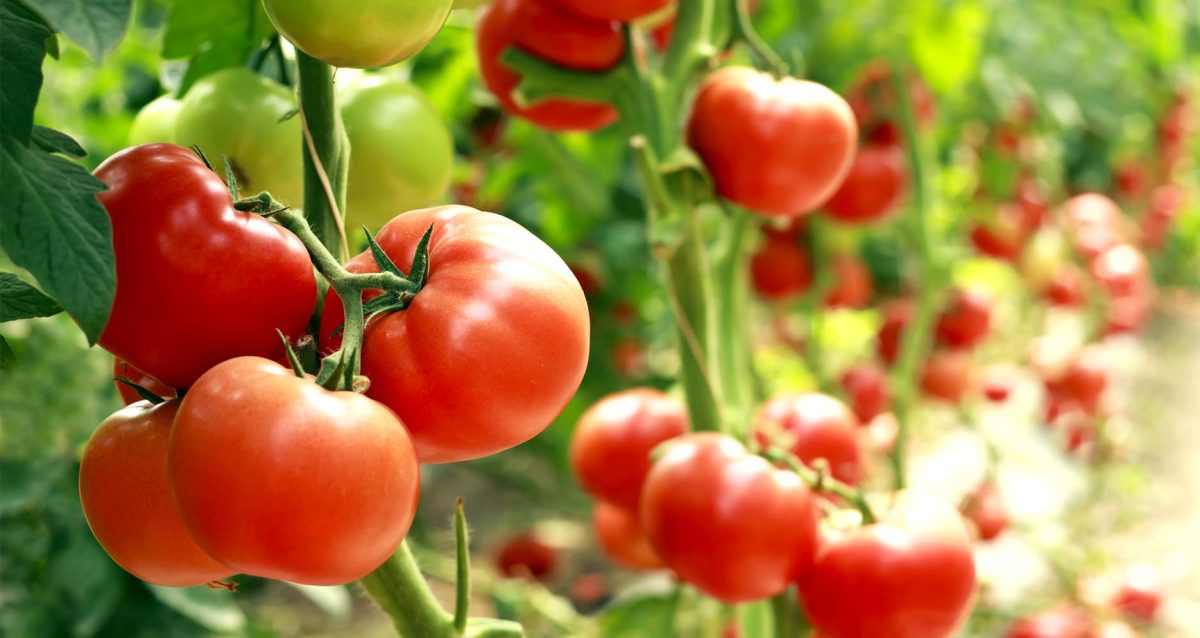
At the other end of the scale, the report flags crops where planting has run ahead of demand. Beetroot plantings hit 8.99 hectares in April and 10.54 in May — well above the 7.26-hectare monthly demand — before easing to 4.99 hectares in June. Tomatoes followed a similar pattern, exceeding demand in April (8.57 ha) and May (9.51 ha) against a requirement of 6.34 hectares.
For both crops, NAMBoard advises that only programmed farmers should plant in July, and with caution, as the late May plantings are likely to reach the market at the same time as the June crop.
Green pepper carries a similar warning. Plantings exceeded the 2.17-hectare local demand in April (6.59 ha) and May (3.65 ha), and because harvesting can stretch up to eight weeks, the board says a market glut remains possible. Only contracted farmers are advised to plant.
Export window open for certified farmers
The report also tracks three export crops — green beans, baby marrow and hot chilli. Green beans and baby marrow are both running well below confirmed export demand, with June plantings of just 0.18 and 0.42 hectares respectively against monthly requirements of 4.17 and 4.00 hectares. NAMBoard is inviting Global GAP certified farmers to approach the board for contracts and planting programmes.
Hot chilli plantings, by contrast, have exceeded the modest local forecast of 0.36 hectares for three consecutive months, though certified growers can still access the export market through NAMBoard.
A planning tool, not a guarantee
The reports draw on data captured through EHIS, the digital platform on which farmers register their locations, plantings and forecast harvest dates. That data allows NAMBoard to assess local supply against demand — evidence it also uses to regulate imports when local production is sufficient.
NAMBoard is clear, however, that the reports are a guide, not a safety net. The board states it will not be held responsible for any produce that is not contracted or formally programmed — a pointed reminder that farmers who plant outside official programmes do so at their own risk.
The overall trend in the data is itself a story: total recorded plantings fell from 44.27 hectares in April to 36.24 in May and just 15.24 in June, against a combined monthly demand of 83.63 hectares — a seasonal winter dip that leaves significant room on the local market for farmers who plan well.
The monthly Area Planted reports are available at ehis.co.sz under Production Info, alongside market prices, gross margins and production guides.
Read NAMBoard Reports here: Production Reports – EHIS