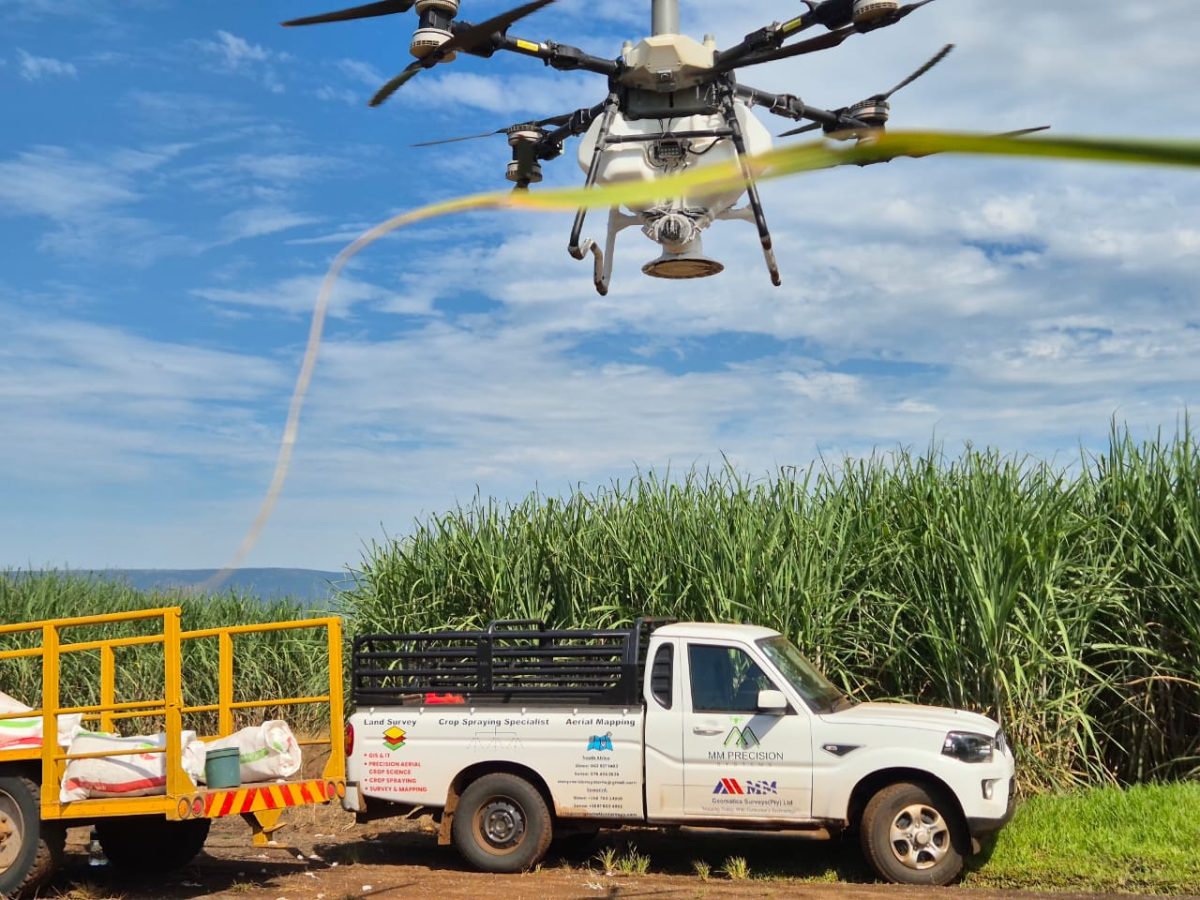
Drone lifting off above a sugarcane field as it prepares to begin aerial seeding of sunhemp.
BY SIBUSISIWE NDZIMANDZE | JOURNALIST
MANZINI – As agriculture faces mounting pressure from climate change, rising input costs, and soil degradation, farming smarter is no longer optional, it is essential. Ubombo Sugar Limited has marked a significant milestone by completing its first-ever 113-hectare drone planting trial of sunhemp under its autumn replant program.
The initiative reflects a shift toward farming systems that prioritise soil health, precision input use, and long-term productivity.
Building sustainability from the soil up
At the centre of the project is soil regeneration. Sunhemp, used as a cover crop, adds organic matter to the soil, stimulates beneficial microbial activity, and improves soil structure. Healthier soils improve nutrient availability, water retention, and overall crop resilience.
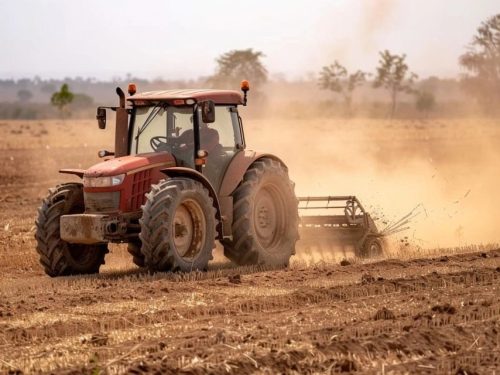
By using drones for planting, Ubombo reduces the need for heavy machinery in wet or fragile fields. Less machinery traffic means lower soil compaction — a key factor in protecting root development and slowing ratoon decline in sugarcane production.
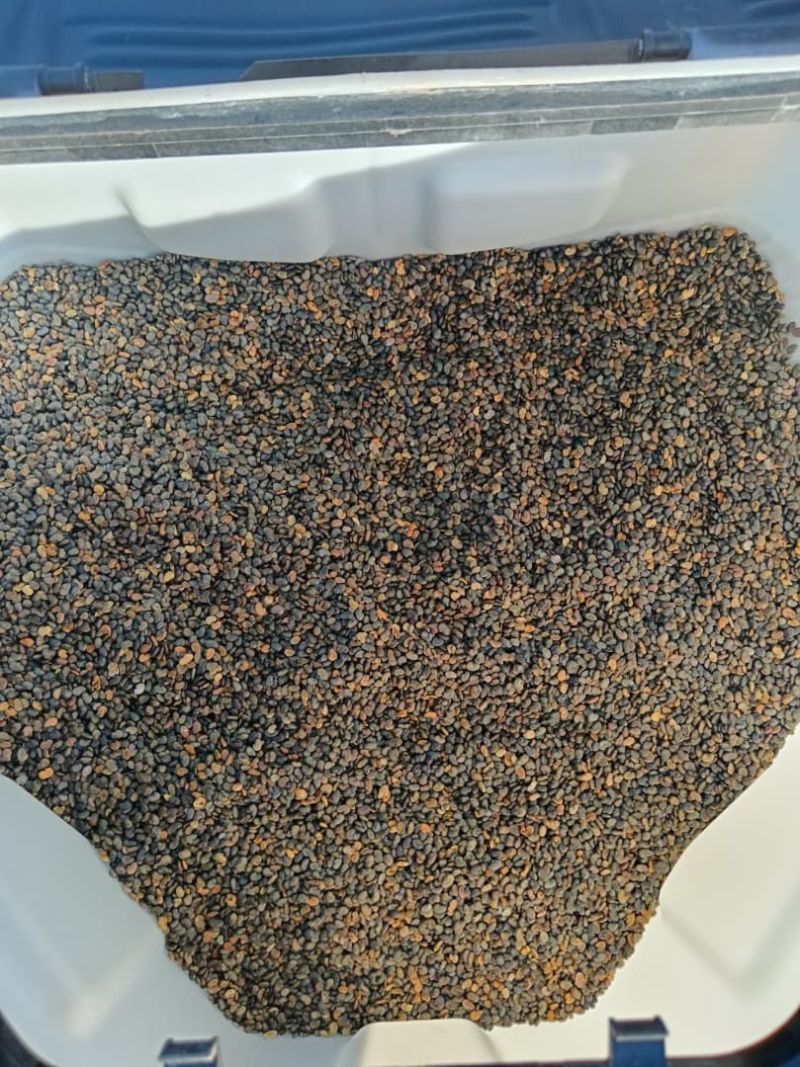
Sunhemp seeds loaded into the drone hopper before planting.
Ubombo Sugar Limited Communications Officer Winile Masinga said sustainability is central to the company’s agricultural strategy.
“Sustainable farming requires us to protect our soils while maintaining productivity. Drone technology helps reduce compaction, improve precision and ensure our operations are both environmentally responsible and economically efficient,” said Masinga.
Precision as a sustainability tool
Sustainability is not only about soil; it is also about how inputs are managed. Drone technology allows agro-products to be applied at the correct rate and only where needed. This targeted approach reduces unnecessary chemical use, lowers input costs, and supports integrated pest management by focusing on problem areas instead of treating entire fields.
For farmers, this model highlights the value of efficiency: reducing waste while maintaining effectiveness is one of the most practical ways to strengthen profitability and environmental stewardship at the same time.
Drones also enable rapid field coverage, ensuring time-sensitive operations such as planting or pest control are carried out when conditions are optimal.
Climate resilience through data
Beyond field operations, drone mapping generates georeferenced data that supports better planning and long-term benchmarking. Monitoring crop performance across seasons enables more informed decisions, strengthening resilience in the face of unpredictable weather patterns.
In an era where sustainability increasingly depends on evidence-based management, access to accurate field data is becoming a competitive advantage.
What it means for farmers
Ubombo will assess the performance of the drone-planted sunhemp through cost-benefit and germination analysis. Early experience has shown that application methods must be adapted to soil type and field conditions reinforcing that sustainable farming is as much about learning and adjusting as it is about technology itself.
While the capital cost of drone ownership may be high for individual small-scale growers, service-based or group models could make the technology more accessible over time.
Importantly, the company emphasises that mechanisation is being implemented to improve efficiency and sustainability, with employees being upskilled where technology changes operational roles.
A shift toward long-term thinking
The 113-hectare drone sunhemp planting initiative signals a broader message for the agricultural sector: sustainable farming is built on protecting soil, using inputs wisely, and embracing innovation responsibly.
For farmers across Eswatini, the lesson is clear: sustainability is not about producing less, but about producing smarter protecting resources today while securing yields for tomorrow.