

BY: NOSIPHO MKHIZE | JOURNALIST
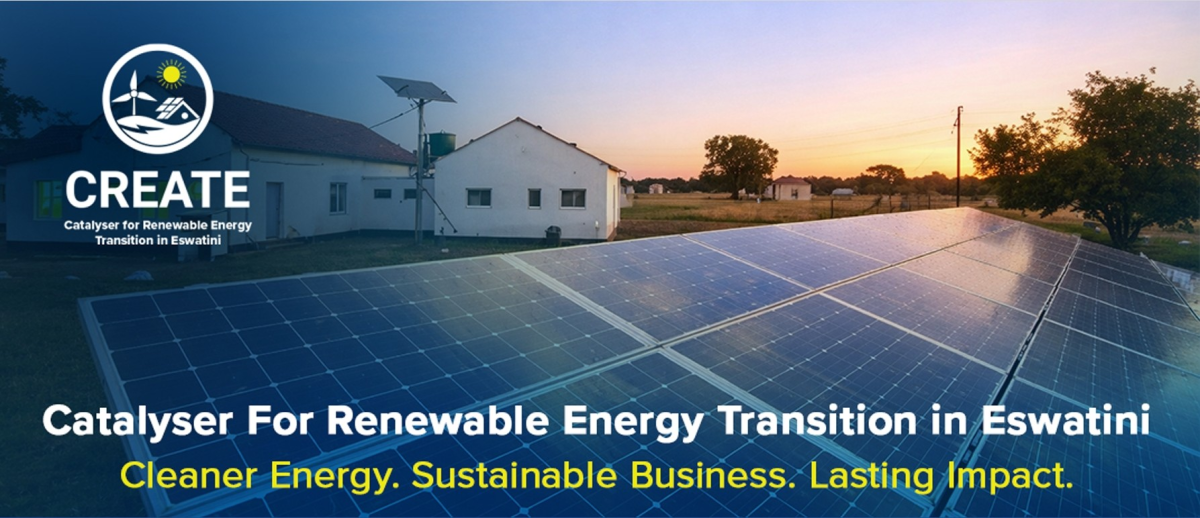
MANZINI – Agricultural MSMEs (Micro Small and Medium Enterprises) in Eswatini have been invited to submit proposals for renewable energy adoption and expansion projects under the CREATE (Catalyser for Renewable Energy Access and Transition in Eswatini) programme, a government-backed initiative aimed at improving productivity, sustainability, and long-term competitiveness across key value chains.
Agricultural micro, small, and medium enterprises in Eswatini have been presented with a fresh opportunity to strengthen their operations through clean energy investment, following a new call for proposals under the CREATE programme. The Ministry of Natural Resources and Energy is inviting MSMEs to apply for support for renewable energy adoption or expansion projects under the initiative, which is implemented with UNDP Eswatini and Catalyse Swaziland.
For agricultural MSMEs, the call comes at a critical time. Across the country, many small agri-businesses continue to face energy-related constraints that affect production, processing, irrigation, storage, and overall efficiency. From horticulture producers needing water pumps and irrigation systems, to processors requiring dependable power for milling, refrigeration, and packaging, energy remains central to growth. The CREATE programme is therefore more than a clean energy initiative; it is a business support opportunity with the potential to improve resilience, reduce operating costs, and unlock expansion for enterprises working across the agricultural value chain.
According to the Ministry of Natural Resources and Energy, the programme is designed to support businesses seeking to transition to renewable energy and energy-efficient systems while strengthening their long-term sustainability. In the official announcement, the Ministry said CREATE will support qualifying MSMEs with “technical support to facilitate access to finance” and help build an environment that enables the shift to renewable energy and energy efficiency. That support could prove especially valuable for agricultural businesses that have viable growth plans but struggle to finance the upfront cost of solar systems, cold storage solutions or energy-efficient production equipment.
The programme explicitly includes agriculture among the sectors eligible to apply, alongside manufacturing, ICT and services. To qualify, MSMEs must be registered in Eswatini, comply with statutory requirements, including tax, labour, social, and environmental obligations, and demonstrate that their business processes rely on some form of energy for production. Applicants must also be able to keep financial records and operate from standalone or commercial business premises. Youth- and women-led businesses are also strongly encouraged to apply, a provision that could broaden access for emerging agri-entrepreneurs working to build viable enterprises in farming, agro-processing, and related services.
For agricultural MSMEs, some of the strongest opportunities under the call lie in the types of projects the programme is willing to support. Eligible proposals may focus on expanding renewable energy access through solutions such as solar photovoltaic systems, biogas, and energy-efficiency packages. They may also centre on the “productive use of energy” in areas including irrigation, processing, cold storage, lighting, ICT services, and production equipment. In practical terms, this means an agricultural enterprise could seek support for energy systems that directly improve farm output, reduce post-harvest losses, or make value addition more efficient and commercially sustainable.
That focus is important because energy challenges are often what stand between agricultural MSMEs and meaningful scale. A small fruit or vegetable producer, for instance, may lose market opportunities because of inadequate cold storage. A processor may face higher costs due to inefficient energy use. An irrigation-dependent enterprise may struggle to expand because of unreliable or unaffordable power. By backing renewable energy solutions linked to productivity, CREATE creates room for agricultural MSMEs to move from survival mode to growth mode, while also positioning them to become more competitive in increasingly demanding markets.
The Ministry also makes clear that projects should do more than install technology. They must show how clean energy will strengthen value chains in key sectors, including agriculture, and applicants are required to present a clear strategy for reinvesting energy savings into business scale or growth. This is a significant requirement because it encourages MSMEs to think strategically about energy not simply as an expense to be reduced, but as a catalyst for reinvestment, productivity, and enterprise development. For agricultural MSMEs, that could mean using energy savings to expand production, improve logistics, add equipment, or enter higher-value markets.
Applicants are expected to submit the name and type of business, the physical address of their operating premises, a clear plan for adopting or expanding renewable energy and energy-efficiency solutions, a financial proposal, and supporting documents such as a registration certificate, utility bill records, and any other proof of concept. Proposals must be emailed to UNDP Eswatini, and the submission deadline is 30 May 2026.
CREATE is described as a four-year government flagship programme running from 2025 to 2028. It is designed to advance inclusive economic development across Eswatini’s principal electricity-dependent value chains, particularly agriculture, manufacturing, and services, by promoting investment in renewable energy and energy efficiency. Funded by the European Union Delegation to Eswatini through the Ministry of Economic Planning and Development, and implemented by the Ministry of Natural Resources and Energy in partnership with UNDP and Catalyse Eswatini, the initiative could become an important lever for agricultural MSMEs seeking to modernise, grow, and compete more effectively in a changing economy.
Agricultural MSMEs that can connect clean energy to productivity, value addition, and business expansion now have a clear invitation to put those plans forward. For many of them, CREATE may well offer not just access to renewable energy, but a route to stronger, more sustainable agribusinesses.