
BY SIBUSISO MNGADI | EDITOR-IN-CHIEF
MANZINI – The Eswatini National Agricultural Union (ESNAU) has raised serious concerns over the country’s long-term commitment to transforming agriculture, arguing that the 2026/27 national budget does little to change the sector’s trajectory despite an apparent increase in funding.
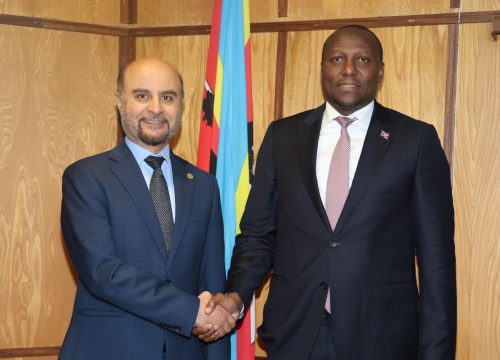
Reacting to the government’s allocation of E2.2 billion to the Ministry of Agriculture, ESNAU Chief Executive Officer Tammy Dlamini says the budget still falls short of demonstrating a meaningful shift toward modernising and strengthening the agricultural sector.
While the government has positioned agriculture as a pillar for economic recovery, food security and rural development, Dlamini argues that the structure of the allocation suggests otherwise.
“One of the questions we must ask is why the country still cannot allocate 10 percent of the national budget to agriculture, despite having committed to that target under continental agreements,” Dlamini said.
Under the African Union’s Maputo and Malabo Declarations, African governments committed to allocating at least 10 percent of public expenditure to agriculture to accelerate agricultural growth and food security. Eswatini’s current allocation remains below that benchmark.
Infrastructure Dominates the Budget
According to Dlamini, the largest portion of the agriculture budget is tied to infrastructure projects such as the Mpakeni Dam, rather than direct investments in farmers, skills and technology that would drive productivity.
While acknowledging the importance of irrigation infrastructure, he argues that relying heavily on capital projects alone cannot transform the sector.
“We are not saying the government should not invest in infrastructure,” he said. “But infrastructure alone cannot transform agriculture. You need investment in people, skills, technology and systems.”
Dlamini believes that the heavy focus on large infrastructure projects risks leaving critical areas of agricultural development underfunded.
Weak Extension and Technology Systems
Another major concern raised by ESNAU is the state of the country’s agricultural extension system, which Dlamini says has not evolved to meet modern farming realities.
He argues that extension services must be modernised and supported with digital tools, data systems and improved training to enable farmers to respond to emerging challenges such as climate change.
“We are not seeing a shift toward modern agricultural systems,” Dlamini said. “We should be talking about digital tools, data systems and real-time monitoring of farms, but the system remains largely paper-based.”
According to him, the lack of technological integration limits the government’s ability to monitor productivity, support farmers efficiently and plan the sector based on reliable data.
Missing Risk Management Mechanisms
Dlamini also questioned the absence of a national agricultural risk management framework, particularly in the face of increasing climate volatility.
He argues that the government cannot continue providing input subsidies without establishing mechanisms such as crop insurance or structured risk mitigation systems.
“Crop insurance should not be the responsibility of individual farmers or companies,” he said. “It is a national risk mitigation strategy that the government must embrace.”
Without such systems, farmers remain highly vulnerable to climate shocks and market disruptions.
Concerns Over Input Subsidy Effectiveness
ESNAU has also raised concerns about the effectiveness of the government’s input subsidy programmes.
According to Dlamini, there is insufficient monitoring and evaluation to determine whether these subsidies are achieving their intended outcomes.
“We distribute inputs every year, but the question is: are we tracking the impact?” he said. “Do we know how the subsidy has improved production over time?”
He believes the absence of a proper tracking system makes it difficult to measure whether the subsidies are improving productivity or simply maintaining the status quo.
Limited Farmer Consultation
Dlamini further criticised what he described as limited engagement with farmer organisations when policy decisions affecting the sector are made.
He said that farmers often find themselves reacting to policy changes rather than participating in their design.
“The people who are affected by these policies are farmers, yet they are rarely consulted in the decision-making process,” he said.
Agro-Processing Still Missing
Another gap highlighted by ESNAU is the absence of a clear strategy to develop agro-processing industries.
Dlamini warned that building processing facilities without a reliable supply of quality raw materials could undermine industrialisation efforts in agriculture.
“You cannot build an industry based on rejects,” he said, referring to proposals around processing horticulture rejects at NAMBoard. “Agro-processing must be linked to a broader agricultural production strategy.”
A Call for Structural Reform
Despite the increased budget allocation, ESNAU believes the country still lacks a coherent long-term strategy for transforming agriculture.
For Dlamini, real transformation will require coordinated investments in technology, farmer training, extension services, risk management systems and agro-industrial development.
Until then, he argues, the sector risks continuing along the same path without the structural changes needed to unlock its full potential.