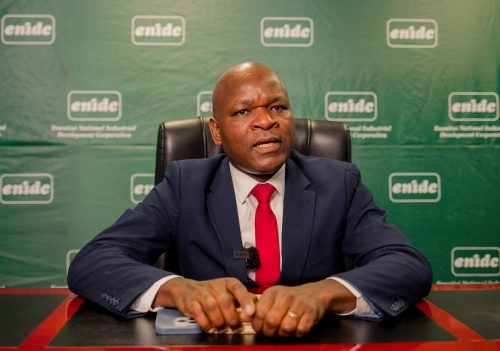

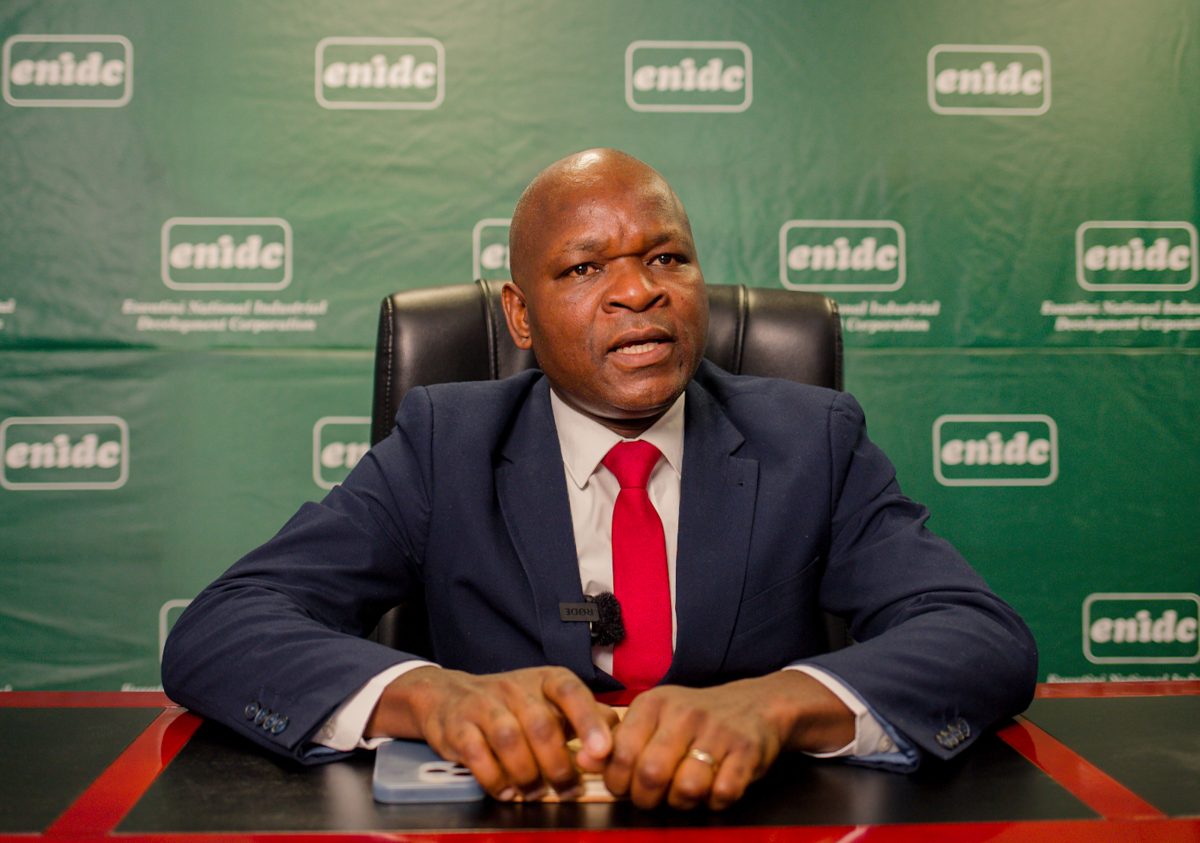
Eswatini National Industrial Development Corporation (ENIDC) Portfolio Investment Executive Mbongeni Gwebu.
BY: SIBUSISIWE NDZIMANDZE | JOURNALIST
MBABANE — When hailstorms and cold seasons pushed Lomveshe Enterprises to the brink, the Eswatini National Industrial Development Corporation (ENIDC) refused to walk away. Instead, it injected a further E1.5 million to rescue the community-owned banana farm and today owns 30 percent of the business.
The equity investment came on top of a E3.9 million loan ENIDC had already advanced to the 44-hectare venture in Gundvwini, bringing its total support to E5.4 million and transforming the Government development finance institution from lender to shareholder with a seat at the boardroom table and a direct stake in whether the operation succeeds or fails.
A Loan, Then a Storm
ENIDC first backed Lomveshe Enterprises in 2018 with a E3.9 million loan to support commercial banana production, an investment aligned with its mandate of promoting industrialisation through value addition.
“Bananas were identified as an important crop because of their contribution to food security and their potential for exports,” said ENIDC Portfolio Investment Executive Mbongeni Gwebu.
But the investment soon ran into trouble. Hailstorms and unusually cold seasons battered banana production, cutting revenues while operational costs electricity, farm inputs, salaries and other expenses continued to mount.
For many financiers, that is the point at which an investment is written off. ENIDC took a different view.
The Decision Not to Walk Away
Rather than abandoning the investment, ENIDC assessed the damage and developed a recovery strategy aimed at restoring the enterprise to sustainability.
“We took a business decision not to walk away but to resuscitate the farm because our mandate is developmental. We wanted to restore the business to sustainability,” Gwebu said.
The rescue came with a restructuring. The additional E1.5 million was injected not as further debt, but as an equity investment giving ENIDC a 30 percent ownership stake in Lomveshe Enterprises.
The shift from lender to shareholder changed the relationship fundamentally. ENIDC now shares directly in the risks and rewards of the business, and the intervention went well beyond capital. It included the appointment of a professional farm manager and the establishment of a Board of Directors comprising ENIDC representatives and members of the Lomveshe Association.
The 39 community members who own the enterprise have remained central to its development, now operating alongside the state financier in a more structured commercial arrangement.
From Rescue to Recovery
The turnaround strategy appears to be bearing fruit. Lomveshe now supplies bananas to local vendors, the National Agricultural Marketing Board (NAMBoard) and export markets the reliable buyers Gwebu says are the foundation of any sustainable agricultural business.
“There is no value in producing without having a market. Today we have improved productivity while simultaneously securing buyers, including opportunities for exports,” he said.
How Lomveshe Got Here
Established in March 2017, Lomveshe Enterprises was formed by community members in Gundvwini who wanted to move beyond subsistence farming and build a commercial banana operation.
The enterprise’s early foundation was laid by several partners. The Eswatini Water and Agricultural Development Enterprise (EWADE) and the Ministry of Agriculture provided initial support, while the Taiwan International Cooperation and Development Fund (ICDF) contributed approximately E1.6 million worth of banana seedlings. Government support financed key infrastructure, including irrigation systems, fencing, water infrastructure, land preparation and a packhouse.
What the enterprise lacked was working capital and commercial structure the gap ENIDC’s financing was designed to close.
What the Deal Signals for Agricultural Finance
The Lomveshe rescue offers a rare local example of a development financier converting a distressed loan into equity rather than calling it in a model that shares risk with farmers instead of transferring it to them.
ENIDC, mandated to promote industrialisation in Eswatini through investments in agriculture, agro-processing, energy and manufacturing, continues to support enterprises through debt and equity financing alongside technical support. Gwebu said agriculture remains one of the sectors with strong potential for value addition, including livestock processing, sugarcane products, forestry and textile-related industries.
For Eswatini’s smallholder farmers, the lesson from Gundvwini is a sobering but hopeful one: agricultural ventures will face setbacks, but with the right financing partner one willing to restructure rather than retreat a disaster does not have to be the end of the business.