

BY: PHESHEYA KUNENE | EDITOR
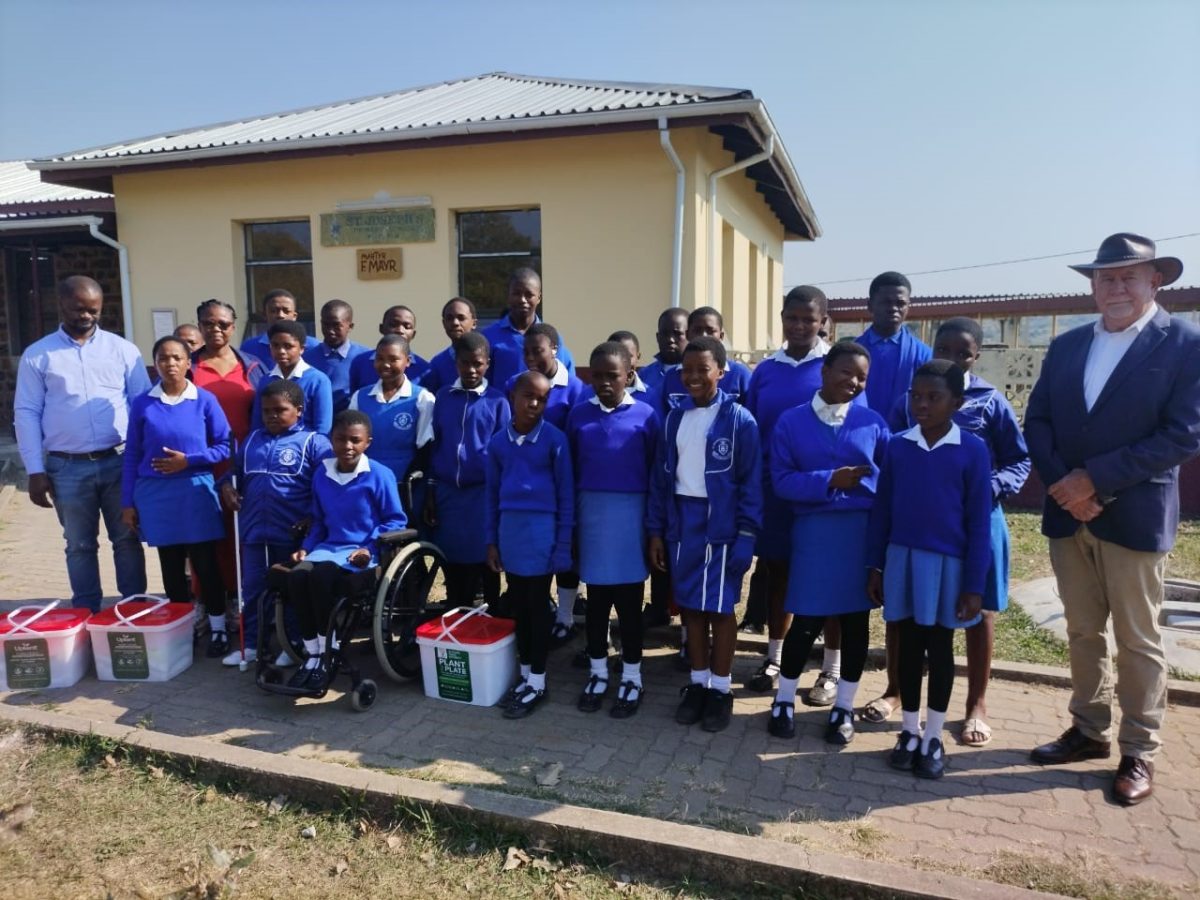
ST JOSEPH’S – A school garden may look like a small patch of soil. But for more than 470 learners at St Joseph’s Primary School, including children living with disabilities, it could become a classroom, a kitchen and a seedbed for future farmers.
African Food Security, a United States-based organisation, has introduced its Plant-to-Plate project in Eswatini through donated agricultural kits aimed at helping schools and communities grow vegetables, improve nutrition and teach practical farming skills.
The campaign is largely driven by young US-based brothers Chase and Austin Kantor, whose fundraising efforts are helping African communities and school-going children access farming tools, seeds and training.
Austin Kantor, 16, said the kits were designed to make farming simple and accessible.
“Plant2Plate kits are clear and easy to use, making them accessible for different learning styles,” he said. “The programme transforms farming into a teaching tool that helps students support their families and communities while moving toward real food security.”
His brother, Chase Kantor, 18, said the value of the project lies in results that can be seen and measured.
“You can count the gardens established, the food produced and the farming techniques students have learned,” he said. “One investment continues creating value long into the future.”
African Food Security Chief Operating Officer Edward Meiring, who travelled to Eswatini after visiting other African countries, said St Joseph’s was only the beginning. He said the organisation had identified more schools and communities to assist, while paperwork and local engagements were being finalised to allow more seeds, inputs and tools to be brought into the country.

The donated kits include organic soil, seeds, compost, protective clothing, pesticides, basic tools and other farming inputs. Meiring said the organisation would not simply drop off supplies and disappear. It would return to provide practical training, monitor progress and support agriculture teachers, focal persons and scholars throughout the planting cycle.
He said learners would also be encouraged to take the same knowledge to their homesteads, where they would receive free Plant-to-Plate kits to start gardens with their families.
St Joseph’s Primary School Principal Ncedile Magagula-Dlamini thanked African Food Security for choosing the school, and also praised Chase and Austin for their fundraising efforts.
She said produce from the school garden would be used in the school kitchen to help feed learners, while the project would also expose pupils to agriculture as a practical life skill.
For a country still working to strengthen household food security, the project offers a useful lesson: agriculture does not have to begin with hectares. It can begin with a kit, a child and a garden behind the classroom.
Meiring said African Food Security was already involved in similar work in countries such as Kenya, Lesotho and South Africa, with plans to grow the Eswatini programme into communities and possibly larger-scale farming partnerships.
After the handover, Meiring visited Eswatini Coffee’s nursery and demo farm at Ngculwini, where founder Patrick Dupont took him through the farm’s journey, intercropping systems, shade-net structures and coffee processing work.
Meiring described the farm as “top notch” and hinted at possible collaboration. He also revealed that African Food Security was developing an agricultural app to help monitor crops, weather and climate change patterns while connecting growers.
That digital layer may prove important. If school gardens teach children how food grows, technology can help communities understand when, where and how to grow it better.
In the end, Plant-to-Plate is not just about vegetables. It is about nutrition, dignity and knowledge. It is about giving children the confidence to plant, harvest and feed themselves. And in rural communities where hunger often wears a school uniform, that is no small harvest.