
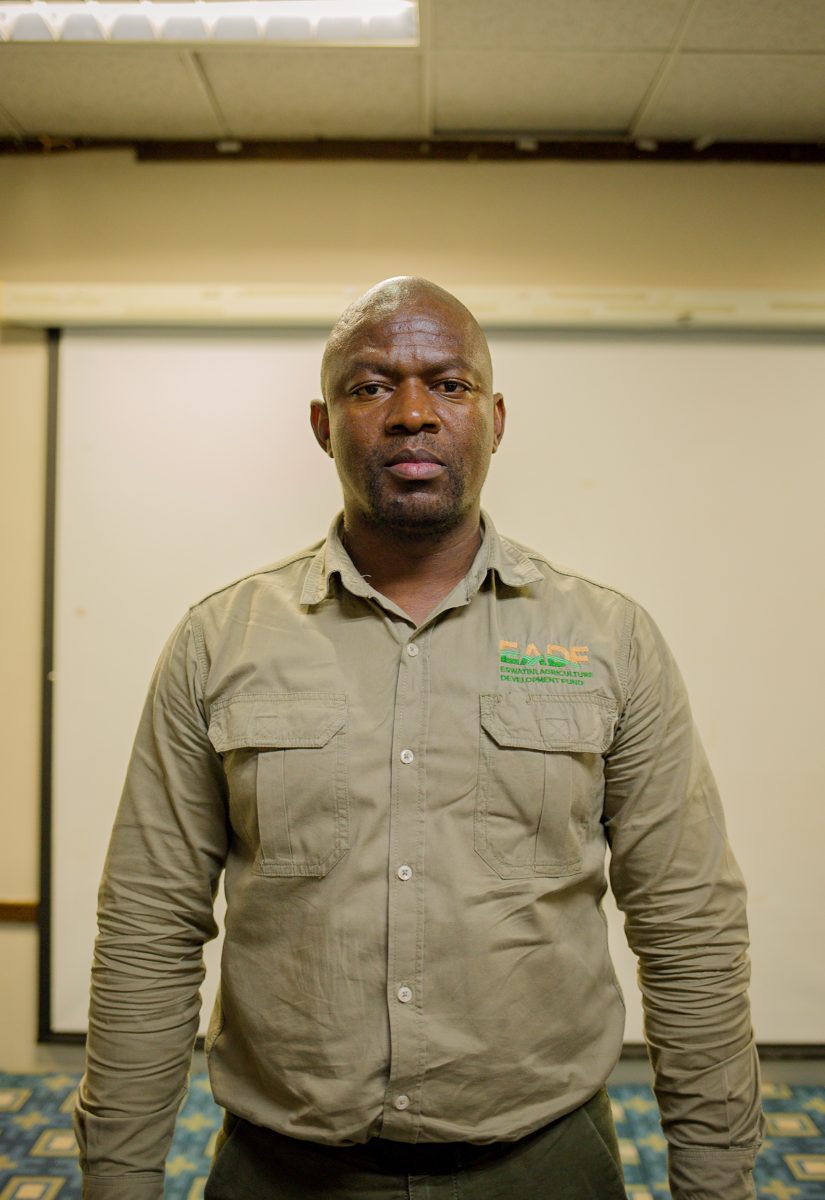
Zweli Vilakati, Head of Technical Services at EADF
BY: NOSIPHO MKHIZE | JOURNALIST
MBABANE – Seventeen of 25 farmers who applied for tractor loans under Eswatini’s agricultural mechanisation programme have been rejected, with weak business proposals emerging as the primary barrier blocking farmer access to a facility with E4.9 million in approved credit already on the table.
The figures, disclosed by Eswatini Agricultural Development Fund (EADF) Head of Technical Services Zweli Vilakati in an interview with Eswatini TV, reveal that farmer readiness — not funding availability — is becoming the defining challenge for a programme backed by the Government of Eswatini, the United States Embassy, Standard Bank Eswatini and EADF.
“Agricultural mechanisation remains key to unlocking agribusiness potential, increasing productivity and strengthening food sovereignty,” Vilakati said. “But access to equipment finance depends on farmers proving that their projects are viable.”
Of the eight approved applicants, only four have received disbursements and proceeded to acquire tractors and equipment. The remaining four chose to defer uptake after concluding that the farming season was already too advanced to justify taking on loan obligations without an immediate productive return.
The rejections point to a structural gap in farmer preparedness. Unsuccessful applicants failed to clearly demonstrate production targets, market access, repayment capacity or long-term sustainability in their business proposals. Under the programme’s financing model, Standard Bank Eswatini covers 75 per cent of equipment costs, EADF contributes 15 per cent, and the farmer is required to contribute only 10 per cent — a deliberately low entry threshold designed to widen access. Yet even that reduced barrier has proven too high for the majority of applicants.
EADF has disbursed approximately E900,000 as its 15 per cent share towards approved applicants, while total loan approvals through Standard Bank stand at approximately E4.9 million — a fraction of the broader E250 million mechanisation programme the government is driving in partnership with its institutional partners.
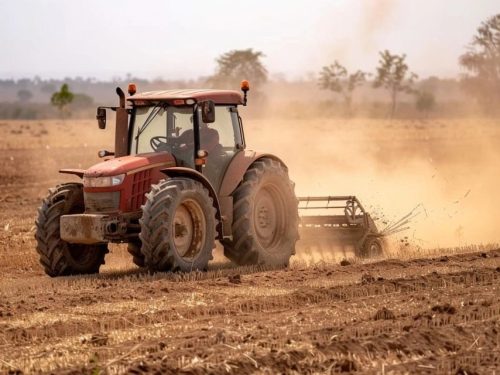
The programme, launched towards the end of 2025, targets improved farmer access to modern farming technology, particularly tractors and related implements, as part of a government-led drive to boost productivity and strengthen local food production.
EADF is now working with Standard Bank to review the 17 rejected applications, with the aim of helping those farmers strengthen their business proposals ahead of future application rounds. The support will focus on land use planning, production cost projections, yield estimates, market linkages and repayment scheduling.
Separately, Standard Bank Eswatini and EADF are introducing 250 mechanisation packages targeting farmers linked to the National Maize Corporation as well as private sector producers — a move expected to extend access to modern equipment and support the transition from subsistence to commercial farming. Their success, however, will rest on the same test that has already tripped up the majority of early applicants: a credible, bankable business plan.
Applications remain open throughout the year for farmers able to present viable proposals. The message from EADF is unambiguous — needing a tractor is not enough. Farmers must show what they will produce, where, how much land they will work, who they will sell to and how the loan will be repaid.
Until that gap closes, Eswatini’s mechanisation ambitions risk being slowed not by a shortage of funding, but by a shortage of farmer readiness.