


BY: SIBUSISO MNGADI | ANALYSIS
The National Maize Corporation has revised downward the price at which it purchases sugar beans from Eswatini farmers — from E27,400 per tonne to E21,700 per tonne — a reduction of E5,700 per tonne, or approximately 20.8 percent. NMC Chief Executive Officer Mavela Vilane confirmed the revision to Agribusiness Media, adding that a formal statement explaining the rationale behind the decision would be issued in due course.
The context surrounding this decision is not difficult to read. Taken together with a regulatory intervention by the National Agricultural Marketing Board (NAMBoard), what is emerging is a coordinated government response to a bean market crisis that has been building for months — one that has left millions of emalangeni worth of locally produced beans sitting unsold in NMC storage while supermarket shelves were being restocked with cheaper imports from South Africa.
The price cut is not the whole story. It is the acknowledgement that something broke down — and that government is now trying to fix it, at the farmer’s expense.

What the Numbers Mean for a Bean Farmer
To understand the weight of this price change, consider the financial position of a typical NMC-contracted farmer producing on one hectare.
Eswatini’s bean yields range considerably depending on variety, inputs, and rainfall. At an average yield of 1.5 tonnes per hectare — considered a standard outcome for a supported smallholder — the arithmetic is stark:
| Scenario | Old Price (E27,400/t) | New Price (E21,700/t) | Difference |
|---|---|---|---|
| Revenue at 1.5 t/ha | E41,100 | E32,550 | –E8,550 |
| Revenue at 2.0 t/ha | E54,800 | E43,400 | –E10,800 |
Production costs for bean farming on a smallholder plot in Eswatini are significant. NMC’s own input subsidy package — which covers seed and fertiliser inputs — is priced at E6,000 per hectare. When additional costs are factored in — land preparation, hired labour, irrigation, pesticides, transport to delivery points, and loan repayments for those who accessed the YERF-NMC production loan facility — total per-hectare production costs for a smallholder easily reach E12,000 to E15,000, and higher for those without access to their own machinery.
Against the new NMC price, the gross margins look as follows:
| Scenario | Revenue | Est. Production Cost | Gross Margin |
|---|---|---|---|
| 1.5 t/ha @ E21,700/t | E32,550 | ~E13,500 | ~E19,050 |
| 2.0 t/ha @ E21,700/t | E43,400 | ~E13,500 | ~E29,900 |
On paper, there remains a margin. But that margin is substantially thinner than what farmers were counting on when they planted. A farmer who based a business plan, a loan application, or a household income projection on a price of E27,400 per tonne is now working with 21 percent less revenue than anticipated, with no proportional reduction in the costs they carry.
For the farmer who borrowed to plant, the arithmetic is more precarious. Under the NMC-YERF youth production loan programme, individuals could access up to E50,000 in production finance. A young farmer who borrowed E40,000, planted three hectares of beans, and projected revenue of roughly E123,300 at the old price now faces projected revenue of E97,650 at the new rate — a shortfall of E25,650 before a single bag reaches an NMC depot.
A Crisis That Did Not Begin Today
This price revision does not emerge in a vacuum. Government has consistently and publicly urged farmers to prioritise bean production, describing beans as “nutritious and in high demand” and “an essential component of a sustainable and resilient agricultural sector.” That call was backed by a subsidised input programme — E6,000 per hectare packages for contracted farmers — and a YERF-linked production loan facility offering up to E150,000 for cooperatives and E50,000 for individuals. The government’s message to farmers was unambiguous: plant beans, we will buy them, and there is a market waiting.
Farmers responded. The results of that response — measured not in success stories but in stockpiles — became the crisis.
By mid-2026, the Eswatini National Agricultural Union (ESNAU) was sounding the alarm: locally produced beans worth more than E9 million were sitting unsold in NMC storage facilities, with no clear pathway to market. ESNAU CEO Tammy Dlamini described the situation as “shocking and disappointing” and called for it to be treated as a national agricultural emergency.
The reason those beans were not moving was not a mystery. Major retailers — supermarket chains that represent the primary bean-purchasing channel in Eswatini — had been importing beans from South Africa, where prices were lower than what NMC was charging for locally produced stock. The economics were straightforward for the retailers. For the farmers, they were devastating.
The South Africa Price Dynamic
South Africa is the dominant regional supplier of dry beans, including red speckled sugar beans — the variety most commonly consumed in Eswatini and across the Southern African Development Community (SADC) market. South African producers operate at a scale that Eswatini’s smallholder farmers cannot realistically match: large commercial farms deploying mechanised harvesting across thousands of hectares achieve production costs per tonne that compress the landed price of South African beans well below what local production costs allow.
According to Farmer’s Weekly South Africa, red speckled bean prices in the South African market were under sustained downward pressure through the 2024/25 season, with producer prices falling below R20,000 per tonne in some trading periods following a larger-than-expected national crop. Analysts forecast a partial recovery to approximately R23,500 to R24,000 per tonne later in 2026, as lower planting intentions and tighter stocks begin to filter through.
A South African producer price of R20,000 per tonne translates to approximately E20,000 per tonne at source. Once transport and logistics costs are added, the landed cost of South African beans in Eswatini could range between E21,000 and E23,500 per tonne, depending on volumes and supply arrangements.
At NMC’s former price of E27,400 per tonne, the gap between locally sourced beans and South African imports was wide enough to make the import option the rational commercial choice for cost-conscious retailers. Local beans were more expensive — not because Eswatini farmers are inefficient in isolation, but because they are competing against the structural advantages of one of Africa’s most capitalised and mechanised farming sectors.
That gap is the context in which NMC’s revised price of E21,700 per tonne must be understood. It brings the local offtake price within closer reach of the landed South African import price. Whether it is enough to shift retailer behaviour depends on the regulatory environment — which is where NAMBoard comes in.
The NAMBoard Intervention: This Is Coordinated Policy
The National Agricultural Marketing Board recently issued a Revised Border Temporary Restriction Notice directed at all importers of sugar beans. Issued under the NAMBoard Act No. 13 of 1985 and drawing on its mandate to regulate agricultural trade and protect the interests of domestic producers, the notice introduces a local sourcing condition: before an import permit for sugar beans can be issued, the applicant must demonstrate that at least 25 percent of the intended import volume has already been sourced locally.
The restriction will remain in place until locally produced beans in storage are depleted, subject to continuous monitoring of stock levels.
This is not a coincidence. It is coordinated government policy.
NAMBoard exists precisely for moments like this. Its mandate under the NAMBoard Act is to regulate the marketing of agricultural produce, protect domestic producers against unfair import competition, and ensure that local supply is given preference in the national market. The local sourcing requirement is a direct exercise of that mandate — a regulatory tool designed to force the retail sector to engage with locally produced beans before turning to imports.
Read alongside NMC’s price revision, the logic suggests that NMC has moved to close the price gap that made South African imports more attractive than local beans. NAMBoard has introduced a procurement obligation that requires importers to source locally regardless, creating a regulatory floor beneath the commercial preference for cheaper imports. Together, the two interventions are designed to achieve what neither could accomplish alone: move the E9 million in unsold beans out of storage and into the market, while signalling to retailers that the era of unchecked import preference is under review.
The Structural Problem That Price Alone Cannot Solve
The bean crisis exposes a structural tension that has long defined Eswatini’s grain sector. The country is committed to domestic food production as a matter of sovereignty and rural economic development. But its smallholder farmers produce at costs that make them structurally uncompetitive against large-scale regional suppliers.
Official sector data puts annual bean consumption in Eswatini at approximately 7,000 tonnes per year, against three-year average smallholder production of roughly 1,177 tonnes — a supply gap that imports have historically filled. The production gap is structural and will not close without sustained investment in smallholder productivity, irrigation infrastructure, and post-harvest handling. Encouraging farmers to plant without addressing those underlying constraints shifts the risk of the production challenge onto the people least equipped to absorb it.
ESNAU has argued — correctly — that government’s own procurement systems represent the most immediately controllable lever available. School feeding programmes and government institutional catering consume significant quantities of dry beans annually. Redirecting that procurement toward NMC-held local stock would represent a direct and immediate policy instrument to clear storage, support domestic producers, and demonstrate that the state’s commitment to local agricultural production extends beyond a press conference.
What Farmers Are Left With
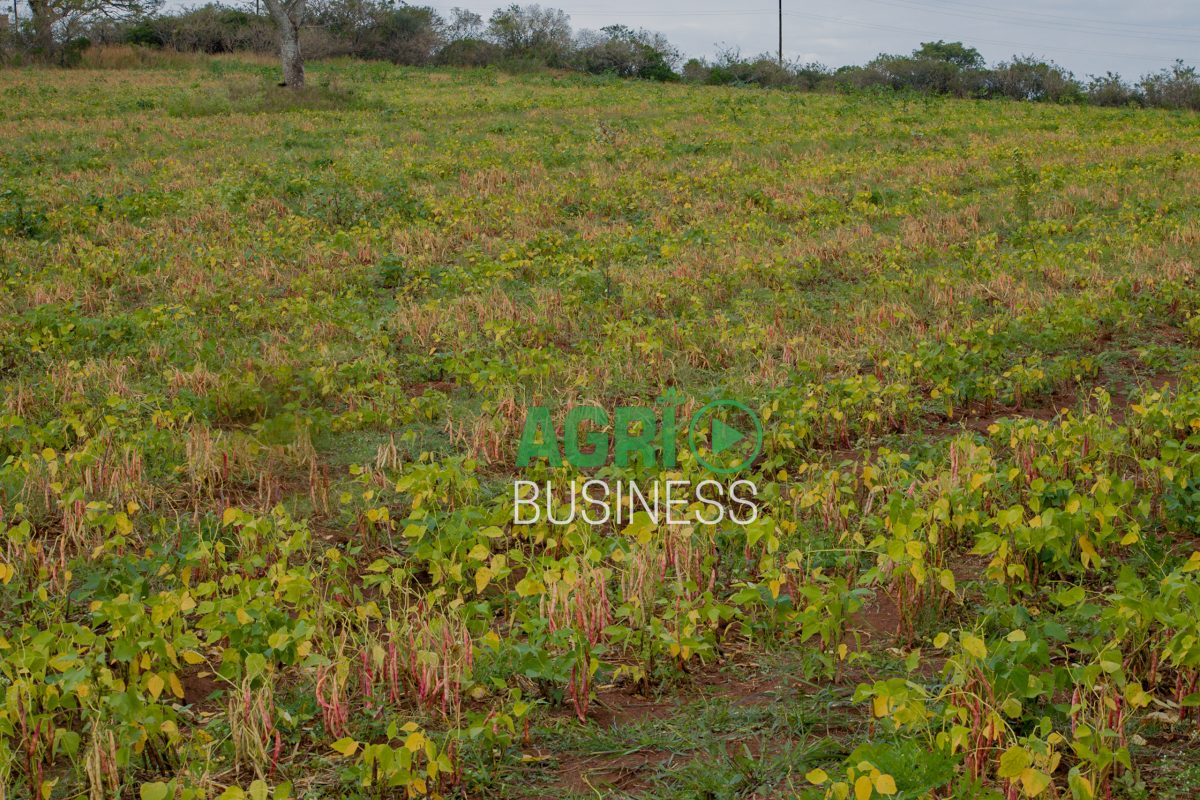
For the farmers who planted sugar beans in direct response to government encouragement — who took out loans, paid for input subsidies, hired labour, and prepared their fields — the current situation is a sobering encounter with the gap between agricultural policy and agricultural reality.
At 1.5 tonnes per hectare and E21,700 per tonne, gross revenue per hectare is E32,550. That is workable if input costs are held low, if loans are not involved, and if the yield holds. It is far less comfortable for a young farmer carrying a YERF loan, managing irrigation costs, and waiting weeks for NMC to collect what may represent several months of household income.
At the more optimistic yield of 2 tonnes per hectare — achievable with good rainfall, quality inputs, and sound agronomic management — gross revenue rises to E43,400. The margin improves. But the structural reality does not change: these farmers are being asked to absorb a 21 percent price reduction without a corresponding reduction in the obligations they entered on the basis of a different number.
NMC’s forthcoming statement will need to go beyond explaining the rationale for the price cut. It will need to account for what was promised to the farmers who answered the call to produce — and what government intends to do for those now holding produce at a price they did not sign up for.
The bean market in Eswatini is a test of whether a small, import-dependent economy can build a viable domestic food production sector in a region dominated by large-scale agricultural exporters. The regulatory instincts, as demonstrated by NAMBoard’s intervention, are sound. The production investment, as demonstrated by the farmers who responded to NMC’s call, is real. What has been missing — and what government is now belatedly attempting to supply — is the market discipline and procurement alignment to ensure that when farmers answer the call to produce, the system honours the commitment it made to them.
Sibusiso Mngadi is the Editor-in-Chief and Publisher of Agribusiness Media, a digital-first agricultural news and content platform operating under Stratcom Group in Matsapha.