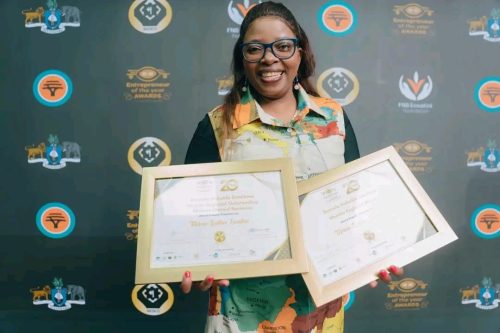


Youth Enterprise Revolving Fund CEO Mandla Nkambule unpacks YERF’s investment in youth agriculture.
BY SIBUSISIWE NDZIMANDZE | JOURNALIST
MBABANE – With Eswatini spending an estimated E4 billion a year importing food it could grow at home, the Youth Enterprise Revolving Fund (YERF) has poured nearly E12 million into agricultural businesses run by more than 250 young farmers, a bet on local production it hopes will dent the country’s food import bill and strengthen food security.
YERF Chief Executive Officer Mandla Nkambule said agriculture remains one of the most promising sectors for tackling youth unemployment while advancing Eswatini’s goal of food security and food sovereignty.
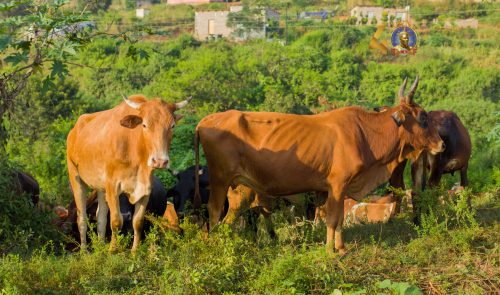
The Fund’s agricultural portfolio now stands at almost E12 million, supporting young people across multiple value chains, vegetable production, poultry, dairy, orchards, fruit and livestock.
“We strongly believe that farming is a business. It is a commercial business,” said Nkambule. “Young people can feed the nation and feed the continent if they take agriculture seriously.”
More than money
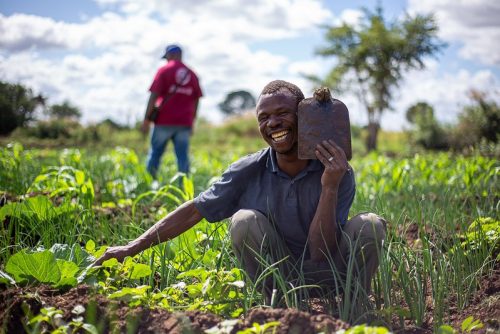
One beneficiary is Lesibovu Agricultural Enterprise, a group of 10 young farmers from Gundvwini who approached YERF in 2024 to establish a vegetable project. After a thorough assessment, the group received approximately E84,000 to launch operations.
But YERF’s support went beyond the cheque. When the Fund identified infrastructure gaps that threatened the project’s sustainability, it engaged the Food and Agriculture Organization (FAO), which provided fencing to protect the farm from livestock and other threats.
“We noted some gaps on the farm and approached FAO for support. They came on board with fencing to ensure that the farm and its investments are protected,” Nkambule said.
He explained that YERF’s role does not end at loan disbursement. Beneficiaries are assigned Business Development Officers for mentorship and business support, while technical guidance is coordinated through partnerships with the Ministry of Agriculture, extension officers and other stakeholders.
Closing the E4 billion gap
Nkambule sees agriculture as one of Eswatini’s biggest opportunities for import substitution. The country spends an estimated E2 billion a year on imported vegetables and a further E1.8 billion on maize and beans.
“That is close to E4 billion leaving the country every year,” he said. “Young farmers have an opportunity to capture part of that market and keep that money circulating within our economy.”
He pointed to dairy farming as a sector with significant untapped potential, noting that Eswatini currently imports about 90 percent of its dairy products.
“We have already funded young people in dairy farming because we see enormous potential in the sector,” he said. “There are opportunities not only in milk production but also in value-added products such as cheese.”
De-risking the sector
Nkambule encouraged young farmers to embrace technology-driven agriculture, drones, modern irrigation and precision farming tools — to lift productivity and profitability.
To cushion the risks, YERF has negotiated specialised insurance arrangements that protect agricultural projects against climate-related disasters, theft and other shocks.
“We are deliberately trying to de-risk agriculture because we understand the challenges farmers face,” he said. “We want young people to invest with confidence, knowing that there are mechanisms to protect their businesses.”
From subsistence to commercial
Looking ahead, the Fund is preparing to launch a dedicated Agricultural Infrastructure Loan Facility to tackle some of farmers’ biggest constraints, including inadequate irrigation and fencing. The facility is expected to help young farmers graduate from subsistence farming to fully commercial enterprises.
“Many agricultural projects are underfunded,” Nkambule said. “We want young people to move from subsistence farming to commercial farming. They need adequate infrastructure and adequate capital if they are to become profitable and sustainable.”
YERF is also exploring models that would allow young people without land to farm government-owned land through structured agricultural hubs and shared production facilities.
For Nkambule, the message is clear: agriculture is not merely a livelihood but a business opportunity capable of transforming lives and strengthening the national economy.
“We have the land. We have the markets. We have the demand,” he said. “What we need now is for more young people to see agriculture as a serious business opportunity. If we support them properly and they commit themselves fully, young farmers can help Eswatini achieve food security, food sovereignty and economic growth.”