

BY SIKHONA SIBANDZE | JOURNALIST
MANZINI — The National Agricultural Marketing Board (NAMBOARD) is moving to position the Eswatini Horticulture Information System (EHIS) as a structured digital marketplace that directly links local farmers with buyers, in a bid to bring order to a horticulture sector long affected by uncoordinated production, oversupply and depressed farm-gate prices.
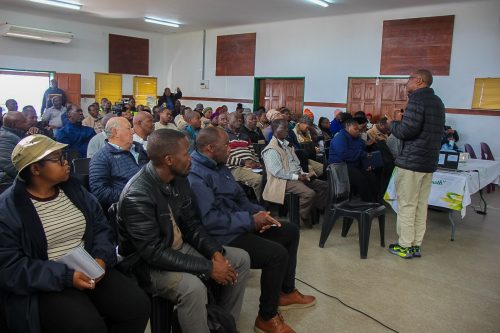
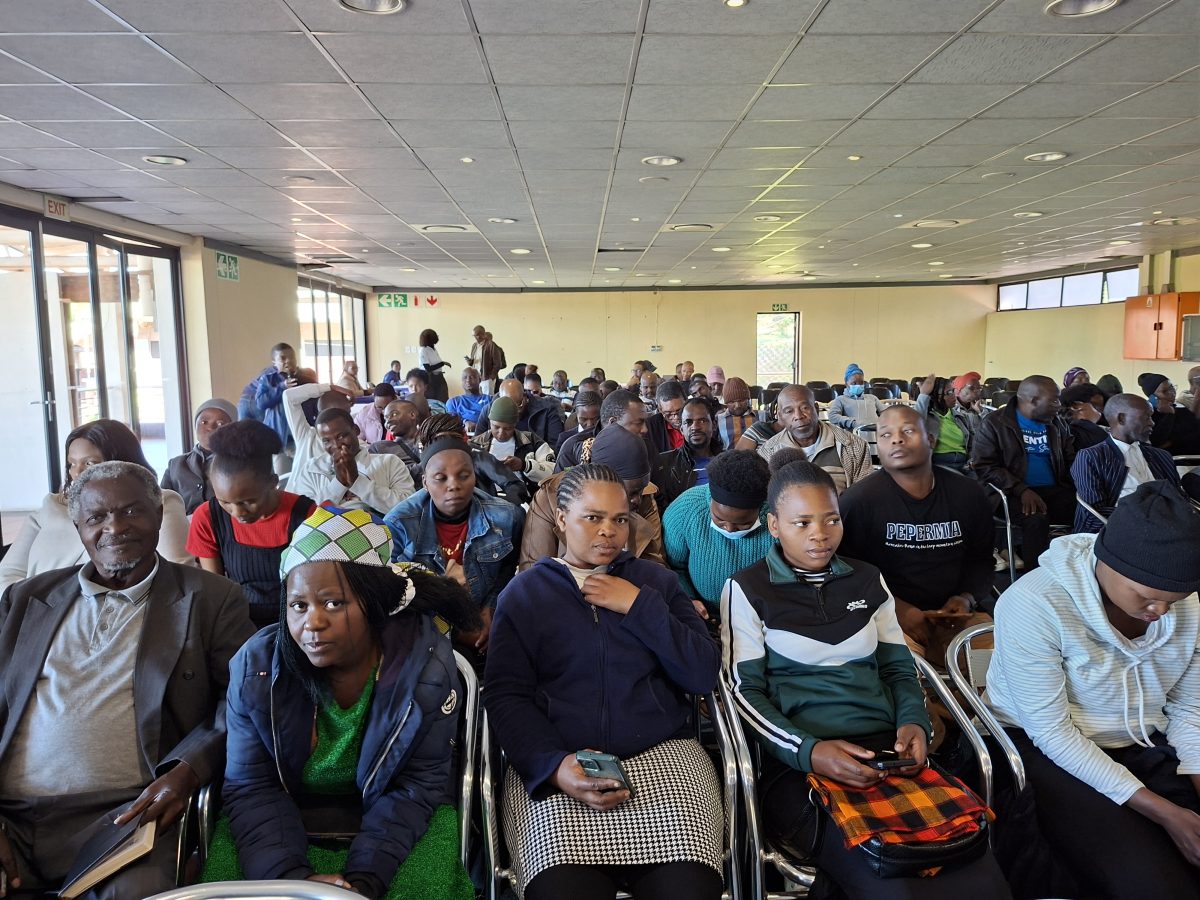
The emerged during a NAMBOARD workshop held at Mavuso Trade Centre in Manzini, where horticulture farmers were taken through how EHIS works, what it offers them and how it fits into the broader effort to improve market access, reduce production losses and strengthen local sourcing across the country’s horticulture value chain.
This comes at a time when Eswatini still imports a significant volume of vegetables, roots and tubers. According to international trade data, Eswatini imported about Eswatini imported approximately US$17.1 million, equivalent to about E279 million, worth of edible vegetables, roots and tubers in 2024, showing that there remains a large market gap which local farmers can target if production is properly planned and coordinated
EHIS is a digital information and market coordination platform developed to organise Eswatini’s horticulture sector. At its core, the system captures reliable data on what farmers are producing and uses that information to match local supply with market demand before imports are considered.
Through the platform, farmers register their personal and farm details, declare the crops they are growing, indicate expected production volumes and harvesting timelines, and specify the markets they wish to supply. That information is then made available to NAMBOARD, buyers, retailers and other value chain players, giving the market a clearer picture of what is available locally at any given time.
The system also gives farmers access to information they have historically lacked, including market prices, production guides, gross margin calculators, quality standards, farm input information and details on available financial support. These tools are intended to help growers make informed decisions on what to plant, when to plant, how much to produce and which markets to target.
NAMBOARD Sales and Marketing Manager Cynthia Simelane described EHIS as a marketplace for farmers. “This platform is a marketplace for farmers. Buyers and retailers will be able to see what farmers are producing and buy directly from them,” she said.

Simelane said the platform is expected to reduce farmers’ dependence on NAMBOARD as the only route to market by opening direct commercial links between registered farmers and retailers, traders and other buyers. Farmers who keep their profiles updated stand to be discovered by buyers searching for specific produce, volumes and supply timelines.
The system is being rolled out against the backdrop of a persistent mismatch between what farmers produce and what the market needs. For years, many horticulture farmers have planted crops based on guesswork, without reliable information on demand, competing supply or buyer requirements. The result has often been oversupply, falling prices, weak bargaining power and unsold produce.
NAMBOARD Chief Executive Officer Bhekizwe Maziya said this pattern is one of the key factors worsening poverty among horticulture farmers. “This decision is done in regard to alleviating poverty for farmers who are currently suffering due to low prices, which are a result of oversupply of produce at certain periods,” he said.
He said the current market often leaves farmers, buyers and NAMBOARD reacting only after losses have already occurred. “What is currently happening is that everyone gets a shocker. We also get a shocker when we take farmers’ produce to the market and realise that there is oversupply and prices have gone down,” Maziya said.
He said EHIS is designed to move the sector away from reactive decision-making by making planning information available before crops are planted, harvested or transported to market.
One of the platform’s major benefits, Maziya said, is that it gives NAMBOARD the data required to restrict unnecessary imports when local produce is available in adequate supply. “In order for farmers to benefit out of the legislation, when we do not have the data in our hands, it makes it difficult for us to restrict the importation of commodities, even if they are in adequate supply by our own farmers,” he said.
Using green pepper as an example, Maziya explained that if EHIS shows that farmers will have sufficient local supply at a particular time, NAMBOARD can advise buyers in advance and intervene to protect local producers. Without such data, he said, the organisation has no credible basis to act.
“If farmers willingly register, they give us the opportunity to access data and know who is producing what, when, at what quantities, and at what point that produce is going to be ready for market,” he said.
NAMBOARD has said buyers will be required to source at least 60 percent of their produce from EHIS-registered farmers before sourcing from outside the country. This requirement is expected to encourage buyers to use the platform while rewarding farmers who register and keep their production information current.
Maziya said while producer registration falls within NAMBOARD’s regulatory mandate, the organisation wants farmers to register because they understand the value of the system. “No one is going to force farmers to register. We want to make sure that once they understand, they are encouraged to register because they know it is to their benefit,” he said.
Award-winning Manzini farmer Bongi Fakudze said EHIS could transform how farmers and retailers interact by making local production more visible. “This system is going to help us know how much produce is available in the country and also help retailers understand what farmers have. That way, farmers can avoid producing too much of the same crop when the market is already full,” he said.
Fakudze added that the platform opens new opportunities because buyers will know who is producing, what they are producing and when the produce will be available.
NAMBOARD says the value of EHIS will grow as more farmers register. For the horticulture sector, the message is clear: production alone will no longer be enough. Future competitiveness will depend on whether farmers can be found by buyers, respond to verified demand and supply traceable produce that meets market requirements.