
BY PHESHEYA KUNENE | EDITOR
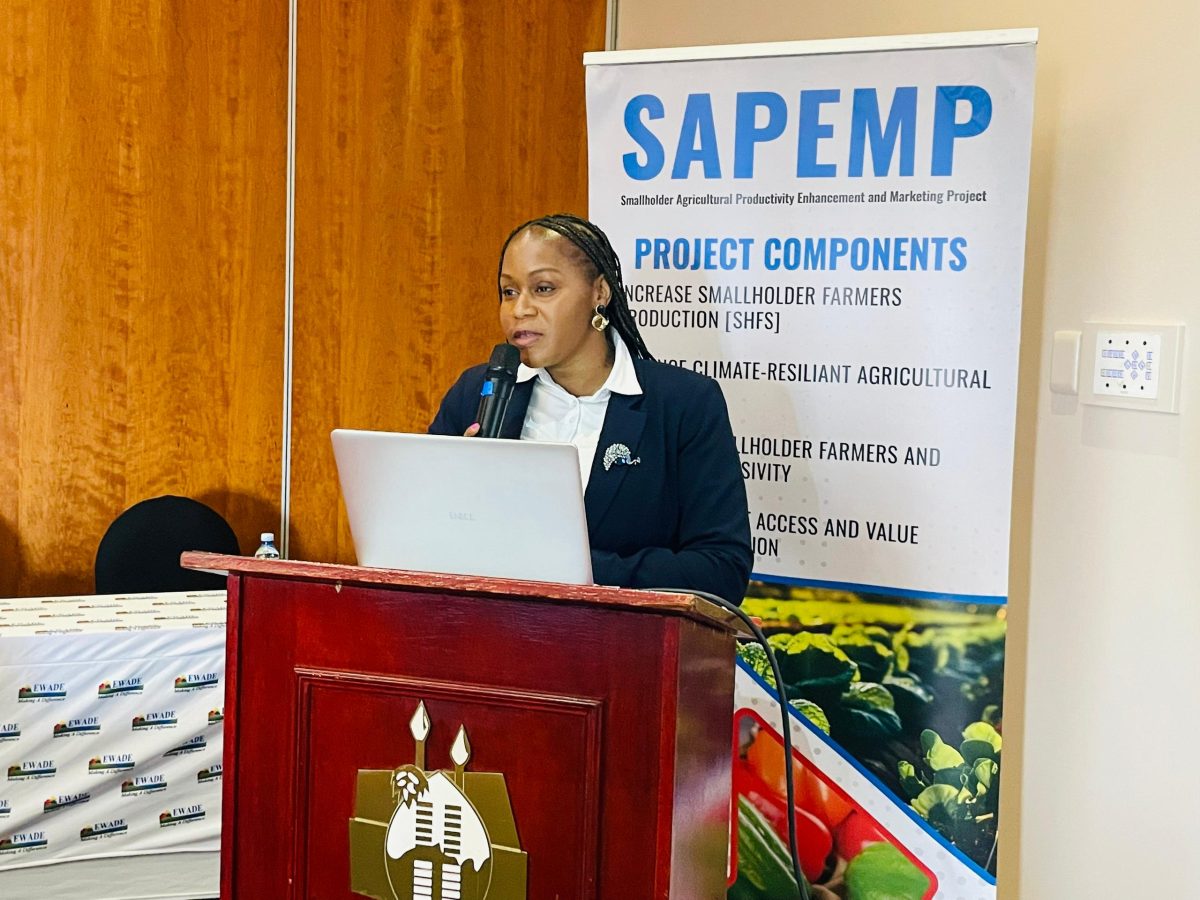
EZULWINI — An E851 million agricultural intervention is being rolled out in Eswatini with the aim of doing more than simply raising production. At the centre of the Smallholder Agricultural Productivity, Environment and Marketing Project (SAPEMP) is a push to organise smallholder farmers into clusters, strengthen value chains and open clearer pathways into formal and export markets.
The project, which runs from 2024 to 2031, is expected to reach more than 19 600 producers and directly support about 14 100 smallholder farmers. It is being implemented by the Eswatini Water and Agricultural Development Enterprise (EWADE) with financing from the International Fund for Agricultural Development (IFAD), the Green Climate Fund (GCF), Government of Eswatini, the private sector and beneficiaries.
While the E851 million figure is significant, the real story lies in how that money is expected to change the structure of agriculture for smallholder farmers. For years, many have remained trapped in low-value, informal market systems where they sell individually, often at weak prices, with little bargaining power and no reliable contracts. SAPEMP is trying to change that by helping farmers produce in a more organised, market-oriented way.
This comes against a difficult backdrop. Although agriculture remains a key source of livelihoods in Eswatini, smallholder participation in export markets remains very limited. The country’s agricultural exports are still heavily concentrated, with sugar accounting for more than 60 percent of export earnings, followed by citrus and soft drink concentrates. Smallholders contribute only a small share, mostly because of structural barriers such as weak aggregation systems, uneven quality standards and poor access to high-value buyers. Direct participation by smallholder farmers in international markets is estimated at below 10 percent of total smallholder output.

That reality reflects what many in the sector have long described as a dual agricultural economy: large-scale producers dominate formal export value chains, while smallholder farmers remain largely confined to local and informal trade. SAPEMP is designed to disrupt that imbalance by creating systems that make it easier for smallholders to produce at scale, meet standards and reach better markets.
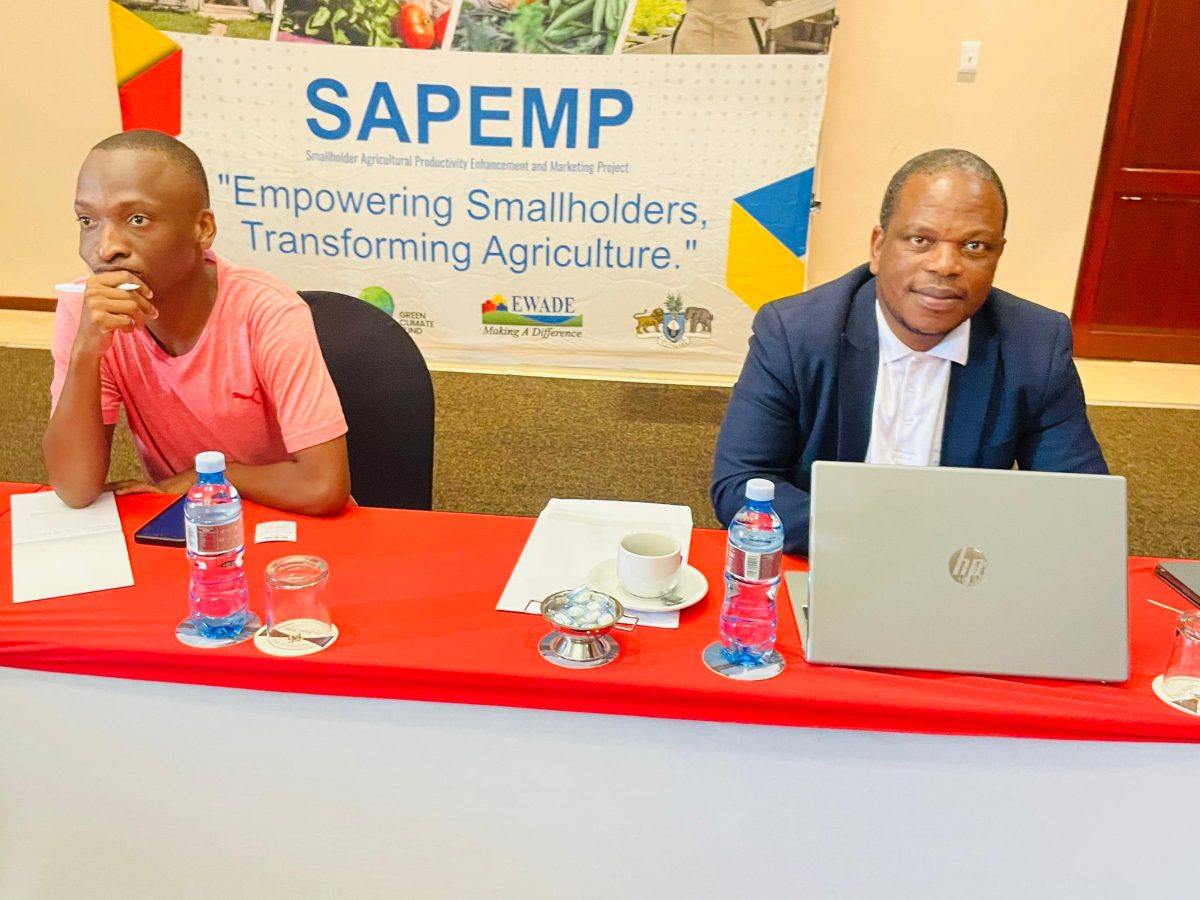
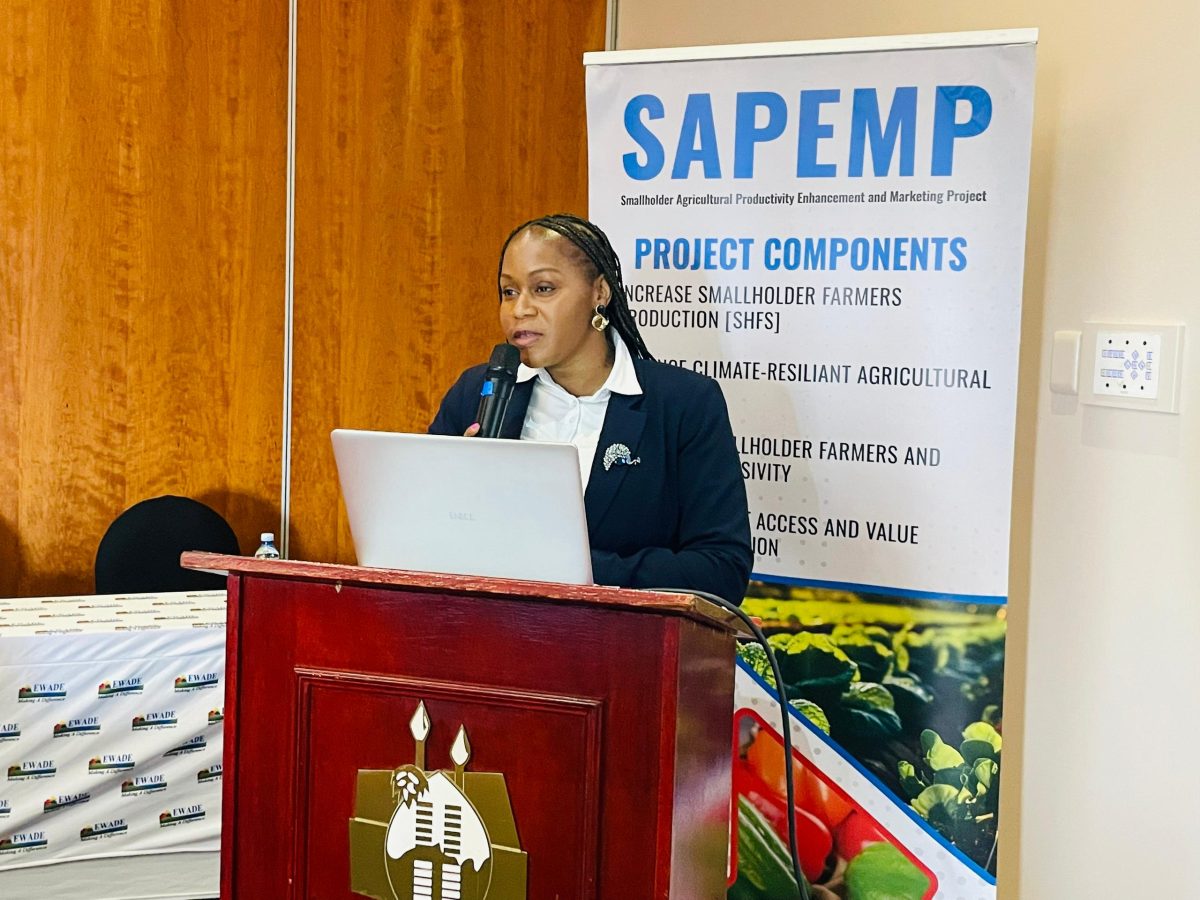
Speaking during a media briefing at Royal Villas, EWADE Monitoring and Evaluation Officer Tengetile Dlamini said the project is focused on moving farmers from subsistence to commercial, market-oriented production.
“We are moving farmers from subsistence to market-oriented production. The focus is not just on increasing output, but ensuring that farmers are able to access both local and international markets,” said Dlamini.
A key part of that strategy is a cluster-based production model. Under this approach, farmers will be grouped into units of between 20 and 100, allowing them to combine volumes, improve efficiency, strengthen bargaining power and supply buyers more consistently. In practical terms, this means shifting away from isolated selling towards organised supply chains with better coordination and more predictable income opportunities.
This clustering model could prove to be one of the most important elements of the project. Smallholder farmers often fail to access formal markets not because they cannot grow crops, but because they struggle to deliver the quantity, quality and consistency that larger buyers require. Grouping farmers together helps solve part of that problem by turning scattered production into a more reliable supply base.
SAPEMP also plans to invest directly in the market systems that support commercial farming. The project will construct 45 multi-purpose collection centres and five packhouses equipped with cold storage and grading facilities. These are expected to reduce post-harvest losses, improve aggregation, strengthen quality control and help farmers meet the standards required for formal and export markets.
This is where the E851 million becomes more meaningful. The money is not only going into production support, but into the infrastructure that helps farmers sell better. Without collection points, grading systems and cold storage, even farmers with strong harvests can still lose value. By investing in these parts of the chain, SAPEMP is trying to make market access a practical reality rather than an abstract promise.
Irrigation expansion is another major pillar of the programme. With climate shocks continuing to affect farm output, the project is aiming to reduce dependence on rain-fed agriculture and stabilise production. Climate-smart agriculture is also being promoted, especially in vegetables and legumes, which have been identified as having strong market potential. These measures are meant to improve both resilience and productivity, while giving farmers a better chance of supplying markets consistently.
Digital services also form part of the intervention. More than 10 500 farmers are expected to access digital extension support, allowing for real-time communication, farming advice and market information. This could help improve decision-making and strengthen connections between farmers and service providers, although uptake may depend on how quickly digital literacy challenges are addressed.
Access to finance is another area SAPEMP hopes to tackle. For many smallholder farmers, the lack of credit remains a major barrier to growth, making it difficult to invest in inputs, irrigation, technology or expansion. The project plans to link farmers to financial institutions in order to improve access to capital and help them better manage risk.
“Farmers have been telling us they struggle to access finance. Through this project, we are working to connect them to financial services so they can invest, grow and also have some level of protection when disasters occur,” Dlamini added.
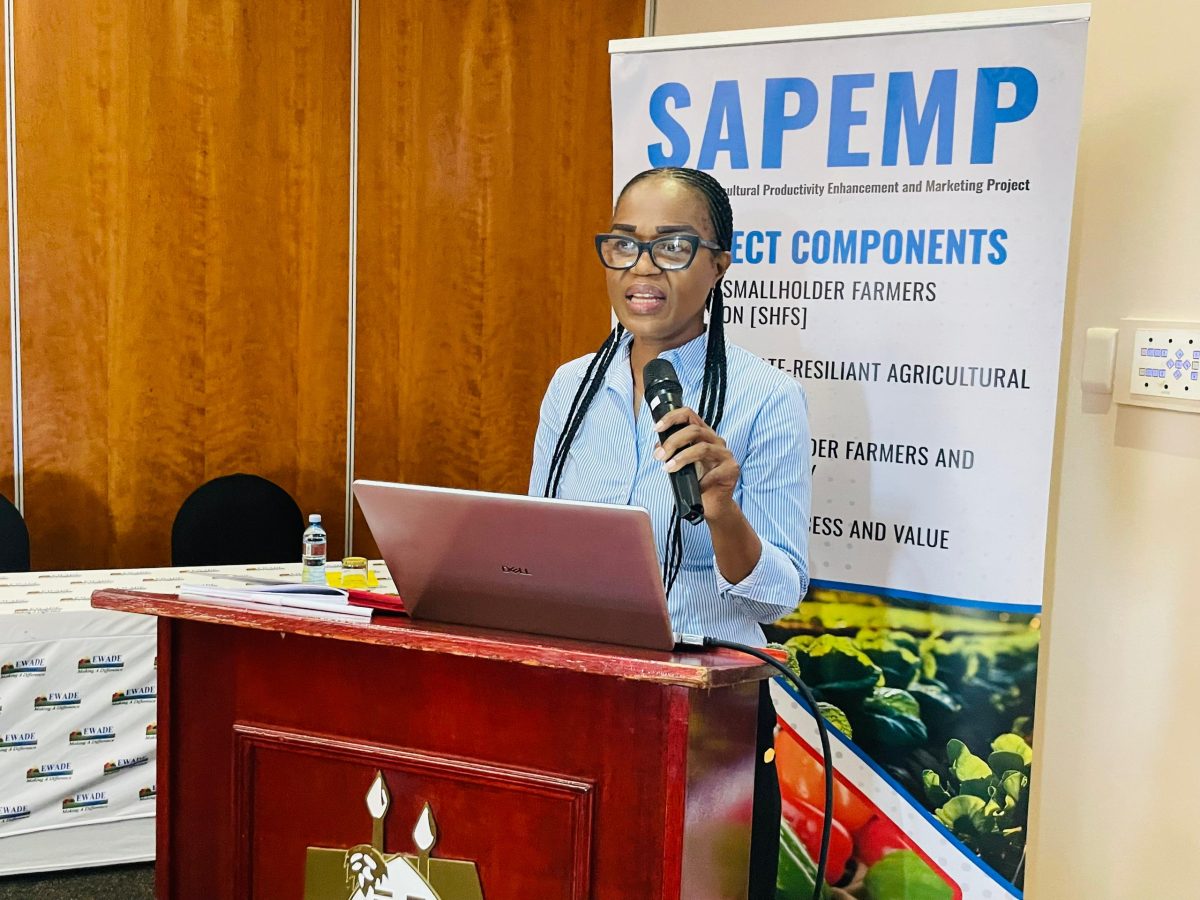
On the ground, implementation is already beginning to take shape. SAPEMP is targeting an intake of about 3 000 smallholder farmers each year over the eight-year period. According to Communications Officer Nokulinda Mazibuko, some early interventions are already visible, including work with youth farmers in Lundzi who are using tunnel production for high-value output.
“We are already working with communities. For example, a group of youth farmers in Lundzi is utilising tunnel production to drive high-value output, which is the kind of modern, market-oriented farming we want to see,” said Mazibuko.
Backed by partnerships with institutions such as the National Maize Corporation, the Ministry of Tinkhundla Administration and Development, and the Ministry of Agriculture, the project is also positioning coordinated, community-based agriculture as a tool for increasing productivity and rural incomes.
The expected impact goes beyond production alone. About 7 500 households are projected to benefit through employment and participation in agricultural value chains. Women are expected to make up 40 percent of beneficiaries, while 30 percent will be youth. SAPEMP will be implemented across 40 chiefdoms, giving it a wide national footprint.
When asked how the intervention would translate into real benefits for farmers, Mazibuko said the project is ultimately about practical change in people’s lives.
“This is about changing livelihoods. Farmers will not only increase production, but they will also have access to markets, information and financial services. That is where the real impact lies,” she said.
Still, the project faces real risks. Climate shocks remain a threat even with irrigation support. Limited digital literacy may slow the use of e-extension services. Technical capacity gaps and funding pressures could also affect the speed at which infrastructure and services are delivered. Like many large agricultural interventions, SAPEMP will be judged not only by the scale of its ambition, but by the quality of its execution.
If it succeeds, SAPEMP could mark an important shift in Eswatini’s agricultural economy — away from a system where smallholder farmers remain on the margins, and towards one where they are grouped, supported and linked into stronger value chains. That is why the most interesting part of the E851 million story is not just the amount itself, but the model behind it: clusters, collection centres, packhouses, finance links and a deliberate push to help smallholders compete in more structured and rewarding markets.