

Mayibongwe Mavuso, owner of Mayindisa Farm.
BY: NOSIPHO MKHIZE | JOURNALIST
GEGE – For Mayibongwe Mavuso, farming is not simply about putting seed into the ground and waiting for harvest. It is a business that requires planning, discipline, market intelligence, and the courage to keep learning.
At 43, Mavuso is steadily building Mayindisa Farm into a serious commercial vegetable enterprise, one that supports his family, creates jobs, and positions itself for larger market opportunities. Based in Gege, the farm operates under Mayindisa Investments (Pty) Ltd, with Mavuso serving as Managing Director.
From his home area of Bhunya KaZondwako, Mavuso has grown an agricultural business that now supports seven dependants, employs four full-time workers, and brings in an additional four seasonal employees during labour-intensive periods such as weeding and harvesting.
His fields tell the story of a farmer who is thinking beyond subsistence. Mayindisa Farm produces red and white onions, lettuce, spinach, and habanero peppers, while recent harvests have included beetroot, carrots, butternut, and baby marrow. The farm has also recorded a good yield of green peppers.
Mavuso says the decision to focus on these crops is informed by the natural advantage of his production area.
“The climate at our farm is suitable for growing these crops,” he explains.
Yet the roots of his farming journey go much deeper than land and climate. His first agricultural lessons came from home, through the influence of his mother, Marjorie Mavuso, who introduced him to farming while he was still in school.
“My mother inspired me. She introduced me to farming while I was still in Form 2 by giving me responsibilities in her poultry business,” Mavuso says.
That early exposure planted a seed that would later become Mayindisa Farm. Mavuso describes his mother as a strong farmer whose example continues to guide him. She was recently recognised as a runner-up in the Woman Farmer of the Year Competition, a distinction that reflects the agricultural foundation from which he emerged.
Although Mavuso does not have a tertiary education in agriculture, he has built his knowledge through experience, training, and a willingness to seek guidance. He has attended short courses and workshops offered by organisations such as NAMBOARD (National Agricultural Marketing Board), the National Maize Corporation, and the Ministry of Agriculture. He also believes strongly in farmer-to-farmer learning.
“I build relationships with experienced farmers and learn from them. Extension officers are also on my speed dial,” he says.
That practical learning has helped him treat agriculture as an enterprise rather than a gamble. Before planting, Mavuso and his team study market trends, consider projected crop prices, assess weather patterns, select quality seedlings, prepare the land, and install the most suitable irrigation system for each field.
The farm currently uses a blended irrigation approach made up of 80 percent drip irrigation and 20 percent sprinkler irrigation. This system supports efficient water use while allowing flexibility across different crops.
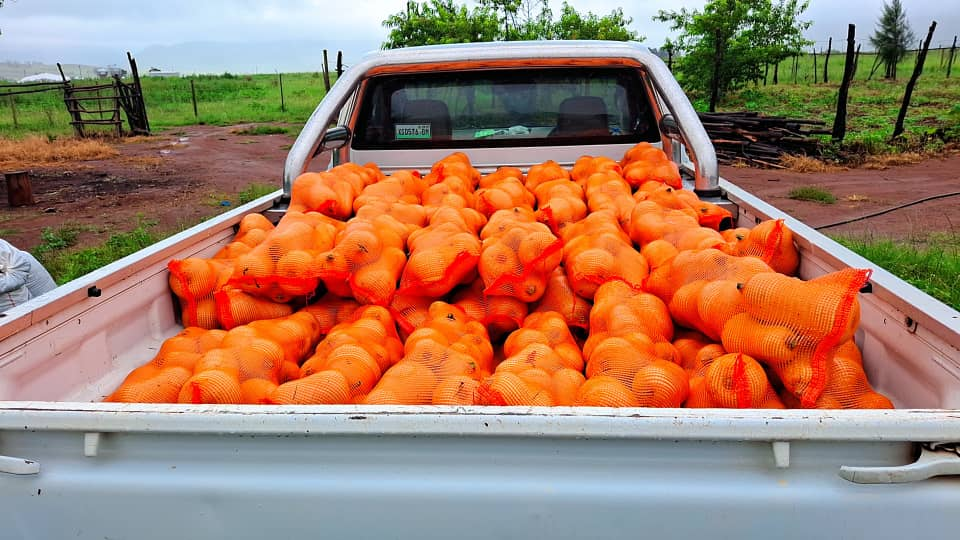
An example of Mavuso’s strength and resilience
Production begins with choosing the right seed varieties and sourcing seedlings from trusted nurseries. Once planting is complete, mulch is applied to retain soil moisture, followed by regular watering and close crop monitoring. Mavuso says the farm pays particular attention to pests, responding quickly when infestations appear.
“We deal with pests as soon as they appear by applying the appropriate pesticides where necessary,” he says.
The farm also uses both organic and chemical fertilisers, although Mavuso’s long-term goal is to move fully into organic production.
“We are gradually embracing organic fertilisers, and our long-term plan is to go fully organic in the future,” Mavuso explains.
Organic compost, however, comes with its own complications. Mavuso notes that it can introduce large volumes of weeds, requiring labour-intensive removal. Instead of using herbicides, Mayindisa Farm relies on seasonal workers who manually weed the fields by hand.
“We do not use chemicals for weed control. We remove weeds manually,” he says.
This production discipline extends all the way to harvesting. At Mayindisa Farm, harvest timing is not determined by routine alone, but by what the market requires. Some buyers prefer lettuce while it is still young and tender, while others want it fully mature. The farm, therefore, adjusts harvesting schedules according to customer demand.
That approach is especially important for highly perishable vegetables. Mavuso says lettuce can quickly lose value if it remains in the field too long. Once overgrown, it can lose its fresh, sweet taste, reducing its appeal to buyers.
“Farmers need to secure a reliable market before planting so that, when the crop is ready, it can be harvested and sold quickly while it is still fresh and of good quality,” he says.
This market-first mindset is central to the future of Mayindisa Farm. The business already has a contract with NAMBOARD, giving it an important route to market. Mavuso adds that the company is also in discussions with several major supermarkets as it positions itself for expanded supply opportunities, although those buyers cannot yet be publicly named.
Still, the road to commercial growth is not without obstacles. Mavuso identifies limited access to finance, unpredictable weather patterns, low market prices, and high labour costs as some of the major pressures facing the farm. Yet he remains focused on growth, convinced that agriculture rewards those who remain patient, organised, and passionate.
“Patience and passion are key. Once you have those, the rest will gradually fall into place,” he says.
His advice to young people is equally direct: do not romanticise farming, professionalise it.
“Start small, but treat agriculture as a business. Build your brand and invest in it,” he says.
In Mayindisa Farm, that philosophy is already taking shape. It is visible in the irrigation lines, the market planning, the labour structure, the brand ambitions, and the careful balancing of productivity with sustainability. For Mavuso, the future of farming lies beyond planting. It lies in building enterprises that can compete, create jobs, and grow with purpose.
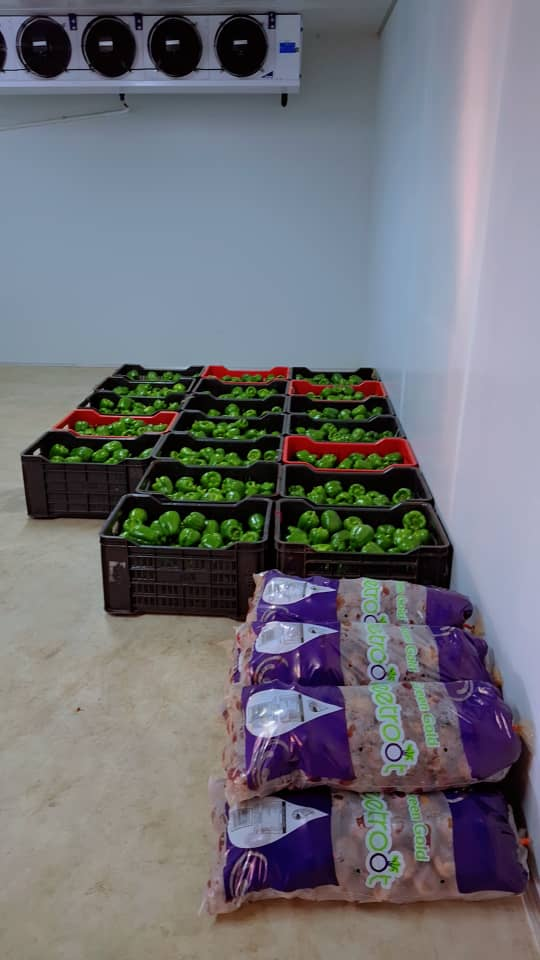
A thriving production of peppers and beetroot