
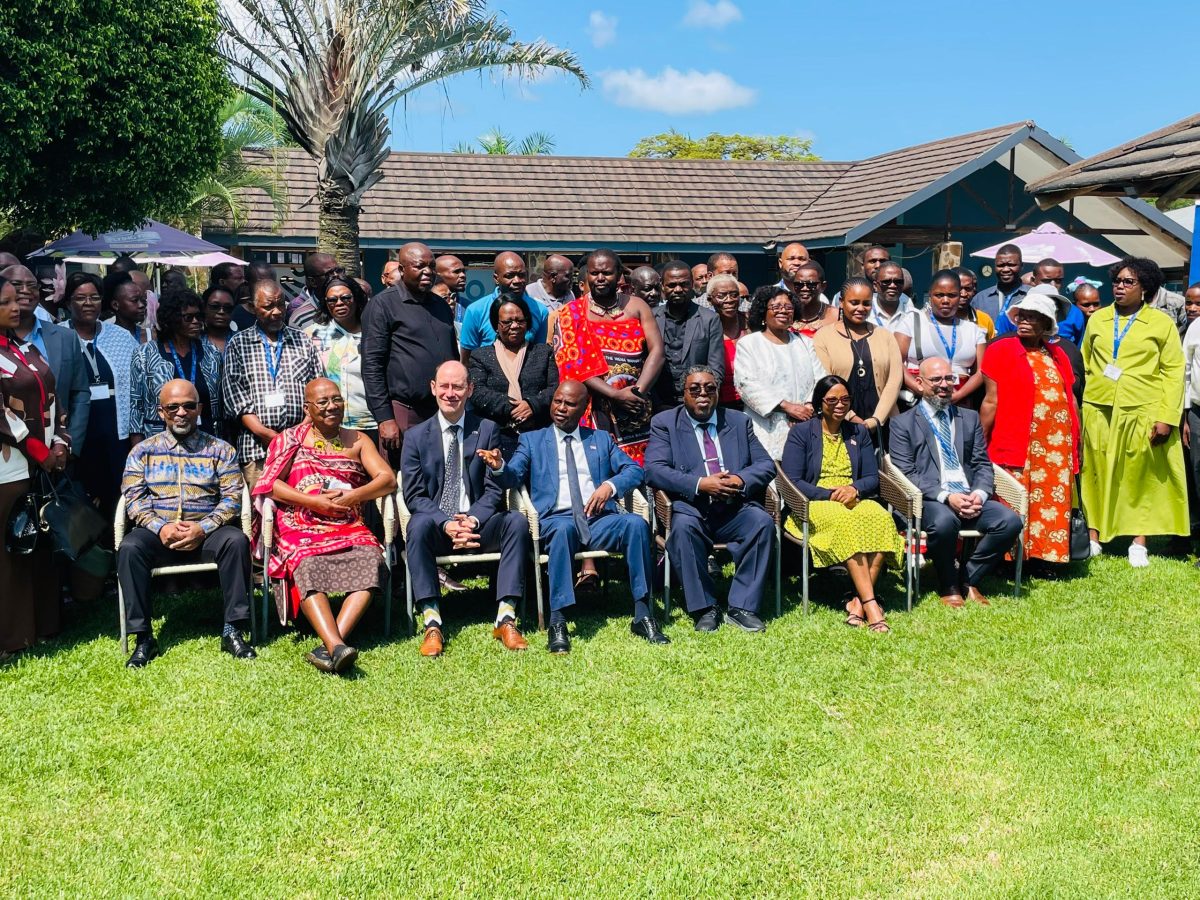
Government officials, development partners and farmers in the feedlot sector posing for a group photo.
BY SIBUSISIWE NDZIMANDZE | JOURNALIST
MANZINI — Eswatini’s feedlot industry is facing a sharp downturn, with only 212 of the country’s 619 registered feedlots currently in operation, reflecting a decline that had already set in before the Foot-and-Mouth Disease (FMD) outbreak.
The scale of the crisis emerged strongly at the National Feedlot Indaba 2026 held at The George Hotel, where government officials, development partners, financial institutions and farmers gathered to confront the steady decline of a sector considered important for value addition, meat quality, exports and rural livelihoods.
While FMD has become the most immediate and visible blow, speakers at the meeting made it clear that the feedlot industry had already been on a downward path due to a combination of long-standing structural challenges. These include high feed costs, limited access to finance, shortage of quality stock, and the unresolved issue of the “5th quarter,” where by-products such as hides, offal, horns and hooves are often taken without compensation to farmers.
Minister of Agriculture Mandla Tshawuka said the problems facing the sector did not begin with the current disease outbreak.
“Recently, the sector has been on a downward trajectory, even before the advent of FMD. FMD is the latest and heaviest blow dealt on the industry. There are 619 registered feedlots but only 212 are currently operational,” he said.
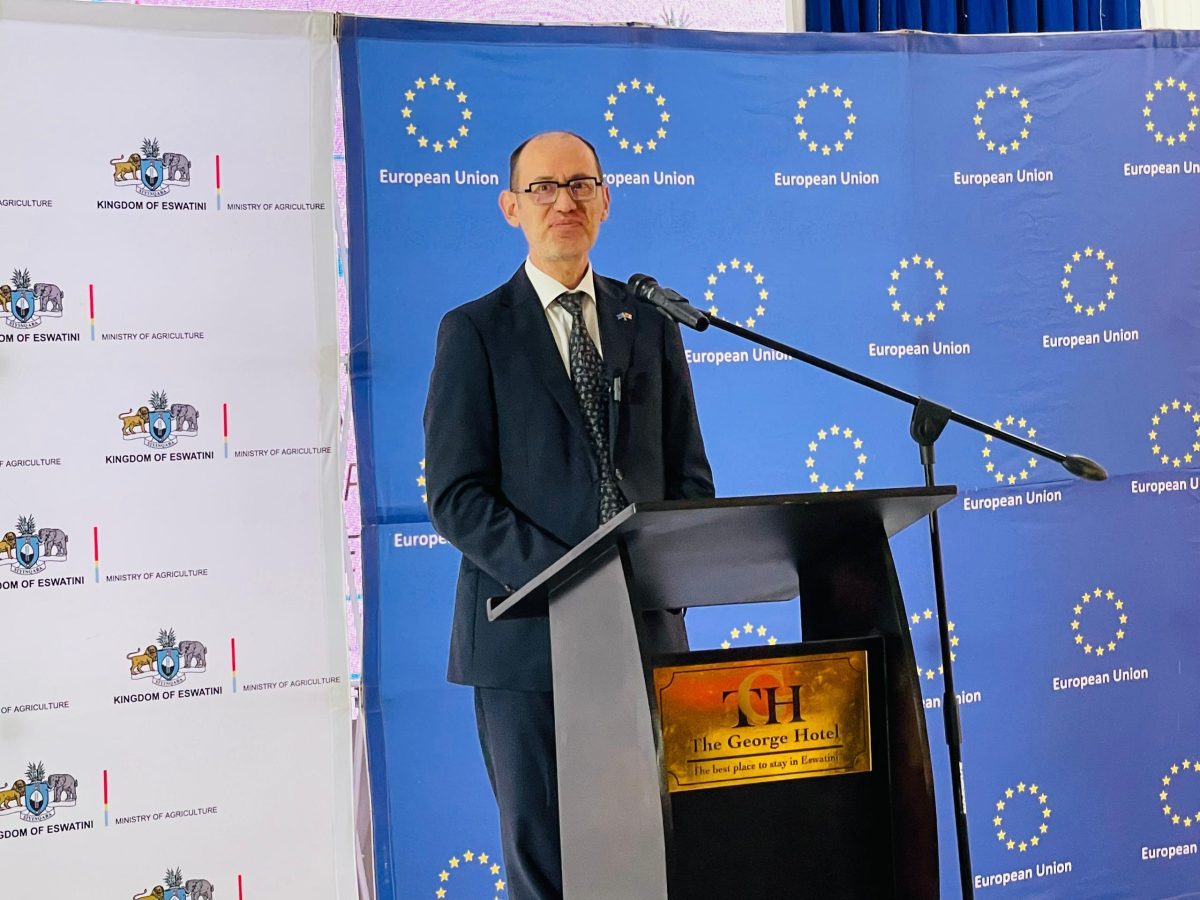
European Union Political Counsellor, Jose Becerra delivering his speech.
His remarks helped define the real purpose of the Indaba: not just to discuss FMD, but to urgently address the wider decline of the feedlot industry and find practical measures to stop further collapse.
The Minister said feedlot farmers are facing a difficult mix of challenges. These include restrictions linked to FMD, rising feed prices, lack of stock, and increased reluctance by banks to lend to farmers because of the risks associated with the disease. He said this has made it harder for producers to keep operating, let alone expand.
The “5th quarter” issue was also identified as one of the major reasons the sector has been weakening over time. Farmers have long raised concerns that when they sell cattle, parts of the animal that still hold commercial value are taken without any return to the producer. This reduces the farmer’s overall earnings and weakens incentives to invest in feedlotting.
At the same time, FMD has made an already difficult situation worse by disrupting livestock movement and market access. When outbreaks occur, movement restrictions delay sales and force farmers to continue feeding animals that are already market-ready, increasing production costs and cutting into profits.
Sydney Nkambule, a small-scale livestock farmer from Sigangeni in Luhlendlweni who keeps 10 sows and one boar, said he attended the Indaba hoping to hear what support government would offer to struggling farmers.
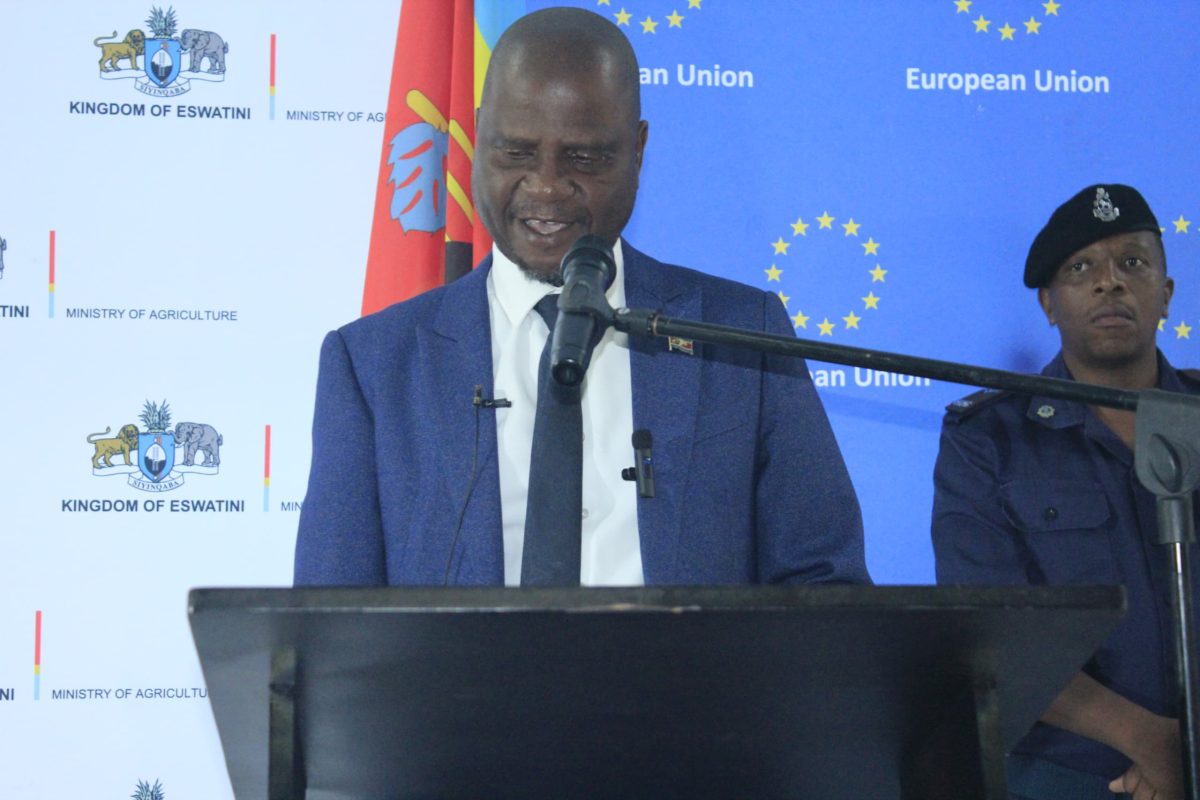
Minister of Agriculture, Mandla Tshawuka addressing farmers and stakeholders during the National Feedlot Indaba proceedings.
He said when an area is affected by FMD, livestock movement is stopped, which means farmers cannot sell animals on time. Instead, they must continue buying feed while waiting for restrictions to be lifted.
From the development partners’ side, European Union Political Counsellor Jose Marta Becerra said the discussion was taking place at a critical time for the sector.
“This gathering comes at a critical moment for Eswatini’s livestock sector,” he said.
He said the feedlot sector remains central to the livestock value chain, but continues to face serious barriers including “high feed costs, limited availability of quality feeder stock, restricted access to finance, and disease shocks, particularly Foot-and-Mouth Disease (FMD).”
According to Becerra, these pressures are hitting MSMEs the hardest, making it difficult for them to grow, compete and participate in formal markets. He said the Indaba should therefore not remain just a talking platform.
“This Indaba is therefore not just a dialogue platform; it is a call to action to develop practical, coordinated, and scalable solutions,” he said.
National Livestock Expert Sibonangabo Sikhondze also outlined the broader intervention framework through the Eswatini Livestock Value Chain Development Programme (ELVCDP), a four-year European Union-funded initiative running from 2023 to 2027. Implemented by the International Trade Centre in partnership with the Ministry of Agriculture’s Department of Veterinary and Livestock Services, the programme is aimed at improving productivity, market access and competitiveness in the beef and goat value chains.
The programme is being piloted in selected chiefdoms including Zinyane, Luhlekweni, Mngomeni, Mambaweni, Dingiswayo, Ngcoseni and Mgofeleni, while some interventions are being carried out at national level.
As the Indaba unpacked the reasons behind the sector’s decline, it also pointed to a number of possible solutions.
One of the biggest proposals came from Tshawuka, who said farmers can apply through the Ministry of Agriculture to use government land for feedlot-related production under the community farming strategy already being implemented in areas such as Sitsatsaweni, Manzamnyama and Lomahasha.
The move is seen as a possible response to one of the industry’s biggest constraints: feed production and access to land. For farmers struggling with space and the high cost of feed, the use of government land could help reduce production pressure and support recovery.
Tshawuka also stressed that controlling FMD remains central to any revival of the sector. He described the disease as “the elephant in the room” and said government has already put in place measures such as vaccinations, an integrated response programme and new standard operating procedures.
There’s a significant progress, with the country receiving 70,000 vaccine doses in February 2026, followed by an additional 50,000 doses to support a phased national rollout. Vaccination efforts have steadily increased, with over 18,000 cattle vaccinated by early March and about 110,000 cattle covered by mid-March.
Government has also committed substantial resources to the response, including an estimated E90 million towards FMD control, alongside E57 million allocated for vaccines and E15 million for cordon fence rehabilitation in the 2026/27 agriculture budget.
Despite these efforts, FMD continues to disrupt the sector through movement restrictions, increased costs for farmers, and the suspension of beef exports to the European Union.
“We will only conquer this through cooperation,” he said.
He warned that porous borders, damaged fences and failure to follow livestock control regulations are worsening the problem, making stronger compliance and coordinated action essential.
Other support options discussed included financing through the Eswatini Agricultural Development Fund (EADF). Animal Husbandry Officer II Thulasizwe Dlamini encouraged farmers to apply for loans offered through the fund at an interest rate of 9 percent, although he acknowledged that the FMD outbreak has affected confidence in the sector.
The meeting also heard that several interventions are already underway through the livestock value chain programme.
These include fodder production support through hay baling equipment worth more than E3.1 million, artificial insemination services for more than 200 farmers, and expanded vaccination campaigns. Tshawuka said the programme has already delivered artificial insemination equipment worth E906,305.94, imported bovine semen worth E310,695, inseminated 329 beef cattle since February 2026, vaccinated 4,291 beef cattle and 4,541 goats at pilot sites, and trained 510 farmers in feedlot production.
These efforts, stakeholders said, are meant to restore productivity and confidence in a sector that has been weakening for years.
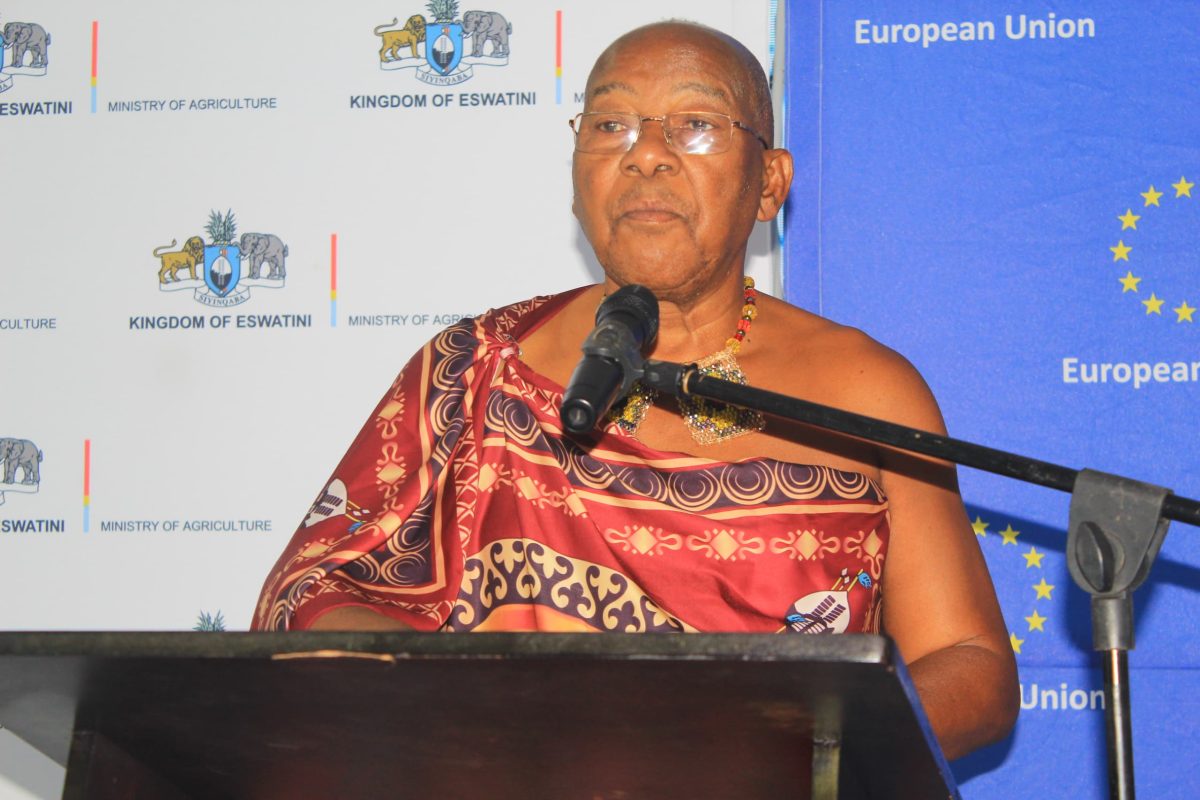
Manzini Regional Administrator, Prince Chief Gija delivering his remarks.
The central message from the Indaba was that Eswatini’s feedlot industry is not only battling FMD, but deeper structural problems that had already pushed many operators out of business. With just 212 out of 619 registered feedlots still operating, the meeting served as both a warning and a call for action.
The challenge now is whether the proposed solutions from better disease control and financing support to land access and stronger policy coordination can be implemented quickly enough to stop further decline and give the sector a real chance of recovery.
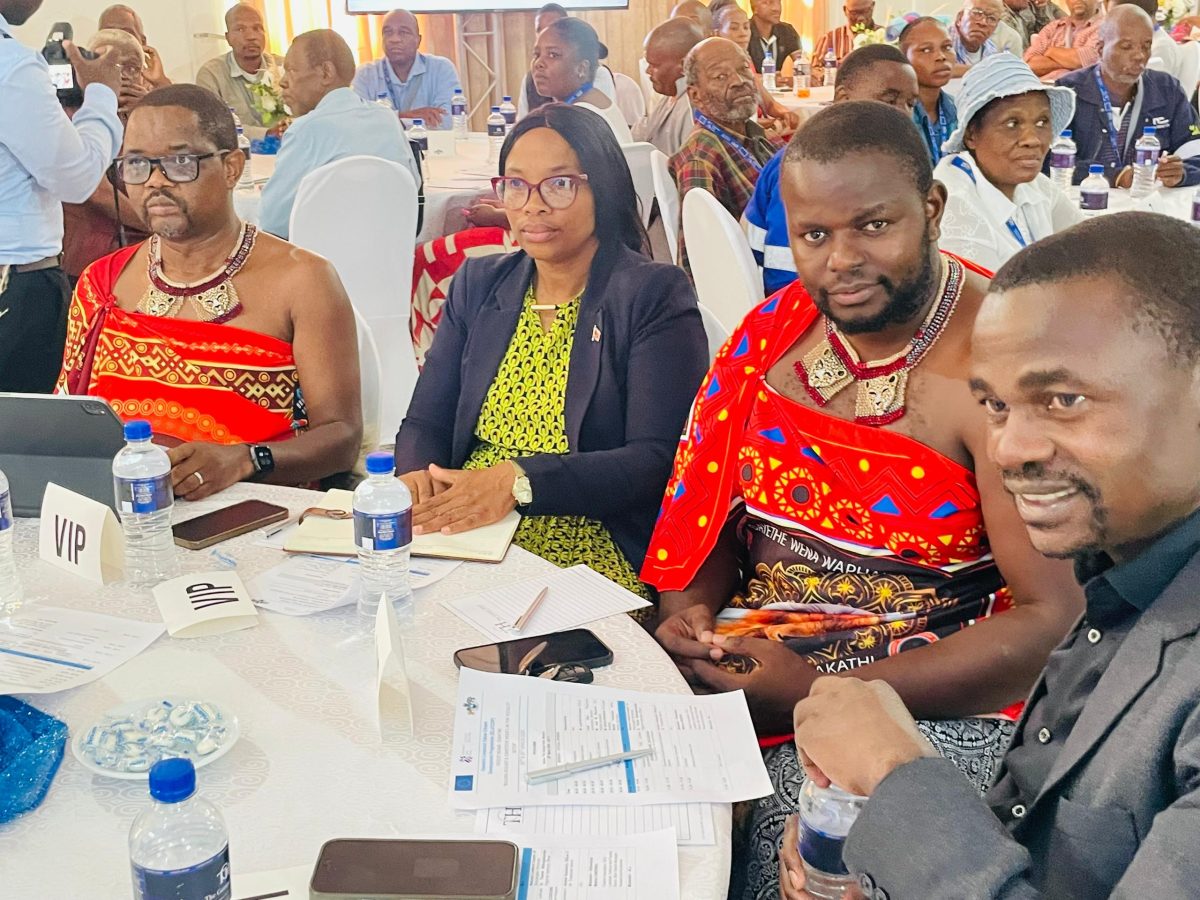
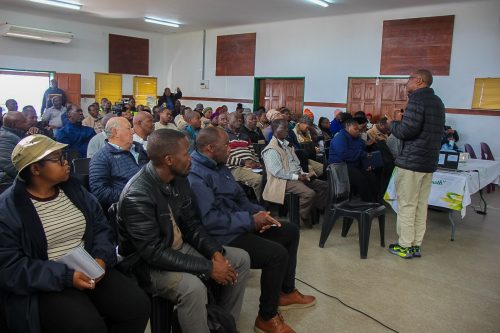
Participants listening attentively on the proceedings of the event.