


BY PHESHEYA KUNENE - EDITOR
KAPHUNGA - What happens when unemployment collides with zeal, and farming becomes not a last resort, but a calculated strategy for survival and growth?
At a modest yet deliberate poultry unit in Kaphunga, that question is being answered daily under infrared lights and the steady rhythm of feeding trays, where Noxolo Nkambule is building not just a broiler enterprise, but reshaping the narrative of youth-led agribusiness in Eswatini.
Nkambule’s entry into poultry farming was not driven by inheritance, privilege or generous start-up capital. It was triggered by disruption. When her corporate contract ended and opportunities in the formal job market dried up, she made a strategic pivot. Agriculture, once a side pursuit, became central to her livelihood. Broiler production, with its short turnaround cycles, predictable demand and relatively low entry barriers, emerged as the most practical point of entry.
“I needed something that could generate income quickly and consistently,” she explains. “Poultry offered exactly that.”
A SMALL UNIT WITH COMMERCIAL INTENT
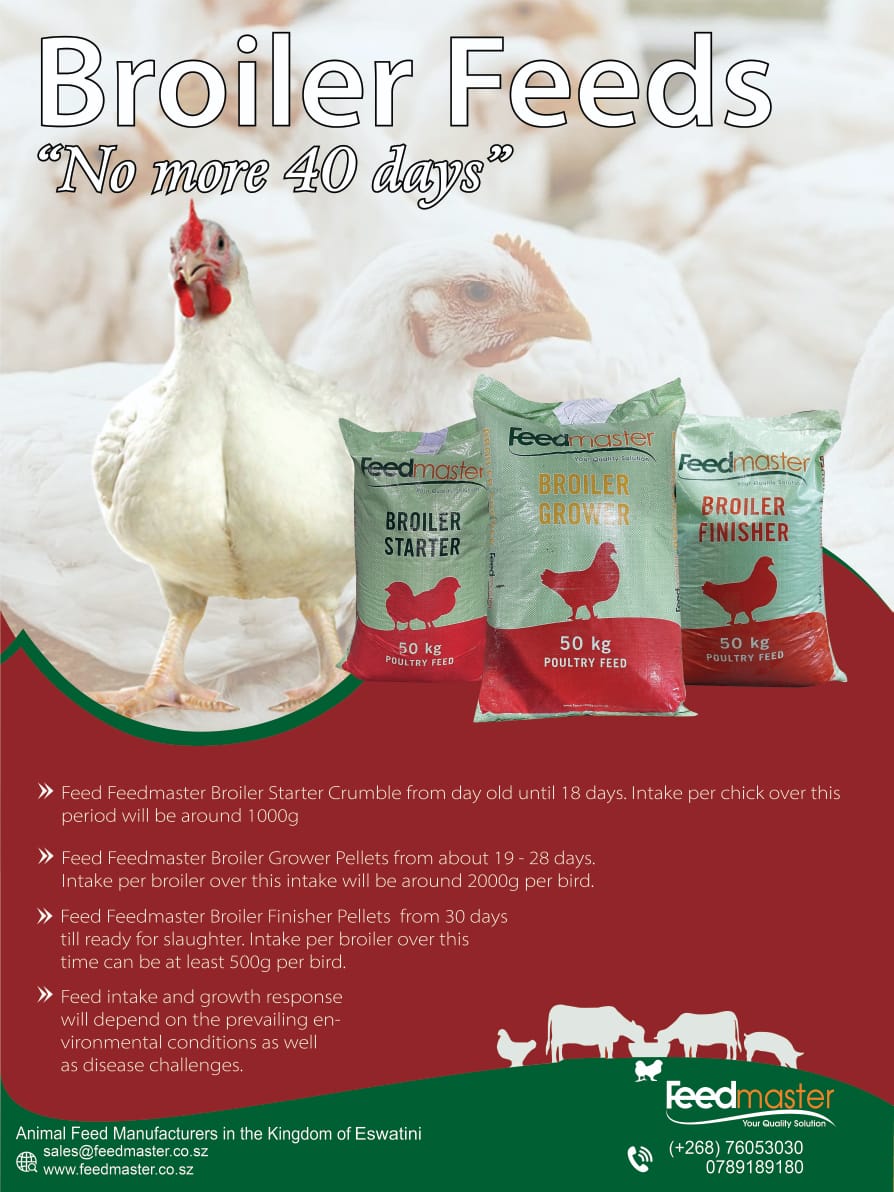
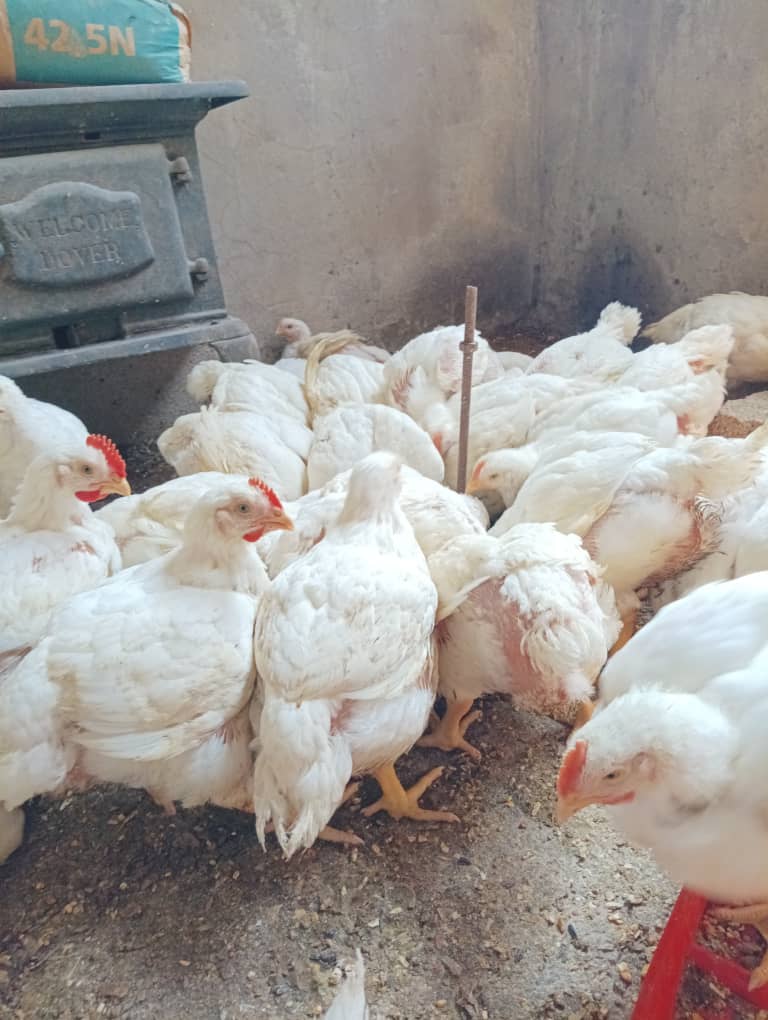
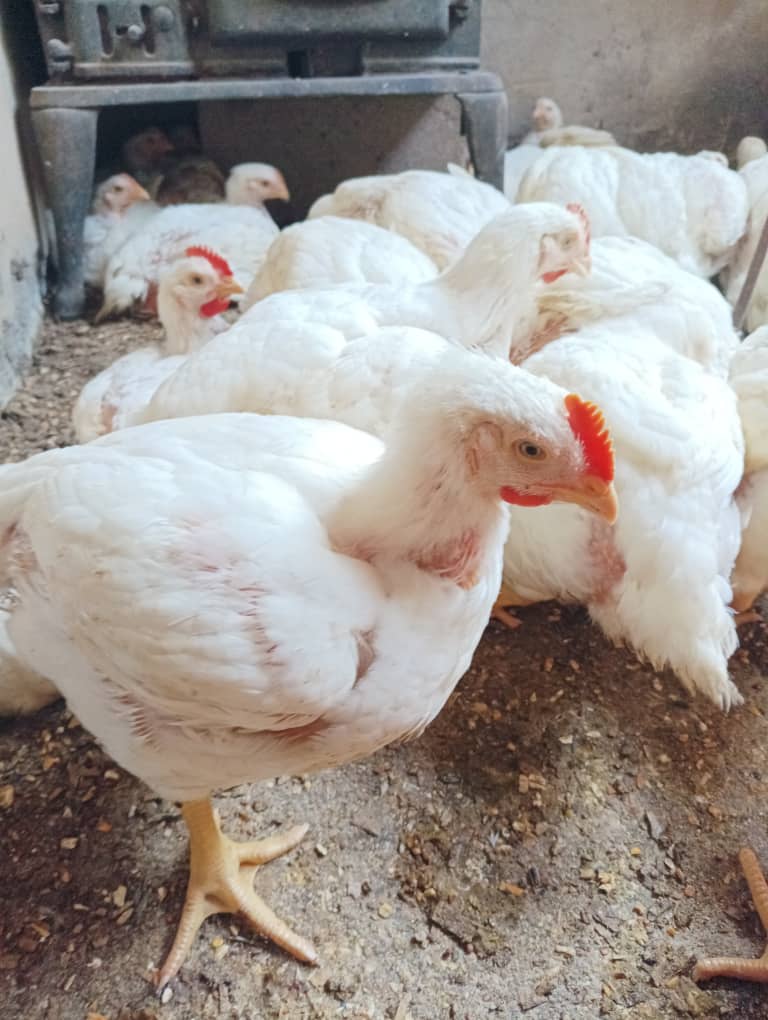
Nkambule currently produces 200 broilers per cycle, operating from a repurposed home structure adapted for poultry production. The infrastructure is basic but intentional. Infrared lights and a wood-fired heating system support brooding, while disciplined daily routines around feeding, hygiene and monitoring help keep mortality at manageable levels.
This is not a showcase farm. It is a functional production unit built around efficiency rather than aesthetics. What distinguishes Nkambule is not scale, but intent. She approaches poultry as a business system governed by numbers, timelines and margins, not as a side activity.
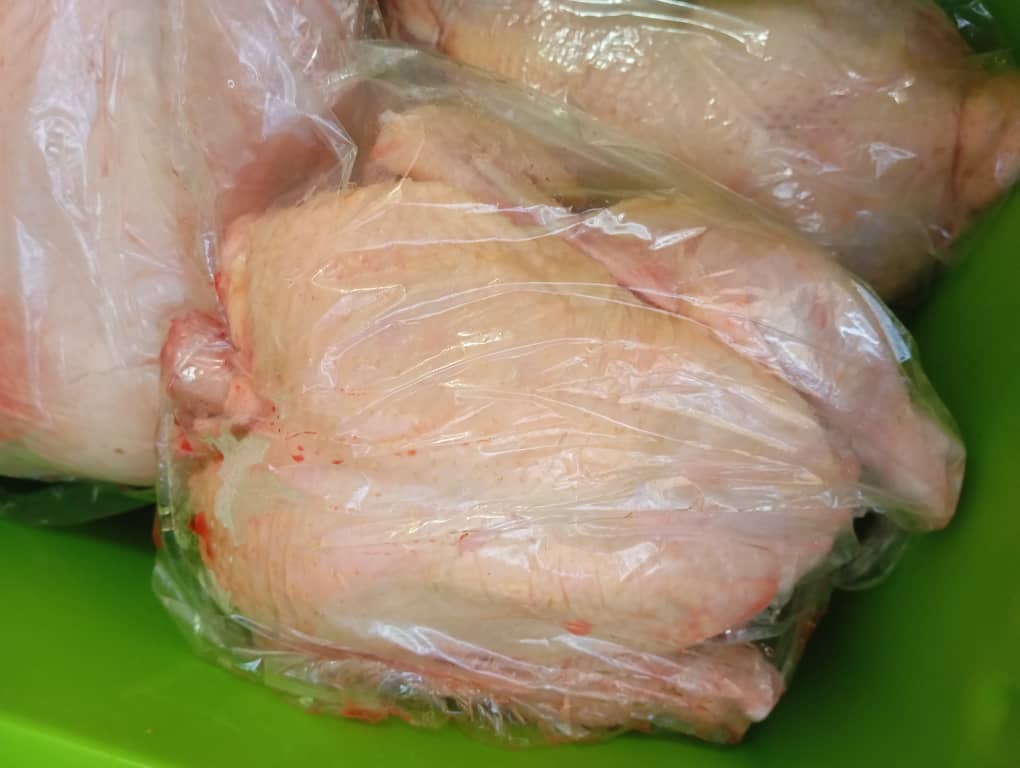
Her academic background in International Business Management is evident in how she plans cycles, controls costs and engages markets. Production is scheduled. Inputs are tracked. Sales are deliberate. Birds are sold both live and dressed, allowing her to respond to consumer preferences while maximising turnover.
Marketing remains grassroots but effective. Through WhatsApp, Facebook and word of mouth, she has built a reliable community-based market. In rural Eswatini, such informal digital platforms are rapidly becoming critical market-access tools, enabling small producers to bypass intermediaries and build direct relationships with customers.
POULTRY AND THE ESWATINI MARKET REALITY
Nkambule’s enterprise sits within a broader national context. Poultry remains one of the most accessible agricultural entry points for youth and women in Eswatini. Demand continues to grow, driven by population growth, urbanisation and poultry’s affordability relative to red meat.
However, the sector is not without complexity. Feed costs remain volatile and heavily import-dependent. Day-old chicks are largely sourced externally. Biosecurity risks persist. Formal markets such as supermarkets and butcheries demand consistency, volume and strict compliance, conditions that many small producers struggle to meet.
Failure in poultry farming often stems not from poor husbandry, but from weak organisation. Birds may grow well, but inconsistent supply, unstable cash flow and poor planning undermine sustainability.
Nkambule has internalised these lessons. By 2026, she plans to scale production to 2,000 broilers per cycle, organised into staggered batches of 500 birds per week. This model supports continuous supply, stabilised income and improved market reliability, a critical step towards formal market entry.
LEARNING AS A COMPETITIVE ADVANTAGE
In early 2025, Nkambule joined the Women Farmer Foundation’s Innovative Climate-Smart Tunnel Training Programme. While the programme focused primarily on horticulture, its influence on her poultry enterprise has been substantial.
The training strengthened her understanding of planning, efficiency and sustainability. It also opened pathways for diversification. She now intends to integrate vegetable and herb production using climate-smart tunnels to spread risk and enhance income stability.
“Sustainability is no longer just about protecting the environment,” she notes. “It is about protecting the business.”
FROM SURVIVAL TO SCALE
Nkambule is candid about the constraints ahead. Capital remains the biggest hurdle. Purpose-built housing, biosecurity systems, cold storage and transport infrastructure all require investment. Strategic partners could unlock access to finance, mentorship and formal markets.
With the right support, she believes her enterprise can transition from survival farming into a competitive agribusiness, capable of employing young people and contributing meaningfully to national food security.
Her ambition is clear. She does not intend to remain small.
LESSONS FOR ASPIRING FARMERS
Nkambule’s advice to fellow young farmers is grounded and practical. Start with what you have. Secure a market early. Track your costs. Invest in learning. Be patient and consistent.
Her journey reflects a broader shift in Eswatini’s agricultural landscape, where farming is increasingly absorbing displaced talent from the formal economy. When approached with discipline, training and commercial intent, agriculture becomes not just a refuge, but a launchpad.
In Kaphunga, amid the steady hum of broiler production, Nkambule is proving that unemployment can be repurposed into opportunity.
As she once told fellow graduates at the Women Farmer Foundation, “The outfit has changed, but the ambition hasn’t.”
For Eswatini’s poultry sector, that ambition may be exactly what the industry needs.