



BY PHESHEYA KUNENE - EDITOR
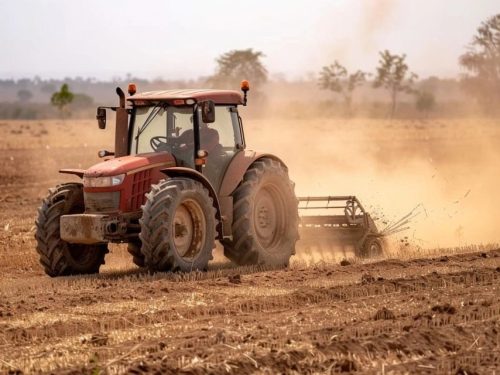
MBABANE – An E180 million partnership between the government and Standard Bank is set to roll out 250 tractors nationwide, reshaping how farmers access mechanisation in Eswatini.
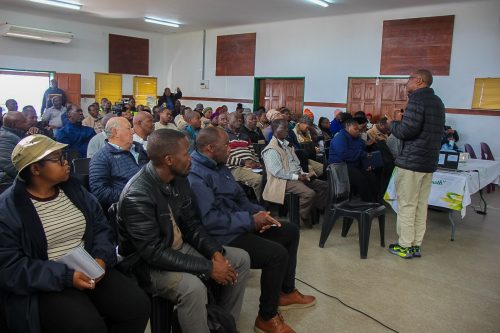
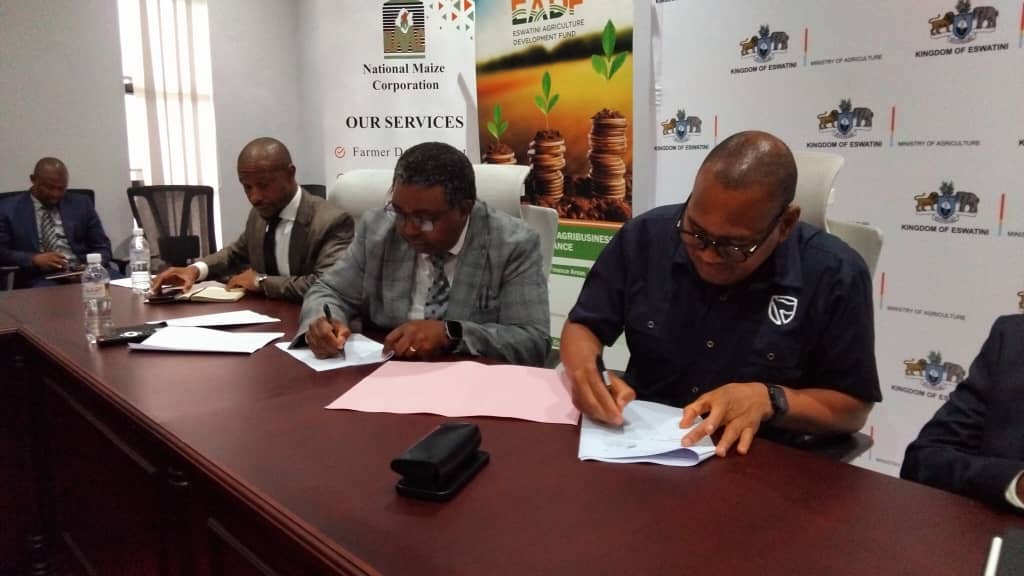
The Ministry of Agriculture and Standard Bank Eswatini have formalised the initiative through a Memorandum of Understanding signed by Principal Secretary Sydney Simelane and Standard Bank Eswatini Chief Executive Officer Mvuselelo Fakudze.
The agreement paves the way for the delivery of 250 mechanisation packages over five years, implemented through the Eswatini Agricultural Development Fund and the National Maize Corporation, in partnership with the American Embassy and global agricultural equipment manufacturer John Deere.
Under the programme, 50 tractor packages will be deployed annually, with 10 allocated to the National Maize Corporation and 40 to private tractor owners. The first batch of 50 tractors has already arrived in the country, marking the transition of the programme from policy design to execution.
Speaking during the signing ceremony, Agriculture Minister Mandla Tshawuka said the partnership directly addressed one of the most persistent structural constraints facing local agriculture, limited and unreliable access to mechanisation.
He said farming was fundamentally a timing business, where delays in land preparation and harvesting translated directly into lost yields and income.
Tshawuka said the absence of sufficient machinery had forced farmers to compete for tractors during peak planting seasons, often missing critical production windows. He said the mechanisation drive was therefore central to the country’s food sovereignty agenda, particularly as farming scaled up from subsistence to commercial production.
The financing model underpinning the programme blends public support with private capital to reduce costs and expand access. Under the structure, the Eswatini Agricultural Development Fund provides 15 percent concessional funding, beneficiaries contribute 10 percent as equity, while Standard Bank finances the remaining 75 percent as a loan.
John Deere has further reduced the cost burden by buying down the interest rate to 9.2 percent per annum.
Standard Bank Eswatini Chief Executive Officer Mvuselelo Fakudze said the participation of a commercial bank required a carefully structured and sustainable model. He said the partnership struck a balance between protecting depositors’ funds and supporting a national development priority, noting that long-term success depended on responsible utilisation and repayment.
Principal Secretary Sydney Simelane said the Ministry viewed mechanisation as a critical input alongside land, climate and quality inputs. He said the programme complemented government’s ongoing efforts to recapitalise the Tractor Hire Mechanisation Programme, which had struggled to meet rising demand.
Simelane said the new intervention would strengthen the National Maize Corporation’s replacement programme while deliberately creating space for the private sector to play a more active role in service provision. He added that all beneficiaries would be contracted to NMC to ensure structured production and market access.
National Maize Corporation Chief Executive Officer said the initiative responded to long-standing operational gaps faced by farmers, particularly delays in land preparation. He said the structured participation of farmers in the financing model promoted ownership and sustainability, with further batches expected to be distributed by the end of the year.
Beyond financing, the programme incorporates technical readiness, with provisions for servicing and maintenance through Swazi Trac, the local John Deere dealership. Officials said local servicing capacity was essential to ensure equipment uptime and protect the investment.
Concerns raised during the engagement on human resource capacity were acknowledged, with stakeholders noting that mechanisation without skills, coordination and farmer readiness would limit impact. In response, officials said the programme was supported by technical guidance and inter-ministerial coordination, including business support from the Ministry of Commerce to ensure beneficiaries treat the initiative as a commercial enterprise.
To date, loans exceeding E4.9 million have already been approved under the programme, reflecting early uptake and confidence among farmers and agribusiness operators.
From a sectoral perspective, the mechanisation drive is expected to reduce production delays, improve yields, and lower operational costs, particularly for medium and large-scale producers. By stabilising planting and harvesting timelines, the initiative strengthens national food security and reduces dependence on imports during poor seasons.
For Eswatini’s agricultural sector, the MoU signals a shift from ad hoc support towards structured, bankable investment, where farmers are positioned as economic actors rather than beneficiaries. If successfully implemented, the programme could mark a turning point in modernising agriculture and anchoring food sovereignty on productivity rather than weather and chance.