
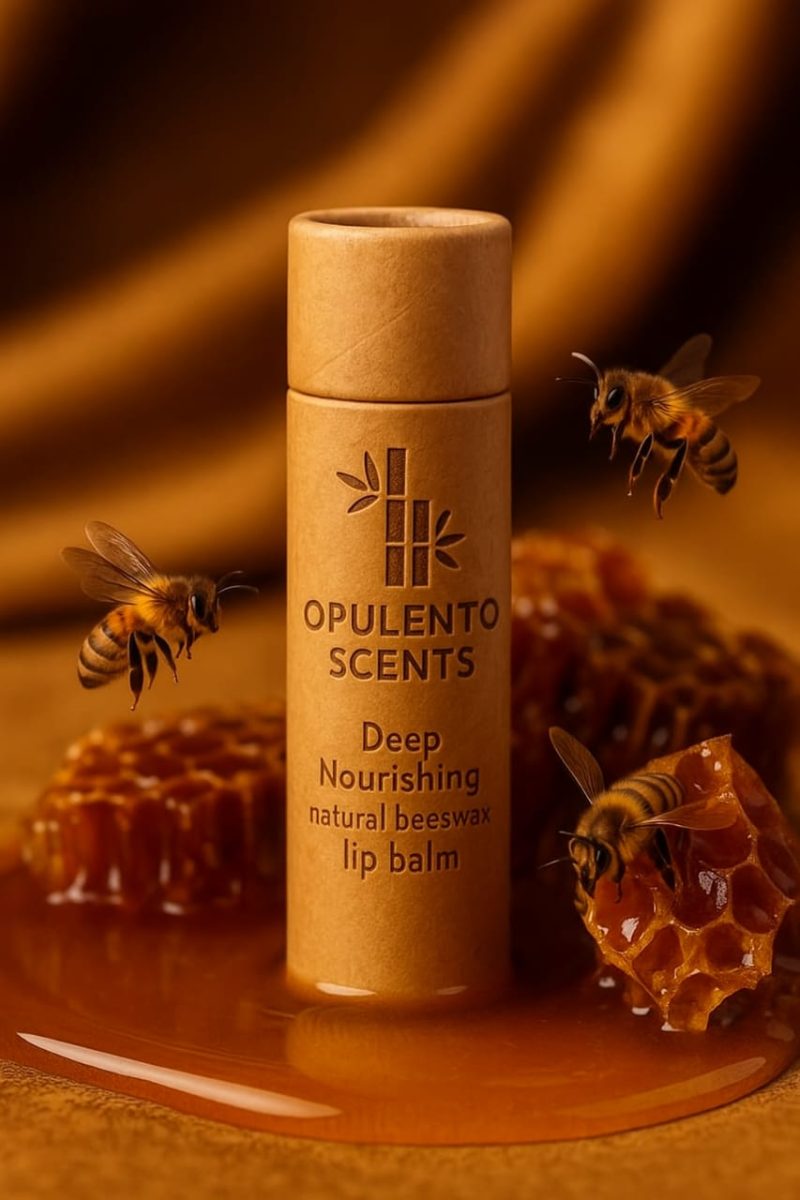
Illustration of a natural beeswax lip balm representing products being developed under the Opulento Scents concept.
BY SIBUSISIWE NDZIMANDZE | JOURNALIST
SITEKI – While many farmers focus only on honey, a young beekeeper from Mzilikazi is exploring the full value of the hive. Siphesihle Dlamini, founder of Opulento Farms, is preparing to launch Opulento Scents, a new range of beeswax-based products that will include lip balms, body lotions, soaps, aromatherapy candles and wood polish.
The initiative aims to transform beeswax, a by-product of honey harvesting, into value-added products that can create additional income for beekeepers.
Dlamini said the move is part of his strategy to maximise the economic potential of beekeeping while building resilience against climate change, which can affect honey yields.
“Sometimes honey production becomes low because weather conditions affect flowering,” he said during an interview at his farm. “By producing products from beeswax, we can still generate income even when honey harvests are lower.”
The new product line is expected to demonstrate how farmers can diversify within the beekeeping sector by turning hive by-products into marketable goods.
Turning beeswax into business
Beeswax is a natural by-product of honey production that remains after honeycomb is processed.
Instead of discarding it, Dlamini plans to convert the wax into consumer products that are increasingly popular among buyers seeking natural alternatives to synthetic products.
Globally, beeswax-based cosmetics have become an established niche within the natural beauty and wellness industry. In countries such as the United States, the United Kingdom and New Zealand, companies produce lip balms, soaps and skincare products using beeswax, while Europe remains a major market where demand for beeswax in cosmetics continues to exceed local supply.
These global trends show that beeswax is increasingly valued not just as a by-product of honey production, but as an important ingredient in natural and eco-friendly personal care products.
After honey is harvested, the remaining honeycomb is burned and processed to extract beeswax, which can then be used to manufacture various products.
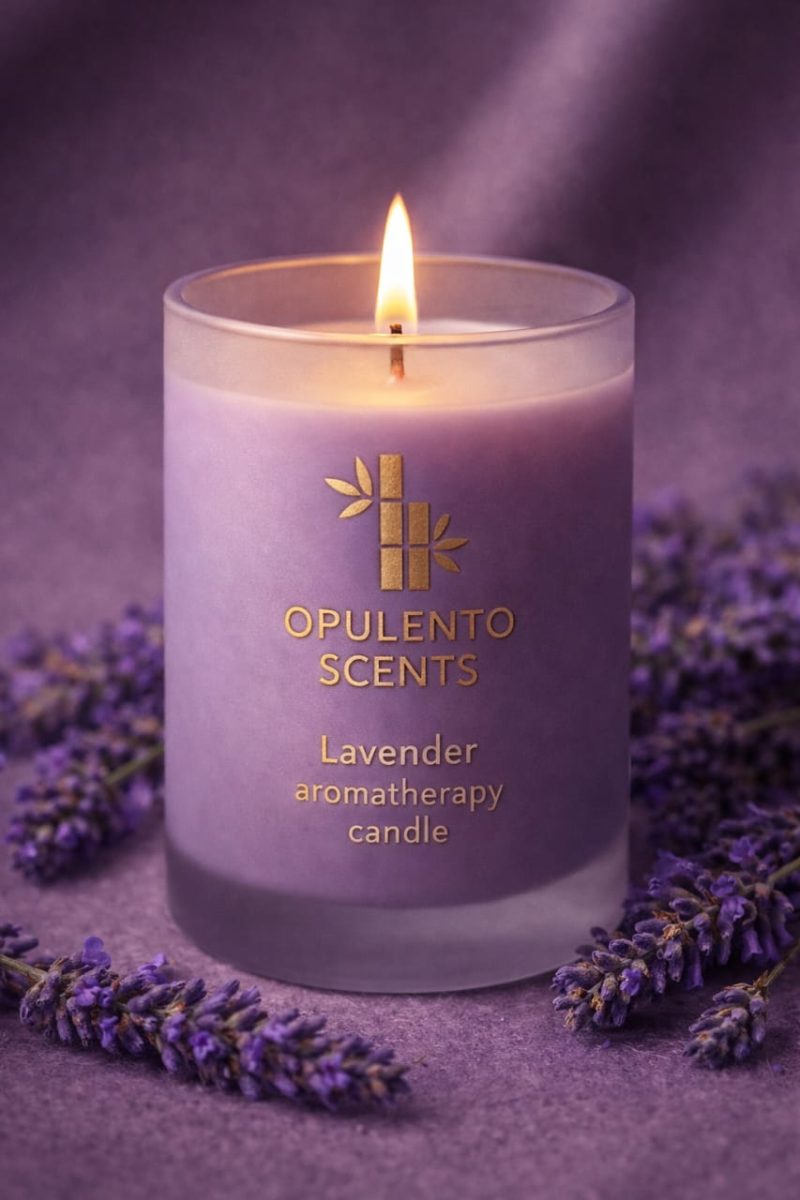
Illustration of a beeswax lavender aromatherapy candle representing products planned under the Opulento Scents range.
Under the Opulento Scents concept, the farm is developing beeswax aromatherapy candles, which are valued for their natural fragrance and cleaner burn compared to conventional paraffin candles.
The farm is also developing lip balms made from beeswax, designed to provide a natural skincare option while supporting environmentally responsible packaging.
The lip balm will be packaged in a brown craft-paper tube, a deliberate move aimed at reducing plastic waste.
“We want our products to be eco-friendly,” Dlamini said. “That is why the lip balm will be packaged in craft paper tubes instead of plastic.”
However, sourcing the packaging materials has presented a challenge.
“At the moment the craft paper tubes are mainly sourced from China, and for small producers like us the challenge is capital,” he explained.
Despite the difficulty, Dlamini says he remains committed to maintaining environmentally responsible packaging as part of the brand identity.
Simple science behind the lip balm
Dlamini says producing beeswax lip balm is relatively simple and can be done by small-scale producers using natural ingredients.
“The science of it is very easy,” he explained. “For lip balm you mix beeswax with coconut oil, sweet almond oil and vitamin E oil.”
The ingredients are blended together using a double boiler, allowing the oils and wax to fuse properly. Farmers or small producers can also add natural scents such as lavender or strawberry to enhance the product.
Once the mixture is ready, it is poured into branded containers and allowed to cool before being taken to market.
According to Dlamini, the same concept of using beeswax and natural oils can also be applied to produce body lotions and soaps, which he plans to include in the Opulento Scents product line.
From honey production to value addition
Dlamini’s beekeeping enterprise, Opulento Farms, produces honey sold under the Lowveld Luju brand and supplies customers ranging from households to restaurants.
The farm packages honey in several sizes including 357g squeeze bottles, 500g jars, 750g jars and 1kg containers, while some customers also purchase natural honeycomb.
By introducing beeswax products, Dlamini hopes to expand the business into new markets while reducing dependence on honey production alone.
He says his long-term vision is to grow within the same sector that he understands best, focusing on beekeeping and related products while building knowledge and expertise in the industry.
Dlamini is also planning to share his knowledge with other farmers by offering guidance and eventually working as a consultant for people interested in starting beekeeping.
“I want to help others who want to start beekeeping,” he said. “If more people learn how to manage bees and understand the value chain, we can grow the industry together.”
Inspired by family and training
Dlamini’s interest in beekeeping began in the rural community of Mzilikazi, where he was inspired by his uncle, his father’s elder brother, who had long been involved in beekeeping.
His agricultural journey has also been shaped by several development programmes aimed at empowering young farmers.
He participated in the Innovative Climate Smart Youth Tunnel Production Training under the Women Farmer Foundation in 2024, and later completed entrepreneurship training supported by Junior Achievement and the United Nations Population Fund.
Through the entrepreneurship programme he secured E10,000 in start-up capital, which helped him establish Opulento Farms.
Dlamini also participated in the African Food Changemakers Programme, which focuses on conservation farming and climate change adaptation.
His exposure to agricultural innovation expanded further when he attended the Smarter Agriculture Programme supported by the Taiwan International Cooperation and Development Fund (ICDF) and the Ministry of Foreign Affairs of Taiwan, where he gained insight into modern agricultural technologies.
A growing opportunity for farmers
Eswatini currently produces about 35 tonnes of honey annually, while imports and local production combined suggest national consumption of about 63 tonnes each year, highlighting a significant supply gap.
For Dlamini, that gap presents an opportunity not only for honey production but also for the development of new products from the hive.
“Beekeeping is not only about honey,” he said. “If farmers understand the full value chain, they can create many products from beeswax and build stronger businesses.”
With plans to launch Opulento Scents later this year, Dlamini hopes his venture will demonstrate how beekeeping can evolve into a diversified agribusiness that combines natural products, environmental sustainability and rural entrepreneurship.