
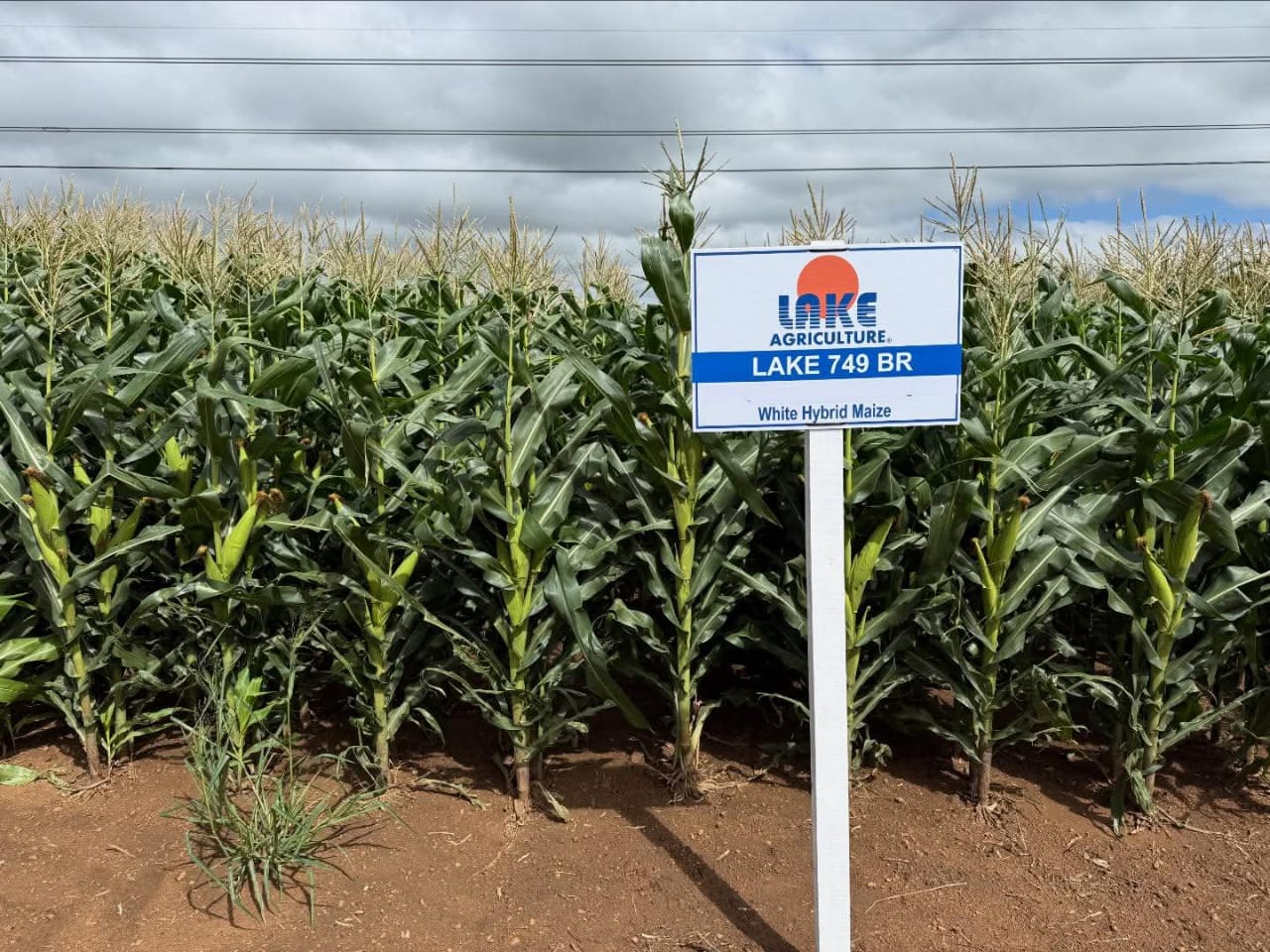
Photo Credit: Lake Agriculture
BY SIBUSISIWE NDZIMANDZE | JOURNALIST
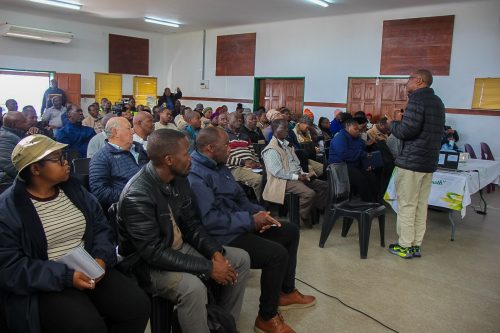
NTONDOZI – As climate change continues to disrupt maize production across Eswatini, farmers are being encouraged to adopt improved maize hybrids that are adaptable, resilient and suited to different planting periods. Speaking during a field engagement at Ntondozi, Dumsani Mbingo from Lake Agriculture said the company’s maize hybrids were developed to help farmers achieve reliable yields, reduce production losses and strengthen food security despite increasingly unpredictable weather patterns.
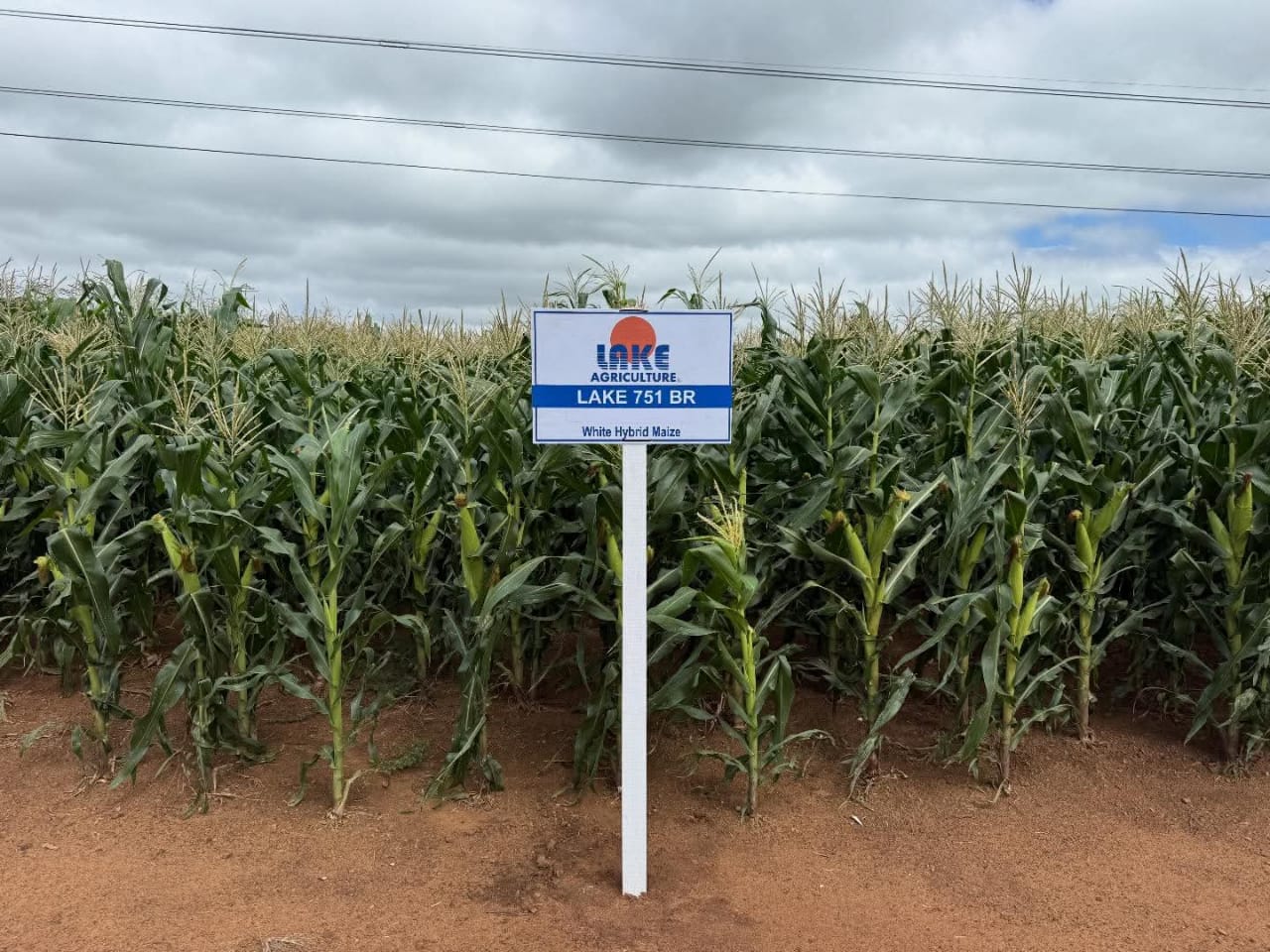
Lake Agriculture currently offers five maize hybrids, comprising four white maize varieties and one yellow maize variety. Mbingo explained that the hybrids were bred specifically to perform well under varying climatic conditions while maintaining good yield potential, grain quality and eating characteristics.
Key Characteristics of Lake Agriculture Maize Hybrids
Mbingo highlighted several key features that are common across Lake Agriculture’s maize hybrids.
Climate adaptability
According to Mbingo, the hybrids are bred to adapt to local environmental conditions, making them suitable for farming under erratic rainfall patterns linked to climate change.
Good eating quality
He noted that the maize is sweet and palatable when consumed, making it suitable for both green mealies and dry grain use.
Improved cob protection
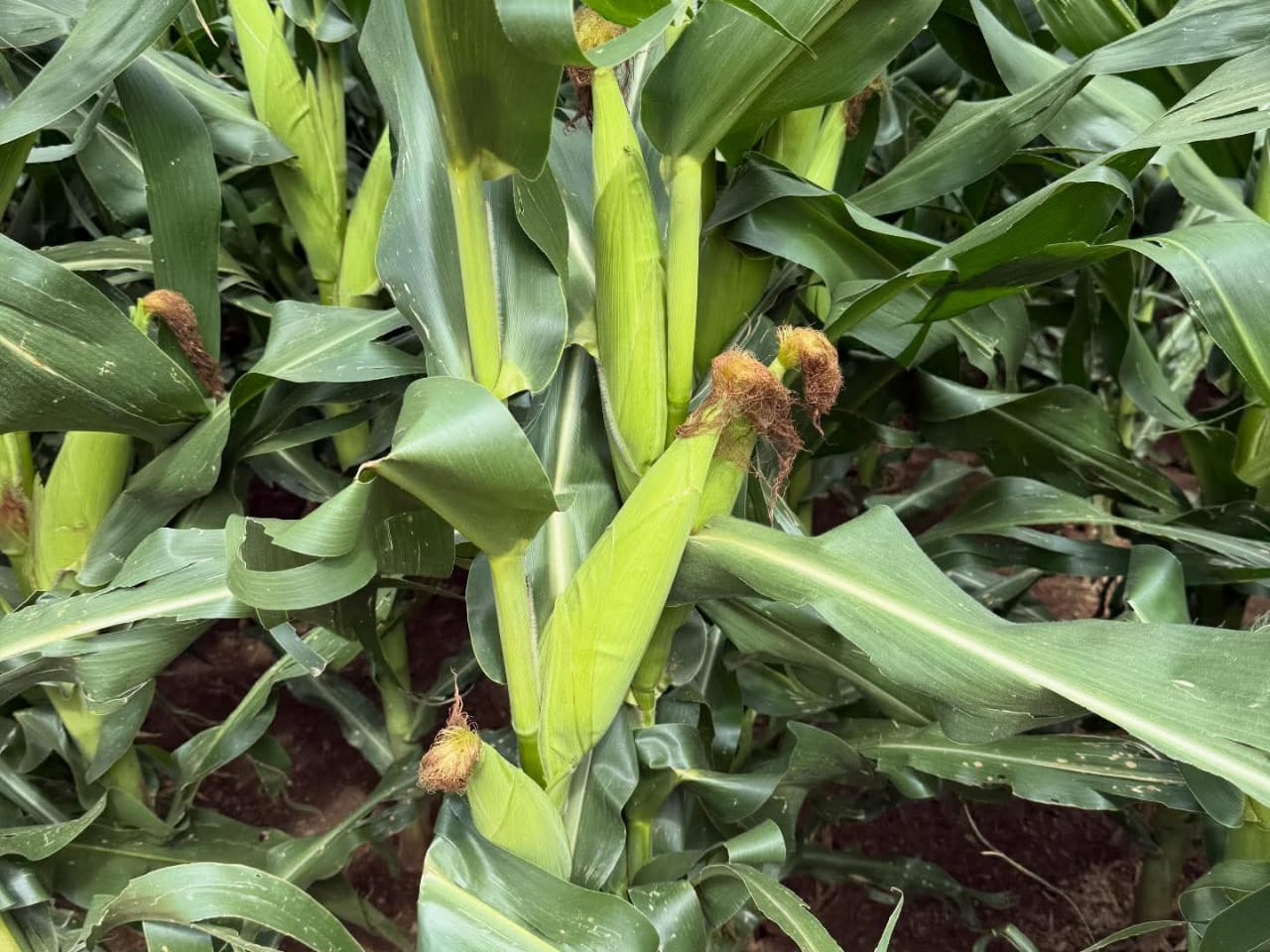
Mbingo explained that during silking and cob formation, the husks close properly at the tip of the cob. This prevents water from entering the cob, reduces the risk of poor grain development and ensures farmers do not harvest poorly filled or damaged cobs.
Disease tolerance
The hybrids also show good tolerance to common maize diseases such as maize streak virus (sifo semkhwane), leaf blight (lidvuba) and rust, which often occur after periods of heavy rainfall followed by strong sunshine.
Maize Hybrid Maturity Groups
Lake Agriculture’s maize hybrids are grouped into early-maturing, medium-maturing and specialised hybrids, allowing farmers to choose varieties that match their planting dates and production goals.
Early-Maturing Maize Hybrids
Lake 401 – “Udokotela”
Lake 401, locally known as Udokotela, is an early-maturing hybrid designed for farmers who need quick results.
- Tasselling: About 66 days after planting
- Physiological maturity: 115–120 days
- Yield potential: One large cob per plant, or two cobs under good management
Mbingo emphasised that timely management practices are critical, as the hybrid develops rapidly. He said the name Udokotela reflects the satisfaction farmers experience due to its dependable performance and yields.
“This hybrid helps farmers even when planting is delayed, because it still allows them to harvest within the same season as those who planted earlier,” Mbingo explained.
He added that Lake 401 also supports sequential planting with fast-maturing bean varieties, enabling farmers to harvest both maize and beans in the same season.
RO413 – “Lushikishi”
RO413, also known as Lushikishi, is another early-maturing hybrid that was previously marketed by Pannar.
- Suitable for late planting, even in December
- Short plant height, reducing lodging under strong winds
- Produces up to two cobs per plant
- Dent grain type, which is softer and not suitable for samp
Mbingo said this hybrid is ideal for farmers who need to harvest before livestock are released into fields after the cropping season.
Medium-Maturing Maize Hybrid
Lake 601 – “Vulindlela”
Lake 601, known as Vulindlela, is a medium-maturity hybrid, positioned between early- and late-maturing varieties.
- Tasselling: Around 67 days after planting
- Maturity: About 100 days can be harvested as green mealies and completely dries out at about 135 days
- Produces two average-sized cobs, resulting in high overall yield
Mbingo explained that the hybrid has well-closed husks that protect the cob and position it lower on the plant, reducing damage. It produces flint grain, which is hard and suitable for making mealie meal and samp.
He added that the grain quality is consistent, allowing farmers to dry and store maize without extensive sorting, making the hybrid suitable for commercial markets.
Yellow Maize Hybrid
Lake 606 – “Njengelanga”
Lake 606, locally known as Njengelanga, is a yellow maize hybrid. Mbingo explained that Lake Agriculture uses a numbering system where the last number is even indicates yellow maize, while where last number is odd indicates white maize.
- Maturity: About 130 days
- Grain is rich in carotene, vitamins and minerals
- Primarily suited for animal feed, but can also be consumed by humans as green mealies
Mbingo cautioned farmers to manage planting carefully to avoid cross-pollination. He advised that white maize should be planted first, followed by yellow maize four to five weeks later, to prevent mixed grain colours that compromise market value.
Green Mealies Hybrid
Lake 711 – “Vuvulane”
Lake 711, known as Vuvulane, is a hybrid specifically bred for green mealies production.
- Tested over six years under controlled conditions on how it can perform in the SADC region and shown great performance when planted
- Green mealies harvest: 94–104 days after planting
- Produces large, attractive cobs
- Sweet taste with strong market appeal
Mbingo noted that if left to mature fully, the hybrid can also be harvested as dry grain, giving farmers flexibility to supply both green mealies and dry maize markets.
Supporting Farmer Productivity
Mbingo encouraged farmers to select maize hybrids based on planting time, rainfall patterns and intended use, noting that access to early-, medium- and specialised hybrids allows farmers to reduce risk and maximise returns.
“These hybrids are designed to work with farmers, even when planting is delayed or weather conditions are challenging,” he said.