


BY: PHESHEYA KUNENE | EDITOR
MANZINI – Eswatini’s food-security fight may soon be won underground, one orange root at a time.
NAMBoard has placed carrots under its crop spotlight, identifying them as one of the top imported crops entering Eswatini and a clear opportunity for local farmers to grow more, supply more and keep more money in the country.
According to the board, a farmer working just 0.5 hectares of carrots can make an estimated E43 360.63 gross profit after costs, depending on management and market conditions. In simple farming language: the carrot is small, but the money is not.
NAMBoard Chief Executive Officer Bhekizwe Maziya said the crop fits directly into the board’s push to reduce import dependence through structured local production.
“Carrots are among the crops where Eswatini farmers can compete strongly if they plant at the right time, meet quality standards and supply consistently. The market exists; what we need is disciplined production, proper planning and farmers who are ready to grow for the market,” Maziya said.
The crop is eligible for the NAMBoard input subsidy and the revolving fund loan, giving serious farmers a chance to overcome the common hurdles of seed, fertiliser, chemicals, irrigation and other production costs.
But carrots are not a crop for lazy land preparation. They demand discipline from day one.
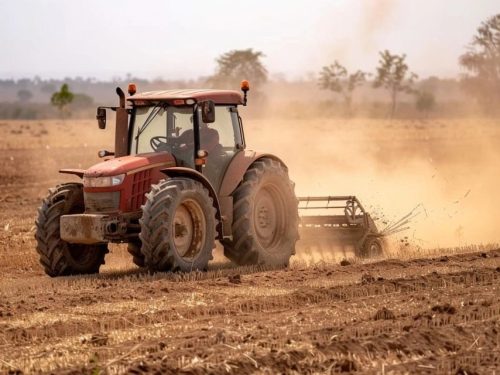
NAMBoard advises farmers to plough deeply to at least 30cm to allow proper root development. The soil must be loose, deep and free of stones, because a carrot does not forgive bad soil. If the land is hard, the roots become stunted, forked or misshapen, and the market simply looks away.
Planting periods also matter. In the Highveld, carrots can be planted from February to October. In the Middleveld, the recommended window is March to August, while the Lowveld is best suited from March to June.
Variety choice is another business decision. NAMBoard highlights Nantees as a winter variety known for uniform roots and excellent sweet flavour, while Nativa is recommended as a summer variety because it is high-yielding, heat-tolerant and adaptable.
For commercial production, farmers must think like technicians as much as traders. Carrots perform best in loose, well-drained sandy loam soils. Raised beds help prevent waterlogging, while drip irrigation can save water, reduce disease pressure and keep growth steady during dry spells. Mulching can protect soil moisture, reduce heat stress and prevent crusting during germination.
Farmers should also practise crop rotation, especially with legumes or maize, to reduce pest build-up and improve soil health. Fresh manure should be avoided close to planting because it can cause hairy or misshapen roots. The field must remain weed-free, particularly during early growth, when carrots are slow to establish.
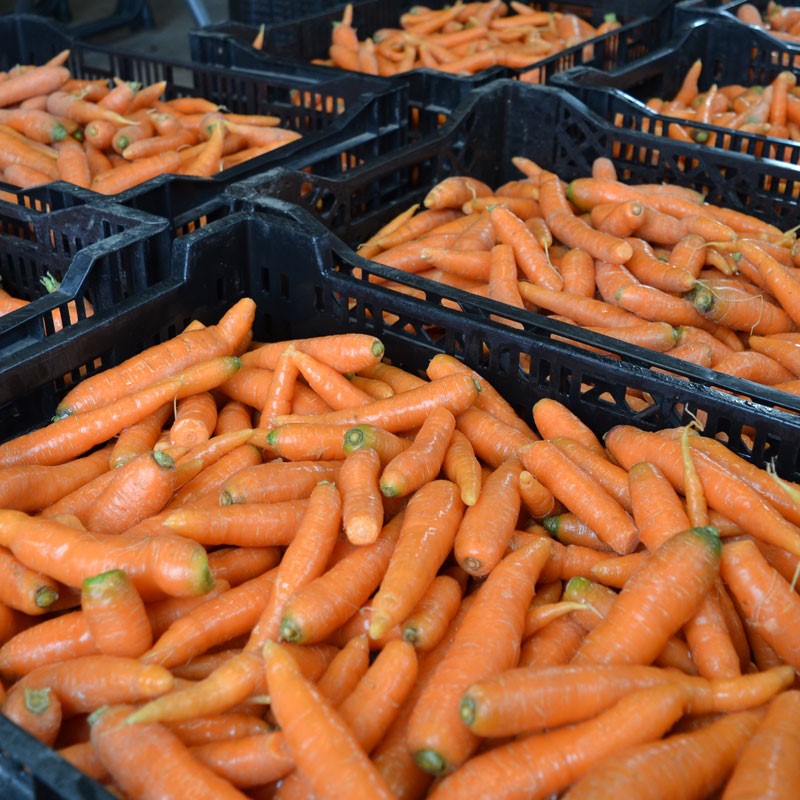
The market wants carrots that are clean, firm and commercially acceptable. Leaves must remain green and intact, snapping when broken, while the root size should not be less than 100mm.
This is where many farmers lose money. They grow the crop, but not the market standard.
Speaking on behalf of farmers, ESNAU Chief Executive Officer Tammy Dlamini said the opportunity was welcome, but farmers would need practical support to turn the carrot gap into real income.
“Farmers are willing to produce, but profitability depends on more than planting. They need access to affordable inputs, irrigation, finance, technical advice and reliable market information. If those systems work together, carrots can become a serious cash crop for smallholder and commercial farmers,” Dlamini said.
Carrots also bring health value to the table. They are rich in Vitamin A, support healthy vision, contain antioxidants, provide dietary fibre, support general wellbeing and remain low in calories.
That makes them a strong crop for both household nutrition and commercial supply.

The opportunity, however, will not reward guesswork. Farmers must register production plans, target the market before planting and avoid flooding the market at the same time. Systems such as the Eswatini Horticulture Information System are important because they help track what farmers are planting, when they expect to harvest and when imports may need to be controlled.
The carrot story is therefore bigger than one crop.
It is about whether Eswatini can turn import dependence into farmer income. It is about whether smallholders can use half a hectare as a business asset. It is about whether local produce can push imported vegetables off the shelves.
The answer is sitting in the soil.
For farmers with water, discipline and the right land, carrots offer a sharp lesson: food security is not only grown on big farms. Sometimes, it begins with a small root, a deep plough and a farmer who understands the market.
The carrot may look humble, but in Eswatini’s import-substitution drive, it has just become serious business.