
BY: PHESHEYA KUNENE | EDITOR
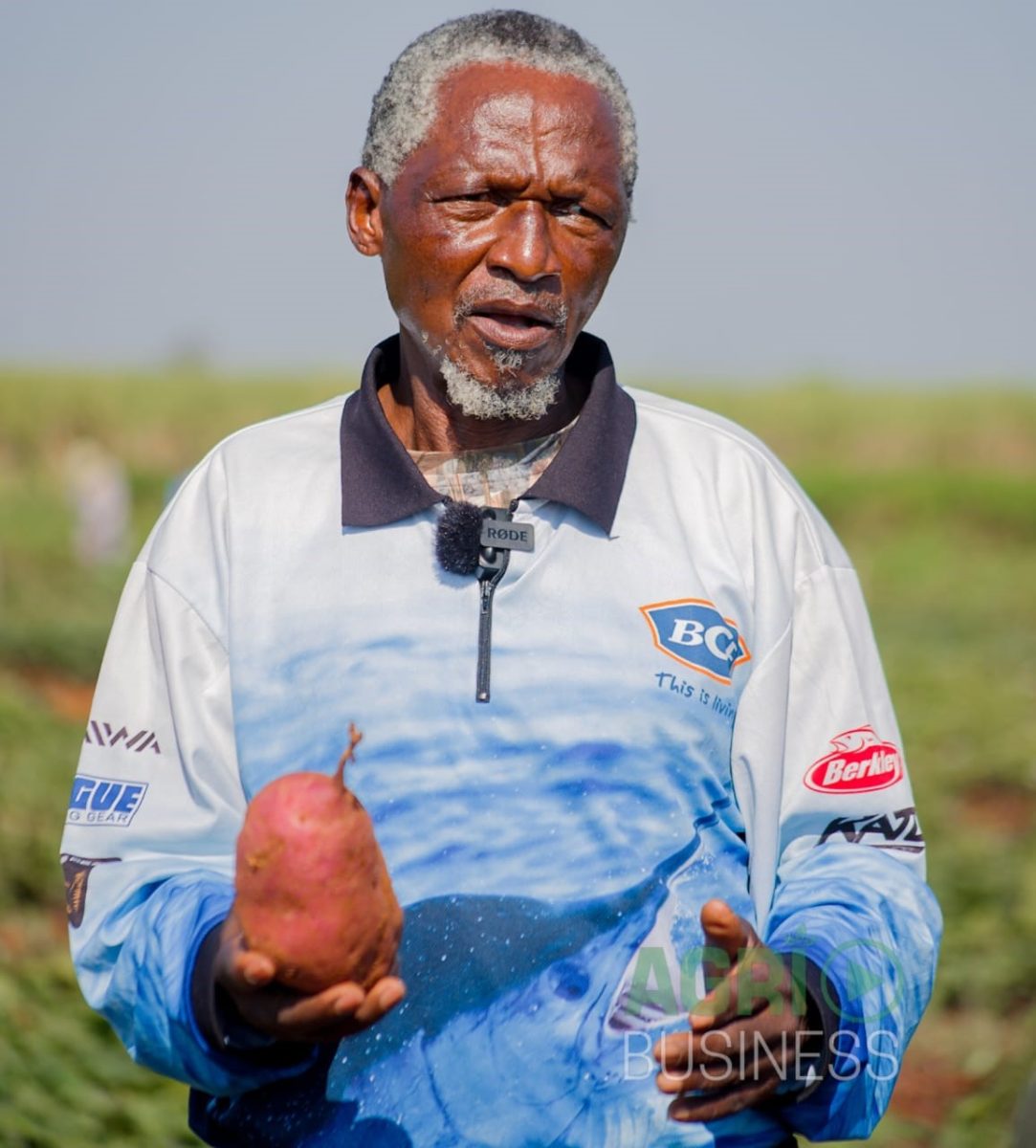
BIG BEND – Most people slow down in their seventies. John Dlamini is speeding up.
At 72, the Siphofaneni farmer still spends most mornings walking through his fields, checking sweet potato vines, inspecting maize stands and studying new crop varieties with the curiosity of someone just beginning a career rather than celebrating more than three decades in agriculture.
His determination is now receiving national recognition.
The veteran farmer has been shortlisted for the 2026 SEDCO Entrepreneur of the Year (EYA) Awards, one of Eswatini’s most respected business competitions, which recognises entrepreneurs whose businesses demonstrate innovation, growth, sustainability and commercial impact.
For Dlamini, however, the nomination is not the destination.
“It tells me that farming is being recognised as a business,” he said. “But there is still more work to do.”
His story is one of resilience, curiosity and continuous learning—qualities that have quietly transformed him into one of the country’s respected commercial farmers.
A FARMER WHO NEVER STOPPED LEARNING
Agriculture has shaped Dlamini’s life for more than 30 years.
A graduate of the former University of Swaziland’s Luyengo Campus, where he studied agriculture, he has spent decades refining his farming methods while watching Eswatini’s agricultural sector evolve.
Today he manages two farms.
At his family homestead in Siphofaneni, he produces maize and sweet potatoes. His second operation, located at Vickery Farm in Malkerns, covers about two hectares, where he grows vegetables, seedlings, maize and sweet potatoes for commercial markets.
His produce reaches buyers including the National Maize Corporation (NMC), vendors in Mahlanya and Manzini and other informal markets.
Although he once supplied sweet potatoes through NAMBoard, changing market specifications encouraged him to diversify his marketing channels.
“My sweet potatoes produced larger tubers than the market wanted at the time,” he recalled. “Instead of giving up, I found other buyers. Farmers must always adapt.”
That ability to respond to changing markets has become one of his greatest strengths.
WHERE SCIENCE MEETS EXPERIENCE
Agribusiness is changing.
Today’s successful farmers are expected to understand genetics, markets, soil health, climate risks and business management alongside traditional production skills.
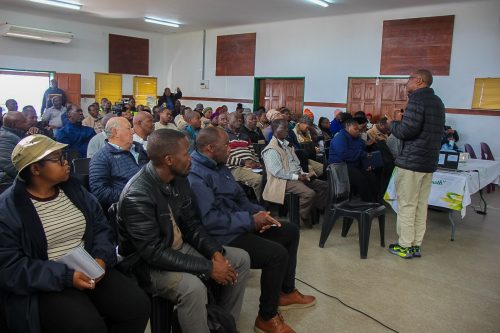
That reality was evident during the Biotechnology Sweet Potato Farmers’ Field Day hosted at KaGule Enterprise in Big Bend.
Organised by the UNESWA Horticulture Department and the UNESWA Research Centre in collaboration with the Ministry of Agriculture’s Department of Agricultural Research and Specialist Services (DARSS), the event brought researchers, commercial farmers and agribusiness stakeholders together to evaluate improved Orange-Fleshed Sweet Potato (OFSP) varieties under real farming conditions.
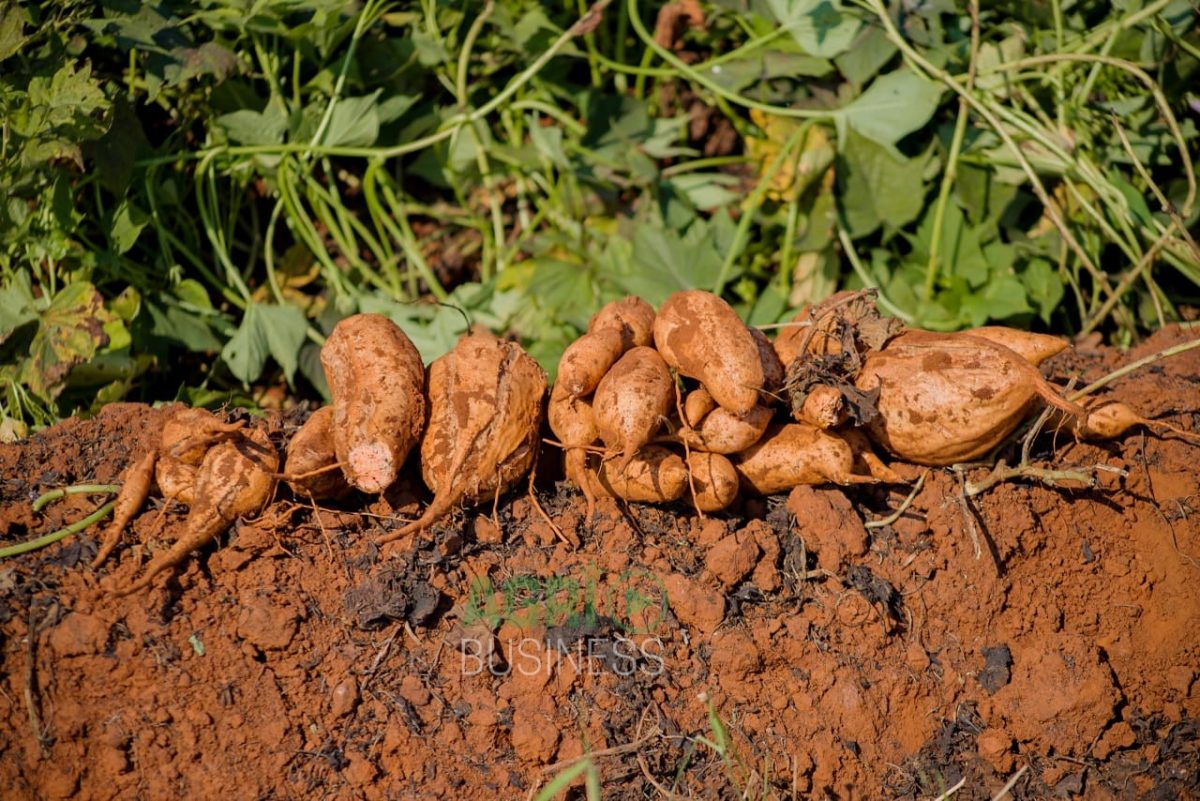
Through the ARISE Programme, twelve high-yielding OFSP varieties imported from the International Potato Center (CIP) in Kenya have been successfully multiplied and established on part of KaGule Enterprise, creating a living laboratory where researchers and farmers work side by side.
The project is also supporting postgraduate research, with UNESWA PhD candidate Nhlanhla Hlophe conducting field trials that link scientific research directly to commercial farming.
For Dlamini, the initiative confirms that agriculture’s future belongs to farmers willing to embrace research.
“These varieties are performing very well,” he said after touring the demonstration plots.
“They have opened another market opportunity for farmers.”
FARMING THE SOIL, NOT JUST THE CROP
Ask Dlamini about his greatest farming investment and he does not mention machinery or fertiliser.
He talks about soil.
In 2014, he adopted conservation-oriented farming practices designed to protect soil structure and improve long-term productivity.
Instead of ploughing entire fields every season, he limits cultivation to planting holes and rotates crops between different fields, reducing soil disturbance while helping maintain fertility.
“The soil is your biggest asset,” he said.
“If you destroy it, you destroy your business.”
His approach reflects conservation agriculture principles increasingly promoted worldwide as farmers confront declining soil fertility, erosion and changing rainfall patterns.
For Dlamini, however, sustainability is not an academic concept.
It is good business.
Healthy soils produce healthier crops.
Healthier crops generate stronger returns.
SWEET POTATO’S GROWING COMMERCIAL VALUE
Although maize remains Eswatini’s staple food crop, sweet potato is steadily becoming one of the country’s promising commercial crops.
Orange-Fleshed Sweet Potato varieties are particularly valued because they are rich in beta-carotene, an important source of Vitamin A, while also offering opportunities for processing into flour, puree, chips, juice and baked products.
Researchers believe value addition could significantly increase farmers’ incomes while improving household nutrition.
That message resonated strongly with Dlamini.
“The future is not only producing more,” he said.
“It is producing better quality and understanding what the market wants.”
The same commercial thinking guides his maize production.
NMC continues encouraging increased local maize production to strengthen national food security, particularly as Eswatini still relies on imports to bridge domestic supply gaps.
For Dlamini, however, production alone is not enough.
Farmers must understand markets before planting.
“You should know who will buy your crop before you even put seed into the ground.”
EVERY FARM IS A CLASSROOM
One of Dlamini’s most remarkable qualities is his willingness to remain a student.
Despite decades in agriculture, he still visits other farmers to exchange ideas, study new production methods and observe improved crop varieties.
“I learn from everybody,” he said.
“No farmer knows everything.”
That curiosity has also drawn him closer to researchers.
He works alongside seed specialists, evaluates improved planting materials and supplies seed to fellow farmers.
Events such as the Biotechnology Sweet Potato Farmers’ Field Day, he believes, are among agriculture’s most valuable learning platforms.
“They help us network, market our produce, understand business management and learn about new technologies.”
For younger farmers, the opportunities are even greater.
A MESSAGE TO THE NEXT GENERATION
Throughout his career, Dlamini has watched many young people dismiss farming as physically demanding and financially unrewarding.
He disagrees.
“The land you have is enough to start,” he said.
“You don’t need hundreds of hectares.”
He encourages young farmers to embrace agroecology, diversify production and maximise every square metre through efficient planning.
Success, he believes, depends less on farm size than on knowledge, discipline and consistency.
Hard work alone no longer guarantees success.
Modern farming requires planning, record keeping, market research and continuous learning.
That philosophy explains why, even after 30 years, Dlamini still attends field days, asks questions and studies new varieties.
“I still want to farm more,” he said.
“There is always something new to learn.”
A LIFE GROWN FROM THE LAND
As the crowd dispersed from KaGule Enterprise, John Dlamini remained among the sweet potato plots, quietly examining the vines that had attracted researchers, government officials and fellow farmers from across the country.
For him, they represented more than another promising crop.
They represented possibility.
Possibility that research can improve livelihoods.
That conservation farming can protect future generations.
That small farms can become successful businesses.
And that age is no barrier to innovation.
At 72, John Dlamini is not farming to pass the time.
He is farming to prove that agriculture rewards those who remain curious, adapt to change and never stop investing in the land.
His nomination for the 2026 SEDCO Entrepreneur of the Year Awards may recognise a lifetime of achievement.
But if his enthusiasm is anything to judge by, he believes his best harvest is still ahead.