
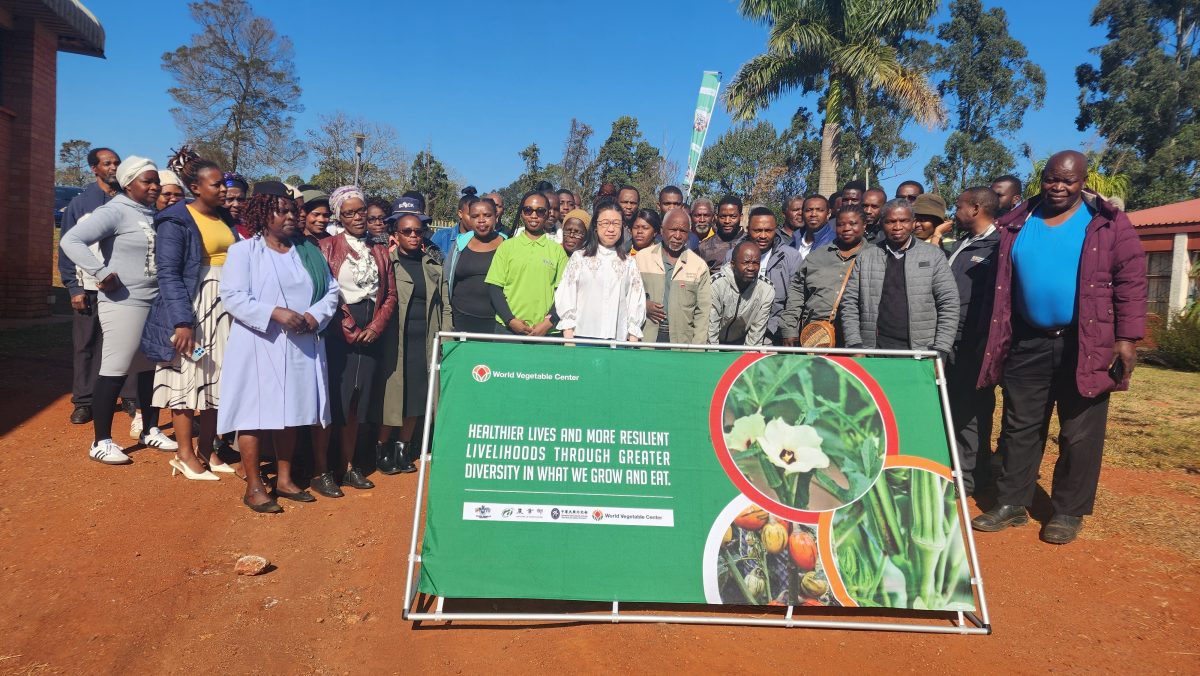
Participants posing for a group photo.
NHLANGANO – Eswatini is currently producing only 18 percent of the vegetables it needs, leaving an 82 percent production gap that has opened a major commercial opportunity for farmers to turn Traditional African Vegetables into income-generating crops.
The gap has become the focus of the Taiwan–Africa Vegetable Initiative (TAVI II-2026), which is rolling out a regional Multi-Stakeholder Platform (MSP) to connect farmers, buyers, seed producers, financial institutions and government agencies in a coordinated effort to commercialise Traditional African Vegetables.
The platform is targeting three priority crops: pumpkin leaves, amaranth and okra. Together, these crops represent an estimated annual market of more than E12.2 million.
Pumpkin leaves alone have an estimated demand of 254 160kg, valued at about E7.6 million. Amaranth has demand of 133 200kg, worth about E4 million, while okra has demand of 18 960kg, valued at approximately E570 000.
The programme aims to bring together 94 farmers as part of efforts to turn Traditional African Vegetables from household crops into profitable farming businesses.
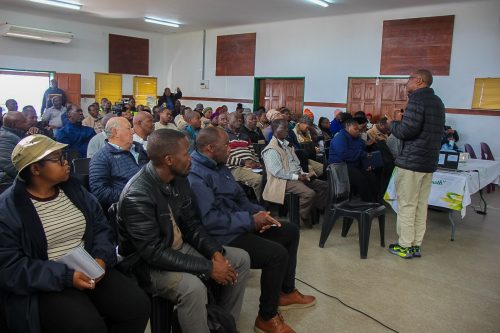
Speaking during the MSP regional rollout meeting in Nhlangano, Mcebo Mnisi, a Research Associate in Value Chain Development at the World Vegetable Center, said the platform was created to improve coordination across the value chain and unlock the commercial potential of what many stakeholders describe as Eswatini’s “Green Gold”.
Mnisi said the MSP seeks to strengthen seed systems, improve market access, support farmer cooperatives and build clear working relationships among producers, buyers, financiers and support institutions.
A key message from the meeting was that commercialisation must be driven by market demand.
Mduduzi Mavimbela, Marketing Extension Officer at the National Agricultural Marketing Board (NAMBoard), said farmers must understand what buyers want, how much they want and when they need it.
NAMBoard wants farmers to have at least 0.5 hectares under contract, with a minimum production unit of 0.2 hectares at any given time.
Mavimbela said success in the formal market will depend on quality, grading, packaging, food safety, consistency and timely delivery. Farmers were also urged to reduce post-harvest losses through proper harvesting, sorting, packaging and transport.
For Masibini farmer Kate Mamba, the opportunity is already real.
Mamba is currently planting Traditional African Vegetables on 0.2 hectares of land and supplying the market, showing that indigenous vegetables can move from the cooking pot into a business.
Her story stood out as proof that the market is ready when farmers produce according to demand and meet buyer requirements.
The Youth Enterprise Revolving Fund (YERF) has also thrown its support behind the commercialisation drive. Thabiso Nyetane from YERF said young agripreneurs can access funding for production, value addition and agribusiness development, provided they follow the required application processes.
The MSP roadmap targets at least 10 tonnes of Traditional African Vegetables per month, three supply agreements and five sales outlets. It also includes annual seed distribution targets of 500kg for pumpkin leaves, 70kg for amaranth and 7kg for okra.
The rollout will also activate four regional hubs:
• Shiselweni, Nhlangano – Ministry of Education Conference Hall
• Lubombo, Siphofaneni – Siphofaneni Inkhundla Hall
• Hhohho, Ntfonjeni – Ntfonjeni RDA
• Manzini – Ludzeludze RDA
It will support three steering committee governance reviews and run through a June to December 2026 workplan covering seed systems, farmer registration, supply agreements, market dashboards, gross margin analysis and regional review meetings.
As Eswatini works to reduce its vegetable supply gap, stakeholders believe Traditional African Vegetables could become part of the solution.
For farmers like Kate Mamba, that shift has already started.