

BY: PHESHEYA KUNENE | EDITOR
LUYENGO – Eswatini has taken a decisive step towards building new agricultural value chains with the launch of the Ginger and Turmeric Research, Production and Value Addition Initiative at the University of Eswatini’s Luyengo Campus.
Prime Minister Russell Mmiso Dlamini officiated the signing of a Memorandum of Understanding between UNESWA, Indonesia’s Universitas Airlangga and Royal Tirta Ayu Spa — a partnership designed to turn ginger and turmeric into high-value products for local and international markets.
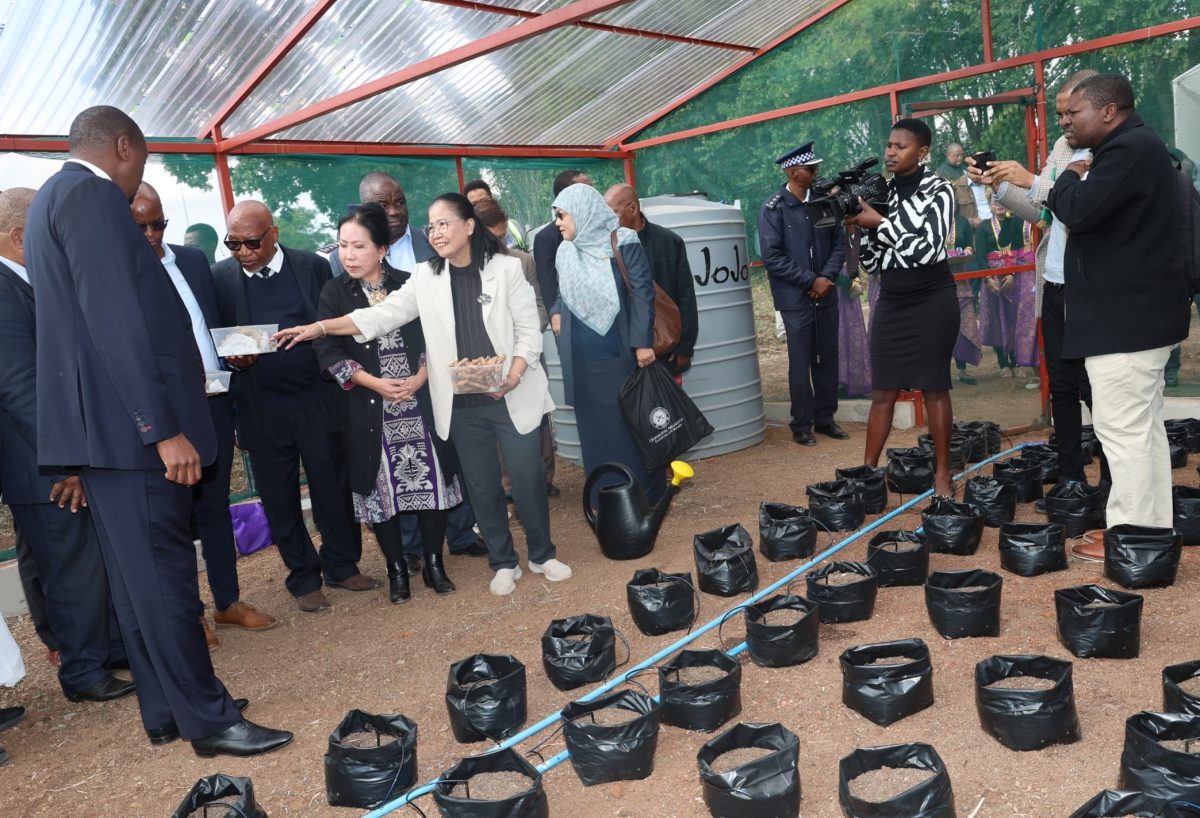
The event also saw the commissioning of a modern greenhouse tunnel donated by Universitas Airlangga. The facility will support research, training, cultivation trials and innovation in ginger and turmeric production.
“Today, we are not merely signing a document. We are planting the seeds of sustainable economic growth, agricultural innovation, scientific advancement and community empowerment,” said the Prime Minister.
From Raw Crops to High-Value Products
UNESWA Vice Chancellor Professor Justice M. Thwala said the partnership showed how universities could move beyond theory and become active players in national development. The collaboration, he said, would strengthen research, innovation, student training and community engagement while turning agricultural knowledge into practical economic opportunities.
At its core, the initiative seeks to move Eswatini beyond selling raw crops and into producing essential oils, herbal extracts, cosmetics, nutraceuticals, wellness products and pharmaceutical ingredients.
For farmers, this could mean access to improved planting material, research-based production methods, quality standards and more reliable markets.
A E90 Billion Opportunity
Speaking on behalf of the Minister of Agriculture, Bongani Ndzima said the country had a clear opportunity to reduce imports and build a local industry around the two crops. Eswatini spends about E2.2 million annually on turmeric and turmeric-based imports, while the global turmeric market is estimated at around E90 billion.
Ministry data also shows that one hectare of turmeric can accommodate up to 150,000 seedlings and yield up to 40 tonnes under proper management — making the crop attractive for farmers looking beyond traditional commodities.
Cutting Import Dependence
Royal Tirta Ayu Spa founder Lenywati Cidesco said the project was born out of a need to reduce dependence on imported products and build stronger local industries.
“During the seven months I spent in lockdown, I observed that almost all products available in supermarkets were imported,” she said, adding that her vision was to help Eswatini produce more of its own goods and create export-oriented industries.
Universitas Airlangga said the collaboration would support education, research, innovation and community engagement, with the donated greenhouse tunnel forming part of its commitment to practical knowledge transfer and skills development.
Cassava on the Radar
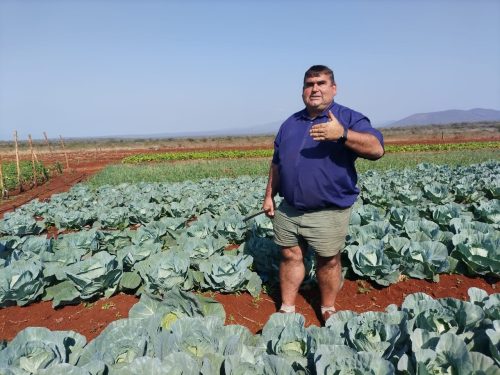
Touring the Luyengo Campus fields, the Prime Minister pointed to cassava, coffee, marula, ginger and turmeric as crops that could shape the country’s agricultural future.
He singled out cassava as having particularly strong potential, revealing that the Public Service Pensions Fund was already in talks with a possible partner interested in cassava by-products.
His message to farmers and researchers was direct: Eswatini must take these crops seriously if it wants to broaden markets, create jobs and reduce overdependence on a narrow range of traditional crops.

Luyengo as an Enterprise Hub
For UNESWA’s Luyengo Campus, the initiative cements its role as more than a teaching institution. It positions the campus as a research, innovation and enterprise hub where students learn by producing, processing and commercialising agricultural products.
The Prime Minister said universities must become engines of economic transformation, not only centres of learning — a message already visible on the ground, where students showcased coffee products on the market, compost made from agricultural waste and other value-added goods.
If properly scaled, the ginger and turmeric initiative could open new income streams for smallholder farmers, women, youth, processors and exporters. Its success, however, will depend on consistent production, quality control, processing capacity and access to dependable markets.
For now, the seed has been planted at Luyengo. The challenge is to turn it into an industry.