

BY PHESHEYA KUNENE – EDITOR
EZULWINI – Water governance is increasingly becoming an agricultural issue.
That was the central message emerging from the Eswatini Youth in Water (EYIW) Roadmap Development and Validation Workshop held at the Happy Valley Hotel and Casino this week, where delegates warned that the future of farming in Southern Africa would depend heavily on how countries manage and protect shared water resources.
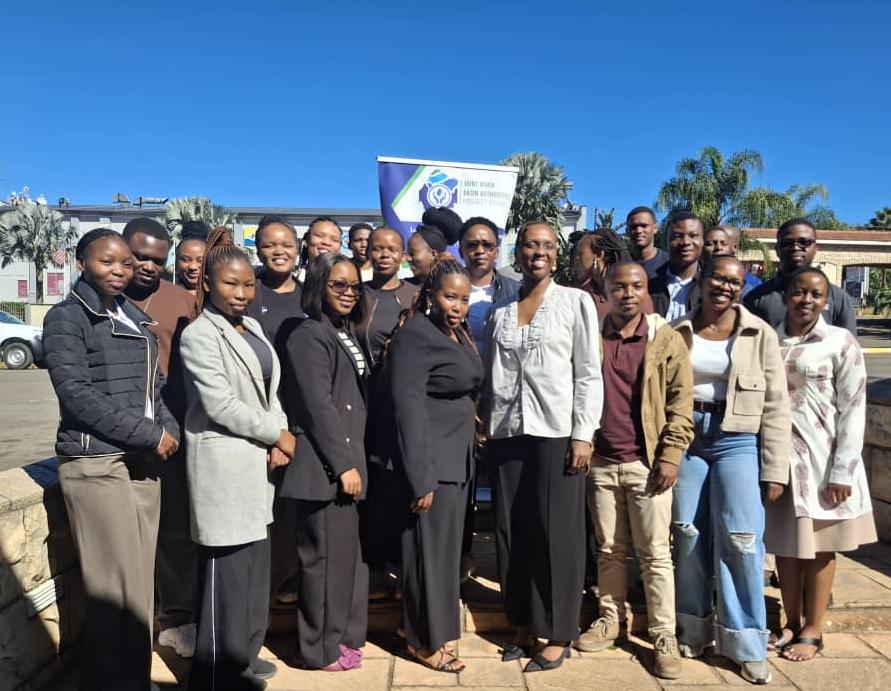
The two-day workshop, running from May 12 to 13, brought together youth leaders, development agencies, water experts and regional institutions from Eswatini, South Africa and Mozambique to shape the EYIW Strategic Roadmap for 2026 to 2028.
While much of the discussion focused on youth participation in water governance and regional cooperation, agriculture remained firmly at the centre of the debate.
Delegates noted that farming continues to consume the largest share of water resources across the region, particularly in irrigation-dependent sectors such as sugarcane, horticulture and vegetable production. As climate change intensifies droughts, floods and erratic rainfall patterns, experts argued that stronger water governance systems would become critical to protecting food production and sustaining rural livelihoods.
Eswatini’s agricultural sector already relies heavily on water infrastructure, irrigation schemes and river basin management systems. According to the Food and Agriculture Organisation (FAO), agriculture employs more than 70 percent of the country’s population and remains central to food security and economic activity.
The country has over 49 000 hectares equipped for irrigation, with most large-scale irrigation schemes drawing water from dams and reservoirs, particularly within the sugar industry. Smaller farming operations often depend directly on rivers and pump systems for irrigation.
Government and development partners have in recent years intensified efforts to improve water management in agriculture through projects such as the Irrigation Master Plan, which seeks to improve water efficiency, attract investment and strengthen climate resilience among farmers.
The National Water Policy further notes that Eswatini only harnesses about 17 percent of its available freshwater resources, despite growing pressure on rivers and dams caused by climate change and rising agricultural demand.

Delivering welcome remarks, Joint River Basin Authorities Project Board (JRBA-PB) Acting Chief Executive Officer Takhona Dlamini urged participants to think beyond traditional approaches and become more intentional in developing long-term water solutions.
She said innovation, strategic partnerships and stronger resource mobilisation would be essential if countries hoped to strengthen water systems that support both agriculture and economic growth.
Dlamini stressed that youth participation should not remain symbolic, particularly as younger generations would inherit the responsibility of managing increasingly strained water resources.
The workshop programme reflected growing concern over regional water security.
Day One included discussions on the SADC strategy for youth engagement in water governance, scaling youth participation from local to transboundary river basin management, and reviewing the progress made by EYIW since its establishment in 2023.
Regional Programme Manager for the International Union for Conservation of Nature (IUCN), Tariro Davison Saruchera, encouraged young people to actively participate in policy and governance processes shaping the future of water management.
Saruchera said structured youth platforms were increasingly becoming important because they helped ensure continuity, accountability and sustainable engagement in environmental governance.
One of the workshop’s major technical discussions focused on the role of INMACOM, the transboundary river basin institution involving Eswatini, Mozambique and South Africa.
The institution oversees cooperation around the Inkomati and Maputo river basins, which are critical to irrigation agriculture, biodiversity and regional water security.
Officials revealed that a new US$7.1 million regional programme running until 2030 would support integrated water management, ecosystem conservation and climate resilience initiatives across the three countries.
Participants heard that the programme would also support local projects in areas such as Bhagana and Lomahasha, where communities depend heavily on agriculture and irrigation for livelihoods.
Experts warned that poor river management, pollution and weak conservation practices were already placing pressure on farming systems across Southern Africa.
Without improved governance, delegates said farmers could face rising irrigation costs, declining water quality and reduced agricultural productivity.
UNICEF WASH Specialist Nontokozo Dlamini said youth initiatives needed stronger institutional focus if they were to make meaningful contributions to water governance.
She cautioned against trying to tackle every issue within the sector at once, arguing that organisations needed to clearly define their priorities, particularly around river basin management and sustainable water use.
The discussions also highlighted the growing need to involve rural youth in water governance structures.
Eswatini National Youth Council representative and Eswatini Malaria Youth Corps Chairperson Makhosonkhe Professor Shabangu said young people living in rural communities should play a bigger role in protecting water sources because they were directly connected to the country’s rivers, wetlands and farming systems.
He argued that water governance discussions often remained concentrated in urban centres and universities while overlooking communities where much of the country’s water originates.
Stakeholders further acknowledged that agriculture, water and climate resilience could no longer be treated as separate issues.
Across Southern Africa, governments are increasingly under pressure to secure water supplies for both food production and industrial development, while also responding to rising climate risks.
Delegates said stronger regional cooperation on water management would help protect agricultural production, strengthen food security and reduce future conflicts over scarce resources.
As the workshop concluded, one message stood out clearly: the future of farming may depend as much on water governance as it does on rainfall itself.