
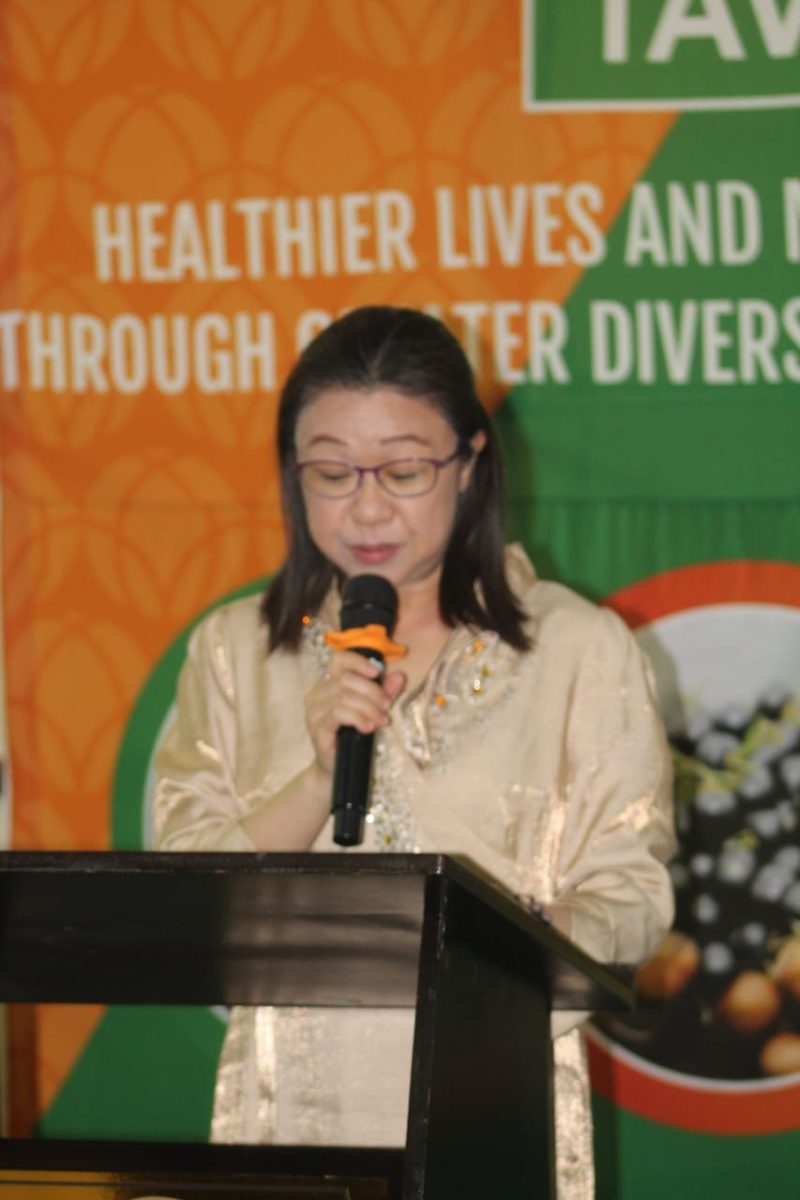
World Vegetable Center TAVI Project Manager Dr Sophia Chan, delivering her remarks.
BY SIBUSISIWE NDZIMANDZE | JOURNALIST
MANZINI – With about E76.5 million invested between 2021 and 2024, followed by a further E23 million in 2025, Taiwan’s support to the Taiwan-Africa Vegetable Initiative (TAVI) is now being channelled towards turning school gardens into commercial production spaces for traditional African vegetables.
Under TAVI Phase II, the focus is shifting from simple school garden demonstrations to practical production, market access and youth participation in agriculture.
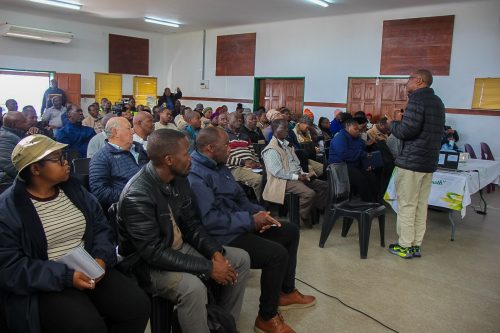
This emerged during the Agriculture Teachers Refresher Training Workshop held at The George Hotel in Manzini today, where government officials, educators and development partners gathered to strengthen school-based agriculture under TAVI Phase II.
The workshop brought together representatives from the Ministry of Agriculture, the Ministry of Education and Training, the Embassy of the Republic of China (Taiwan), the World Vegetable Center, school inspectors, curriculum specialists and agriculture teachers from 42 schools across the country.
Taiwan Embassy representative Sofia Jeng said the initiative responds to growing disruptions in food systems caused by COVID-19, climate change and global conflicts, which have exposed weaknesses in nutrition and agricultural value chains, especially among vulnerable communities.
She said traditional African vegetables remain important because they are nutritious, climate resilient and capable of supporting both household food security and income generation.
“Vegetables are vital for nutrition, health and job creation. They improve livelihoods and strengthen resilient farming systems in the face of climate change,” she said.
Jeng said Taiwan’s continued investment reflects its commitment to working with Eswatini to strengthen food security, improve nutrition and promote climate-resilient agriculture.
She explained that while the phase I of TAVI focused on reviving traditional African vegetables and improving food and nutrition security, Phase II is placing greater emphasis on commercialisation.
“As we move into this second phase, our vision is not only to support healthy diets through traditional vegetables, but also to facilitate the commercialisation of these vegetables to enhance livelihoods and economic development,” she said.
She revealed that the programme would work with the National Agricultural Marketing Board (NAMBoard) to establish commercial school gardens in selected schools.

Taiwan Embassy representative Sofia Jeng attended the Agriculture Teachers Refresher Training Workshop.
“This year we are going to work with NAMBoard. There will be three or four schools that we are helping to develop commercial vegetable gardens. Students will grow vegetables and NAMBoard will connect them to the market,” Jeng said.
According to Jeng, the initiative seeks to show learners, schools and surrounding communities that traditional vegetables can move beyond backyard consumption and become market-driven income opportunities.
The programme is also introducing smart agriculture approaches to change how young people view farming.Jeng acknowledged that many young people see agriculture as old-fashioned and physically demanding, a perception development partners are trying to shift through technology, innovation and practical exposure.
“This year we are trying to bring in smart agriculture techniques. There will be digital elements and modern technologies because we want to attract more young people to become involved in agriculture,” she said.
World Vegetable Center TAVI Project Manager Dr Sophia Chan said the programme now wants schools to begin seeing school gardens as income-generating agricultural enterprises rather than simple demonstration plots.
Chan said the project’s focus is now on producing traditional vegetables for available markets, with schools encouraged to treat gardens as productive assets.
“School gardens can earn money for your school because the market is there,” Chan told teachers.
She revealed that the TAVI project had already entered into an arrangement with one participating school to begin commercially producing traditional vegetables, with her office assisting the school to access markets.
“One school garden will produce traditional vegetables and our office will help market the produce. Not only that school, all schools can do so, learners can do so,” she said.
Chan said agriculture teachers would be central to making the commercialisation model work, as they are responsible for guiding learners and sustaining school gardens.
“It all relies on the agriculture teachers because you are the leaders,” she said.
She added that the project hopes to transform school gardens into productive and commercially oriented spaces capable of contributing to nutrition, school development and the country’s agricultural future.
Ministry of Agriculture Principal Secretary Sydney Simelane said agriculture teachers remain central to the success of the initiative because they turn agricultural knowledge into practical implementation within schools.
Simelane said TAVI Phase II would be implemented in 42 schools nationwide in partnership with the Ministry of Education and Training and the World Vegetable Center.
“The goal of TAVI Phase II remains clear: to improve food and nutrition security, strengthen climate resilience and enhance livelihoods through the promotion of traditional African vegetables,” Simelane said.
He added that the refresher training workshop was equipping teachers with practical skills in irrigation, pest and disease management, seed management, garden planning and post-harvest handling to strengthen the sustainability of school garden systems.
Officials said the broader vision is to raise a new generation that sees agriculture not only as a subsistence activity, but as a modern, technology-driven sector capable of improving nutrition, creating jobs and strengthening rural economies.
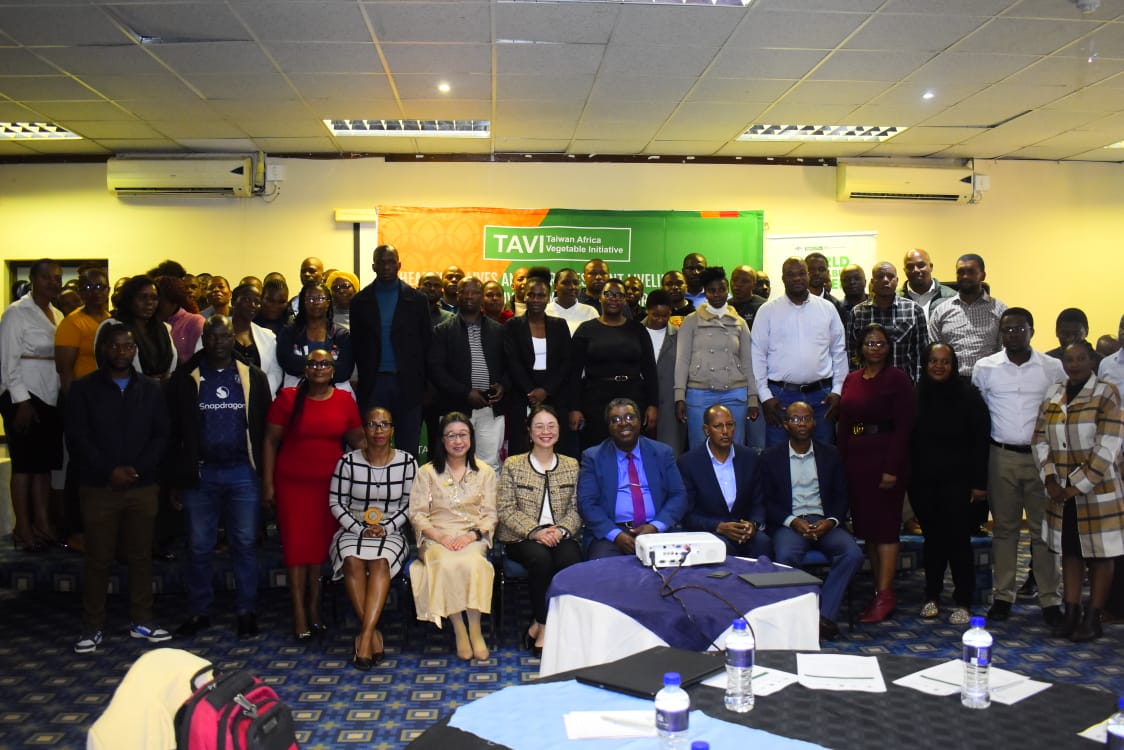
Representatives from the Ministry of Agriculture, the Ministry of Education and Training, the Embassy of the Republic of China (Taiwan), the World Vegetable Center, school inspectors, curriculum specialists and agriculture teachers from 42 schools across the country posing for a group photo.