
…Stock theft and Foot and Mouth Disease are fast becoming twin threats to Eswatini’s livestock economy, squeezing farmers, disrupting trade and exposing the fragility of rural livelihoods.
BY PHESHEYA KUNENE – EDITOR
MANZINI — Minister of Agriculture Mandla Tshawuka has come out strongly against stock theft syndicates, warning that government is closing in on criminals who continue targeting livestock farmers across the country.
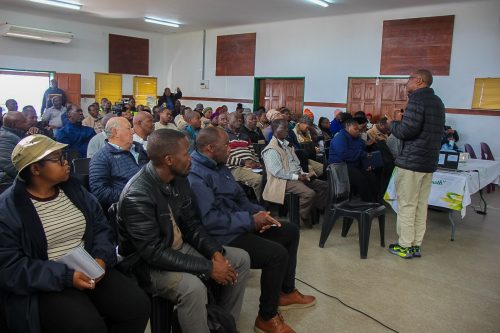
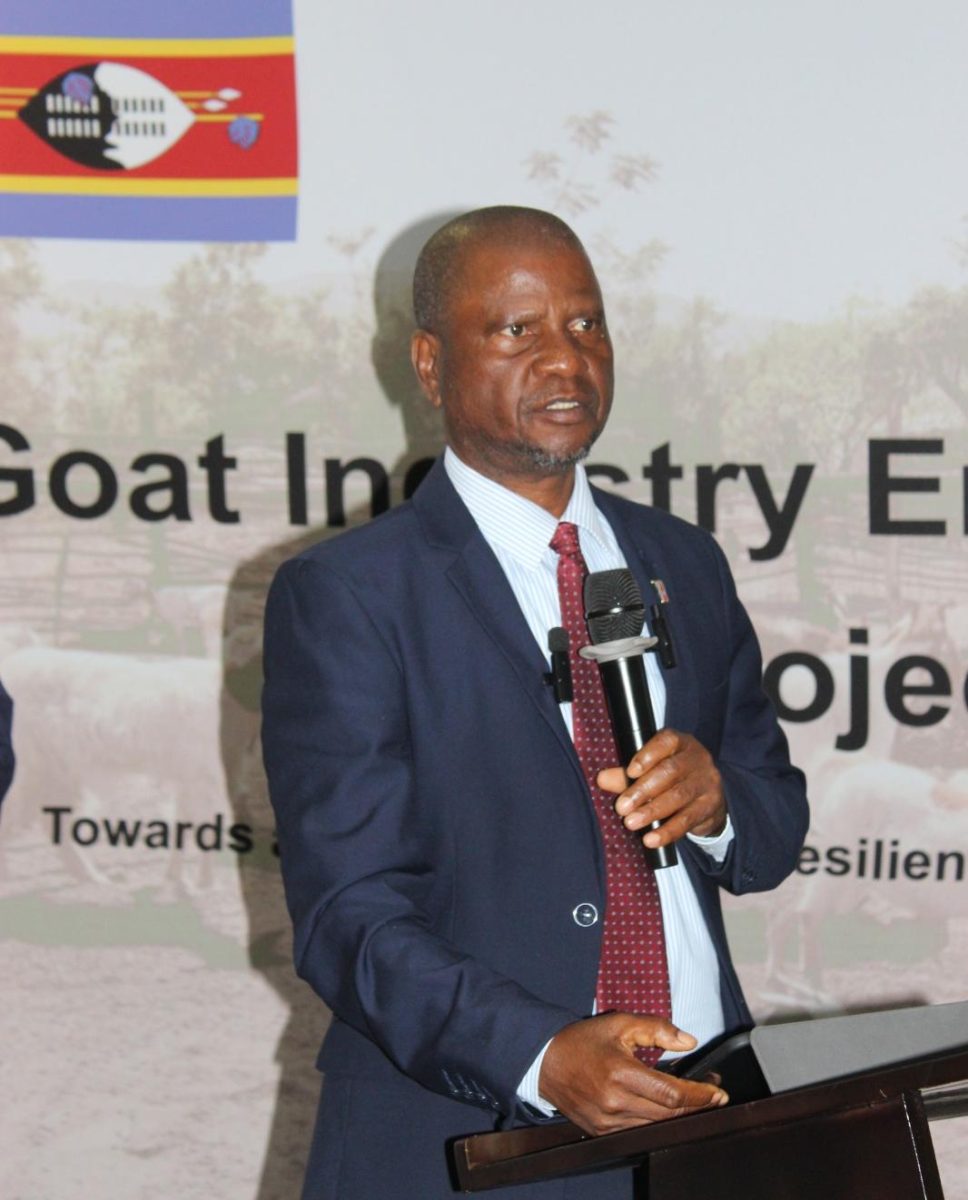
Speaking during the official launch of the Goat Industry Enhancement Project at The George Hotel on Thursday, Tshawuka revealed that amendments to the country’s Stock Theft legislation were nearing completion as government intensifies efforts to protect the livestock sector.
“Once this legislation is complete, it will be war against stock thieves,” Tshawuka declared. “We cannot allow criminals to destroy the livelihoods of emaSwati farmers and weaken the agricultural economy.”
His remarks arrive at a time when livestock theft is escalating into a national economic concern. Police reports show that livestock worth more than E20.5 million was stolen between January and October 2025, with more than 4 000 animals reported missing nationwide. Goats accounted for a significant share of the thefts, reflecting the growing commercial value of the country’s goat industry.
Security agencies have increasingly linked the crimes to organised syndicates operating within rural communities and across borders. Recent law enforcement operations intercepted large numbers of goats suspected to have been destined for illegal smuggling routes into neighbouring countries.
Agricultural analysts say the trend is undermining herd growth, discouraging investment and eroding farmer confidence, particularly among smallholder farmers who rely heavily on livestock as a financial safety net.
Police records and security reports show that stock theft has steadily evolved into one of Eswatini’s most costly rural crimes over the past three years.
In 2023 alone, more than 1 815 cattle valued at nearly E15 million were reportedly stolen and smuggled across the border into South Africa, according to the Royal Eswatini Police Service. Between April and June 2024, police recorded the theft of 1 325 livestock animals, including 582 cattle and 743 goats worth over E6.5 million, with authorities warning that highly organised cross-border syndicates were behind most cases.
In 2025, national crime statistics revealed that 4 156 livestock animals valued at more than E20.5 million were stolen countrywide, including 1 689 cattle and 2 378 goats, despite intensified police operations.
Along the country’s borderlines, the Umbutfo Eswatini Defence Force (UEDF) has increasingly intercepted stolen livestock believed to be destined for illegal markets in neighbouring countries.
Security reports indicate that soldiers recovered over 257 goats and 104 cattle during anti-smuggling operations in the 2024/25 financial year alone. In separate operations conducted in late 2025 and early 2026, UEDF troops intercepted another 130 goats and arrested suspects linked to organised livestock smuggling syndicates operating along the South African border.
Against this backdrop, government and development partners officially launched the Goat Industry Enhancement Project, a five-year initiative expected to modernise goat production and strengthen the country’s livestock value chain.
The project, which will run from 2026 to 2030, is being implemented by the Ministry of Agriculture in partnership with the Republic of China (Taiwan) through the International Cooperation and Development Fund (ICDF). Taiwan has committed E51.5 million towards the initiative, while the European Union is supporting the establishment of a Goat Artificial Insemination Centre.
Tshawuka described the project as a strategic investment aimed at transforming goat farming from subsistence activity into a commercially competitive industry.
“This project is about creating resilient farmers, improving incomes and building a stronger livestock economy,” said the minister.
He said the programme would focus on improving genetics, strengthening breeding systems, enhancing animal nutrition and expanding market access for farmers.
The minister further stressed that development programmes should produce measurable impact at community level instead of being consumed by administrative costs.
“Resources must benefit ordinary emaSwati on the ground. Development must be visible in households, communities and local economies,” he said.
Goat farming continues to gain importance within Eswatini’s agricultural economy, particularly as climate pressures intensify. Compared to cattle, goats are generally more adaptable to drought conditions, require fewer production inputs and remain accessible to smallholder farmers operating in difficult environments.
His Excellency Jeremy Liang, Ambassador of Taiwan to Eswatini, said the initiative represented a new chapter in agricultural cooperation between the two countries.
Liang said the project would strengthen the entire goat value chain through improved genetics, artificial insemination technologies, farmer training programmes and institutional capacity building.
“Ultimately, we hope to see farmers achieve higher incomes, improved herd quality and stronger market opportunities,” Liang said.
He added that the programme would help rural communities build more sustainable livelihoods while improving meat quality and production efficiency.
Speaking on behalf of goat farmers, Nondumiso Matsebula welcomed the initiative, saying many livestock producers viewed the project as a long-awaited intervention.
“This project gives hope to farmers who want to grow commercially and improve the quality of their herds,” she said.
The launch also comes as Eswatini continues battling the economic effects of the ongoing Foot and Mouth Disease outbreak, which has disrupted livestock movement, affected trade flows and placed pressure on agricultural value chains.
Tshawuka assured stakeholders that government remained committed to controlling the outbreak through vaccination campaigns, stricter surveillance systems, movement restrictions and rehabilitation of sanitary cordon fences.
The minister said restoring confidence in the livestock industry remained critical for both food security and economic stability.
Recent investigations by authorities have also uncovered illegal slaughter operations and cross-border livestock smuggling networks, factors experts say complicate disease containment efforts and weaken biosecurity systems.
Agricultural economists warn that the combined impact of stock theft, animal disease outbreaks and climate shocks is exposing deeper structural vulnerabilities within Eswatini’s rural economy. For many households, livestock is more than an agricultural asset; it is a store of wealth, a source of food security and, increasingly, a buffer against economic uncertainty.
Despite mounting pressure on the sector, government believes the Goat Industry Enhancement Project signals a broader shift towards modernising livestock production and building a more commercially resilient agricultural economy capable of withstanding future shocks.