


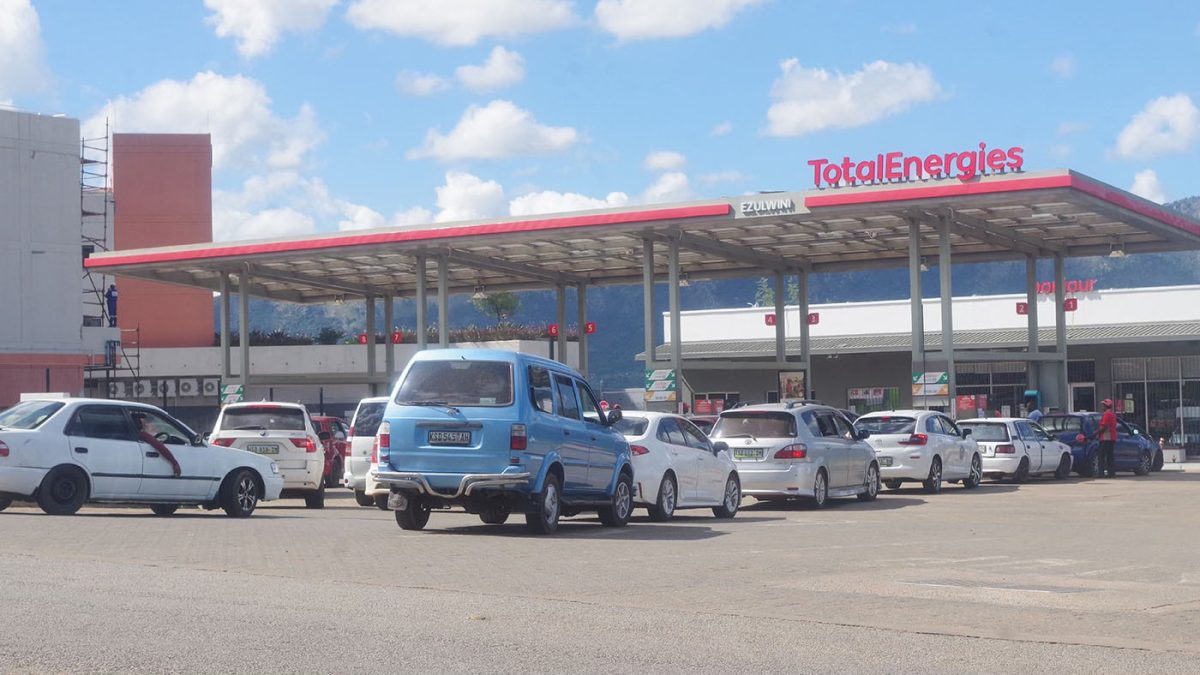
Eswatini motorists, households and businesses are set for a sharp rise in fuel costs after the Ministry of Natural Resources and Energy announced major increases in the prices of petrol, diesel and illuminating paraffin, with the new pump prices taking effect at midnight on Thursday, 2 April 2026, effective Friday, 3 April 2026.
According to a press release issued by Principal Secretary Lindiwe Mbingo, the price of unleaded petrol will rise by E2.90 per litre, diesel 50ppm by E5.35 per litre, and illuminating paraffin by E5.30 per litre.
This means the pump price of ULP95 petrol will move from E19.45 to E22.35 per litre, while diesel (0.005% S) will jump from E19.85 to E25.20 per litre. The price of illuminating paraffin will increase from E14.20 to E19.50 per litre.
The price hike comes as motorists across Eswatini were already battling fuel supply disruptions, with panic buying, long queues, rationing and temporary stock-outs reported at filling stations in places including Manzini and Mbabane by the end of March and into 1 April 2026. Queues and rationing was reported in Manzini on 30 March, and by 1 April several stations in Mbabane CBD had run out of petrol, forcing motorists to look for fuel in surrounding areas.
The ministry attributed the sharp adjustment to the impact of ongoing geopolitical tensions in the Middle East, saying the conflict has disrupted global fuel supply logistics, pushed up international oil prices and caused long lead times in the delivery of imported fuel products. It said Brent crude traded at an average of US$104 per barrel in March 2026, compared with an average of US$69 per barrel in February 2026.
Government said the impact on local pricing had created very high deficits across petroleum products, reaching as much as E12.14 per litre. It said the overall impact for March and April 2026 amounts to a deficit of E332 million incurred by oil companies, with Government set to cushion this through the Strategic Oil Reserve Fund, also referred to as the fuel stabilisation fund.
The increase comes at a delicate time for the domestic economy. In its monetary policy statement released on 27 March 2026, the Central Bank of Eswatini kept the discount rate unchanged at 6.75 per cent and said commercial banks were expected to maintain the prime lending rate at 10.25 per cent. The bank also said headline inflation had eased to 1.9 per cent in February 2026 from 2.1 per cent in January, while its inflation forecast for 2026 was revised down to 3.33 per cent from 3.97 per cent projected in January.
The bank said risks to inflation remained tilted to the upside because heightened geopolitical tensions could disrupt global supply chains and put renewed pressure on the prices of imports. That means the latest fuel increase could quickly feed into transport, distribution and production costs across the economy, even though inflation had recently been on a softer path.
For consumers, the immediate impact is likely to be higher commuting and household energy costs. For business, especially in agriculture, transport and logistics, the diesel increase is expected to raise the cost of moving goods and running operations. In a small import-dependent economy like Eswatini, that could place fresh pressure on prices in the coming weeks.
The ministry has urged the public to use fuel efficiently, warning that international oil markets remain highly volatile amid continuing geopolitical tensions.